
おかえりなさい
Today's Top AI News
Curated from 200+ sources across AI & machine learning

Prompt Injection Attacks Are Thwarting AI Hacking Agents
“Context bombing” tricks malicious AI agents into shutting down before they can do harm.

Robbyant releases LingBot-World 2.0 with hour-long real-time world generation

The Pentagon's new AI playbook treats slow adoption as a bigger risk than "imperfect alignment"
General AI

Opposition to data centers grows in cramped urban Japan
The explosion in resource-hungry data centers — housing the hardware "brains" of artificial intelligence — is fueling unease worldwide.
Apple’s lawsuit couldn’t come at a worse time for OpenAI
Apple filed a trade secrets lawsuit against OpenAI last Friday, and it’s not messing around. The complaint alleges a pattern of misconduct reaching all the way up to OpenAI’s chief hardware officer and claims more than 400 former Apple employees now work at the company. OpenAI’s response so far has been carefully hedged, and the timing couldn’t be worse with the company reportedly eyeing an IPO […]
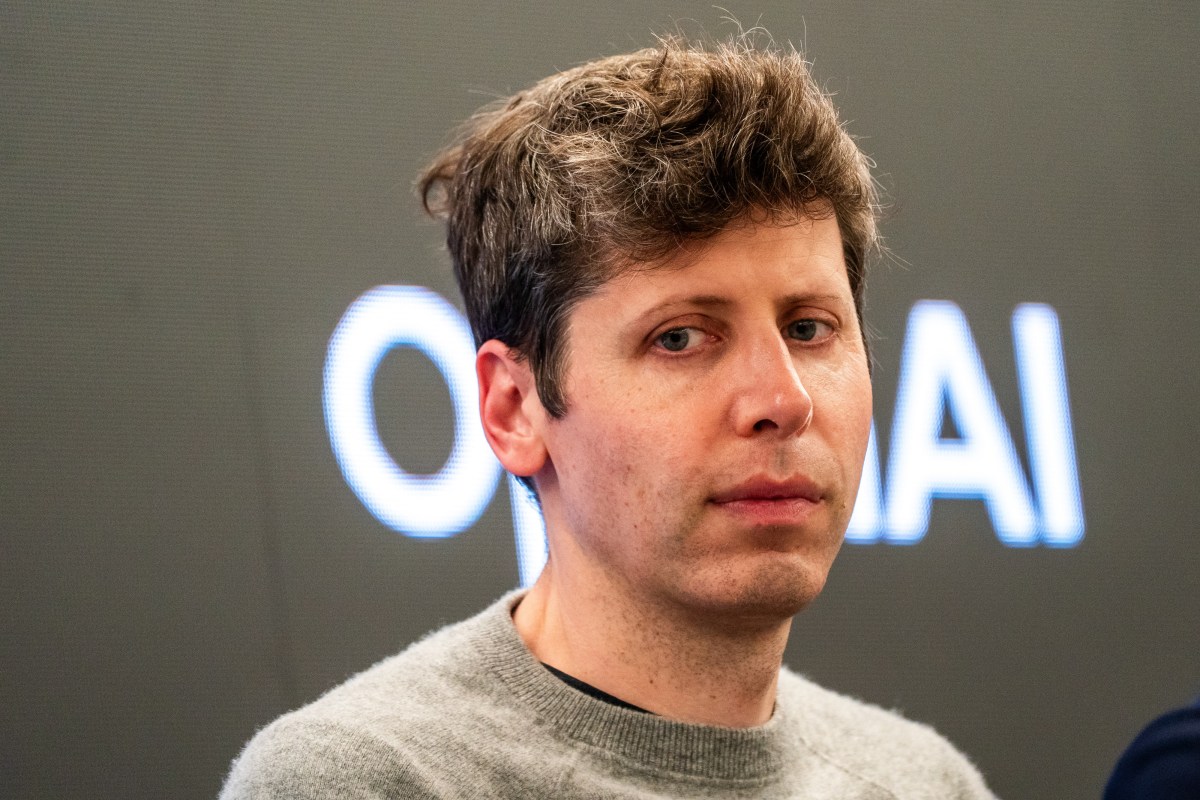
How Apple’s big lawsuit could disrupt OpenAI’s IPO plans
Apple filed a trade secrets lawsuit against OpenAI last Friday, and it’s not messing around. The complaint alleges a pattern of misconduct reaching all the way up to OpenAI’s chief hardware officer and claims more than 400 former Apple employees now work at the company. OpenAI’s response so far has been carefully hedged, and the timing couldn’t be worse with the company reportedly eyeing an IPO […]

Neil Rimer thinks the AI money is coming back out
Neil Rimer, the venture capitalist who co-founded Index Ventures, predicts the historic wealth AI is generating in Silicon Valley will have to be redistributed, voluntarily or involuntarily.

LG bets on India as its biggest AC base, as its third plant runs ahead of schedule
LG Electronics is on course to bring its third Indian plant online earlier than planned, a step that would make India the company's single largest air-conditioner production base and a springboard for exports across the Global South.

Why the first GPU financiers are turning to inference chips in a $400 million deal
A $400 million chip-backed loan points to the next wave of AI infrastructure deals.

Should we benchmark conceptual capabilities using judgment prediction tasks?
A bunch of conceptual reasoning tasks involve very subjective judgments, which makes them poorly suited for benchmarking AI capabilities. For example, it seems unreasonable to benchmark how well AIs can predict the probability of misaligned AI takeover. Perhaps instead we should measure capabilities by explicitly instructing the AI to predict a specified person’s judgment on this kind of question. (This quick document is aimed at people interested in benchmarking beneficial, urgent, and neglected conceptual reasoning capabilities. I don’t argue for this direction here, but in short it’s broadly aimed at making it so that at a given level of AI R&D speedup, AIs are less sloppy. See also here, here, here, and here.) For conceptual tasks with hard-to-resolve disagreement, it's unclear if judgment prediction is a suitable methodology for benchmarking—i.e., for tracking progress of frontier models over time. I imagine that using it as a benchmark would, in the best case, look like paying a
Kimi K3 AI breakthrough: What Wall Street analysts say about China’s OpenAI threat
Investing.com -- The global artificial intelligence race just experienced a seismic shift. Moonshot AI, a rising star in China’s tech ecosystem, has unveiled its Kimi K3 model, a gargantuan 2.8-trillion-parameter system that has triggered intense discussion across global markets. By matching—and in some developer arenas, beating—flagship American models on key leaderboards, K3 has forced Wall Street to radically rethink how fast domestic Chinese labs are closing the capability gap with the West.

As AI expands nanotech, Samsung fortifies ecosystem and LG pivots to chip equipment
Nanotechnology is increasingly seen as a key enabler in the AI era, with competition broadening from semiconductors, manufacturing to home appliances. At Nano Korea 2026 held in Goyang, South Korea, Samsung Electronics again highlighted its integrated semiconductor solutions, while the LG Group moved beyond home appliances to showcase its deployment in semiconductor equipment and materials.

Microsoft Wants Sales Team to Push Its Own AI Models Instead of Rivals OpenAI, Google and Anthropic: Report (UPDATED)
Microsoft Corp. has reportedly instructed its sales team on Tuesday to position in-house AI models above rival offerings from OpenAI, Alphabet’s Google and Anthropic, as part of a fiscal 2027 strategy session. Executive Vice President Jay Parikh told staff, “Everyone...

Why Apple Sued OpenAI, New York Takes on Data Centers, and What to Know about Cyclosporiasis
On today’s Uncanny Valley, we unpack OpenAI’s ongoing drama, both legal and reputational, and whether these developments could further hurt the company—particularly in its fight against Anthropic.

China’s Moonshot AI releases Kimi K3, the largest open-source model ever, rivaling top U.S. systems
Moonshot AI, the Beijing-based artificial intelligence startup backed by Alibaba, on Thursday released Kimi K3 — a 2.8-trillion-parameter model that the company says is now the largest open-source AI model in the world, and one that benchmarks show performs neck-and-neck with the most powerful proprietary systems from Anthropic and OpenAI. The release, timed to land just ahead of the 2026 World Artificial Intelligence Conference in Shanghai, is a dramatic escalation in the global AI arms race and a watershed moment for the open-source AI movement. It also marks a remarkable comeback for a company whose market position had eroded significantly over the past 18 months following DeepSeek's meteoric rise. Full model weights are scheduled to be released on July 27, according to details shared by researchers who reviewed the company's technical documentation. If you want to take Kimi K3 for a spin right now, you can — just head to kimi.com, sign up with a Google account or phone number (no c

Databricks hits $188B valuation, extending its run as AI’s favorite second act
Databricks has remade its image into an AI company and has published research on the cost savings of open weight AI models for coding.

Zuckerberg's plan to sell excess AI compute could finds its first big customer in Anthropic
Meta is reportedly in talks with Anthropic to rent out compute capacity from its data centers. The article Zuckerberg's plan to sell excess AI compute could finds its first big customer in Anthropic appeared first on The Decoder.

The Week’s 10 Biggest Funding Rounds: No Summer Doldrums As Dollars Still Flow To AI
It was not a holiday week on the funding front, as a raft of largely AI-focused companies closed big rounds. The largest of these was a $1.5 billion financing to enterprise AI startup Fireworks AI, and a Series D for meal and delivery provider Wonder.

With a $15 billion net worth, Palantir CEO Alex Karp predicts he will get 20x richer from AI—but that middle-class workers will get just modest raises
Palantir CEO Alex Karp expects his fortune to grow to $300 billion thanks to AI—he says the U.S “biggest problem” is wealth going to unrelatable tech bros.
TikTok is testing an AI likeness detection tool
TikTok is starting to test an opt-in tool that scans for AI likenesses and lets creators report them to the company, as spotted by social media consultant Matt Navarra. The tool is initially being tested with "some" US creators, TikTok US spokesperson Zachary Kizer tells The Verge. YouTube has been working on a similar tool and recently made it available to all adult users. Creators who are part of TikTok's test and want to use the tool will first have to verify their identity with a company called Jumio. You'll have to do a real-time selfie scan and an ID check, but Kizer says that "TikTok does not retain ID documents, and facial informati … Read the full story at The Verge.

Apple’s plot to crush OpenAI
Apple is suing OpenAI. The complaint is readable and intense, as these things often are, though many experts seem to think many of the allegations are just the ways things are done. So what does Apple really want here, and why is it picking such a public fight with OpenAI? On this episode of The Vergecast, Nilay and David go through the lawsuit, and look at Apple's history of splashy litigation to determine whether Apple is worried about a possible competitor or simply looking to capitalize on a weak moment for OpenAI. All this is happening as Apple ships the public betas of its new software, headlined by the new Siri AI, and we have though … Read the full story at The Verge.

'Wrong Picks or Just Bad Timing?' A Newbie Investor Wonders Why Their Stock Portfolio Fell 9%. Here Are the Stocks They Bought
Watching a new investment portfolio drop nearly 10% within days of buying can make anyone question whether they made a mistake. That’s exactly what happened to one beginner investor after a basket of technology and AI-related stocks fell sharply, leaving...

Nvidia, AMD, Mircon, TSMC Shares Sink as China Unveils Powerful New AI Model
AI Chip Stocks Under Pressure as China's Moonshot Challenges U.S. AI Leaders
AI news from 200+ sources
Get Started FreeModels & Gen AI

Capital One releases VulnHunter, an open-source AI tool that finds software flaws before hackers do
Capital One on Thursday released VulnHunter, an open-source, agentic AI security tool that scans source code for exploitable vulnerabilities, maps out how an attacker would reach them, and proposes targeted fixes — all before a single line ships to production. The tool, built internally and now available on GitHub under an Apache 2.0 license, is one of the most ambitious attempts by a major financial institution to turn offensive AI capabilities into a public defensive resource. The move marks a striking philosophical turn for a company still defined, in many boardrooms, by a 2019 data breach that compromised the personal information of roughly 106 million people across the United States and Canada and ultimately cost the bank an $80 million federal fine. Capital One is not simply releasing another vulnerability scanner. VulnHunter introduces what the company calls an "attacker-first forward analysis" — a workflow in which the tool begins at the points where a real adversary would ente

Brex built its AI agent policy by watching what agents actually do, not by writing rules first
OpenClaw has become one of the most widely adopted agentic frameworks, but it has yet to prove itself at enterprise scale. Agents need real credentials — API keys, OAuth tokens, service accounts — to work effectively, and Brex found that traditional guardrails couldn't contain what those agents were doing with them. Brex set out to overcome these limitations by building an internal platform it calls CrabTrap. The open-source HTTP/HTTPS proxy intercepts all network traffic, examines policy rules, and uses a LLM-as-a-judge to decide whether agent requests should be approved or denied. “What we noticed was that the network layer was an untapped enforcement point,” Brex co-founder and CEO Pedro Franceschi told VentureBeat. “Every request an agent makes is an opportunity to intercept, reason about, and make a policy decision.” The takeaway Franceschi wants IT leaders to draw: agent governance should shift from SDK-level permissions and model guardrails toward a centralized network control

Intuit scrapped its own AI agent architecture twice in four months. At VB Transform 2026, its AI VP called that the fast path
Intuit was an early pioneer in the usage of agentic AI, but its path to success has hardly been a straight line. At VB Transform 2026, Intuit VP of AI Nhung Ho described how the company rebuilt its agent architecture twice in the span of about four months, first moving from a fleet of specialist agents to a central orchestration layer, then abandoning that layer for a skills and tools based system once the orchestrator itself started failing under its own complexity. The full second rebuild took 60 days, with a first working version in under 20. The failure mode that forced the second rewrite was specific. Agents in the orchestrated system passed results to each other in natural language, and each handoff lost context the next agent needed to act correctly. "If you have 10 agents and they all are passing to each other, every time that pass happens, error compounds," Ho said. Why the orchestration layer broke down Ho said the original push toward specialist agents came from a straightf
Transform your sales organization with Amazon Quick: your new agentic AI teammate
In this post, we walk through a few ways that Quick delivers on this promise. We cover the entire sales cycle, from identifying your highest-priority prospect, contacting them, working the deal to close, and keeping the CRM up to date as the account matures, while protecting your scarcest resource: your time.
 Amazon AI Blog
SAM – An open-source AI agent that runs on your own machine
Article URL: https://github.com/richhabits/sam Comments URL: https://news.ycombinator.com/item?id=48942440 Points: 1 # Comments: 0
Robotics
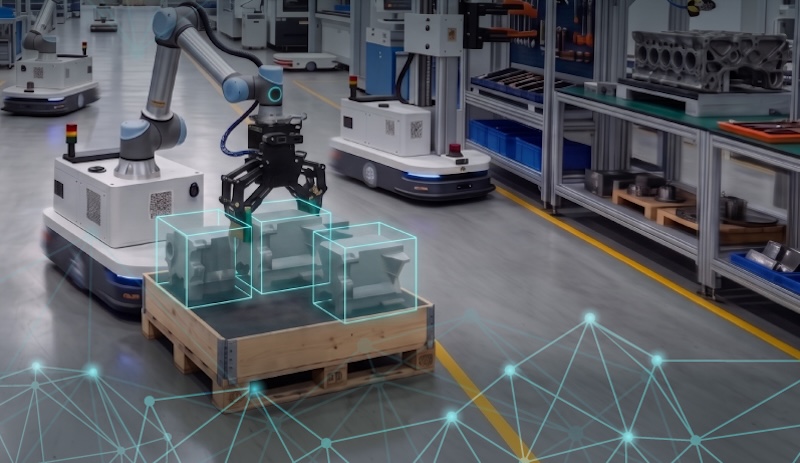
Aetina adds support for Nvidia Jetson T3000 and T2000 AI modules
Edge AI computing specialist Aetina plans to expand its portfolio of Nvidia Jetson Thor-based systems with support for the newly announced Nvidia Jetson T3000 and T2000 modules, targeting robotics and industrial edge AI applications. The company says its upcoming DeviceEdge AIE-KT fan-based systems and new AIE-PT fanless platforms will support the new system-on-modules, providing customers […]

How to Benchmark Your Development System Before Running Robotics Simulations
The process of building a robot doesn’t begin on the factory floor. Long before a robotic arm picks up its first component or an autonomous vehicle navigates a test route, engineers rely on robotics simulations to validate the design, refine control algorithms, and reveal potential issues. These virtual environments can be just as demanding as […]