← 記事一覧に戻る

Study finds multi-agent AI systems more vulnerable to attacks than single agents across three environments
arXiv cs.MA (Multi-Agent) · 2026年4月28日
AI要約
- •Researchers evaluated 13 architectural configurations of multi-agent systems (networks of two or more autonomous AI agents) across browser, desktop, and code environments, using stagewise evaluations to measure planning refusal, execution-stage interception, partial harmful execution, and successful attack completion.
- •Multi-agent architectures were more vulnerable than standalone agents in the majority of configurations, with attack success rates varying by up to 3.8x at comparable or higher benign accuracy. Three key design choices shaped the security tradeoff: agent roles (how authority and responsibility are allocated), communication topology (how and when agents interact), and memory (context and state visibility accessible to each agent).
- •No single multi-agent design was found to be universally safer, indicating that architectural decisions governing agent coordination create attack surfaces that have not been systematically characterized until this empirical study.
関連記事
大規模言語モデル
Atlassianが2026年4月にGoogle Cloudとの多年パートナーシップを拡大し、Gemini 3 FlashモデルとGoogle Workspaceの深い統合によってRovo AIプラットフォームを強化
Yahoo Finance AI·2026年4月28日
大規模言語モデル
OpenAI loosens Microsoft exclusivity to distribute via Google TPU and AWS; Xiaomi open-sources MiMo-V2.5 with 1M-token context; Sakana's 7B Conductor orchestrates frontier models to reach 83.9% on LiveCodeBench.
Latent Space·2026年4月28日
大規模言語モデル
Article body unavailable — unable to generate summary
Hacker News·2026年4月28日
大規模言語モデル
QuickDef:GPT-4o-miniを使い文脈に応じた定義を提供するChrome拡張機能
Hacker News·2026年4月28日
大規模言語モデル
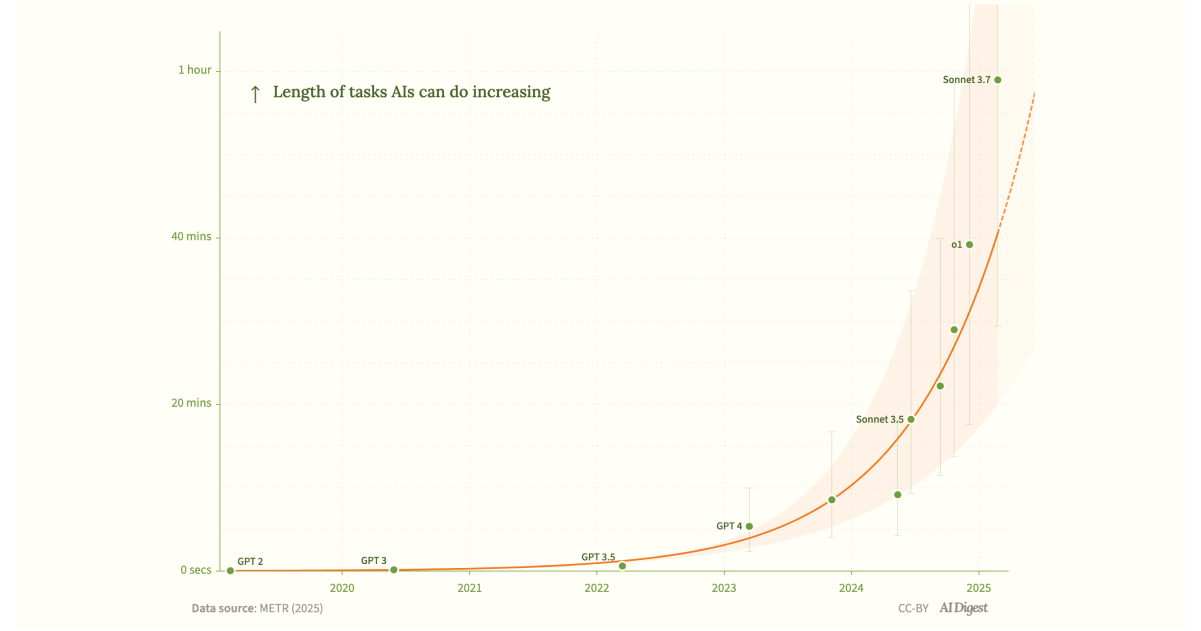
AI agents' task complexity is doubling every 4 months, with time horizons growing exponentially from 30 seconds in 2022 to 14+ hours today
Hacker News·2026年4月28日
AIニュースを毎日お届け
200以上のソースから厳選したAIニュースを毎日無料でお届けします。
無料で始める