What happened
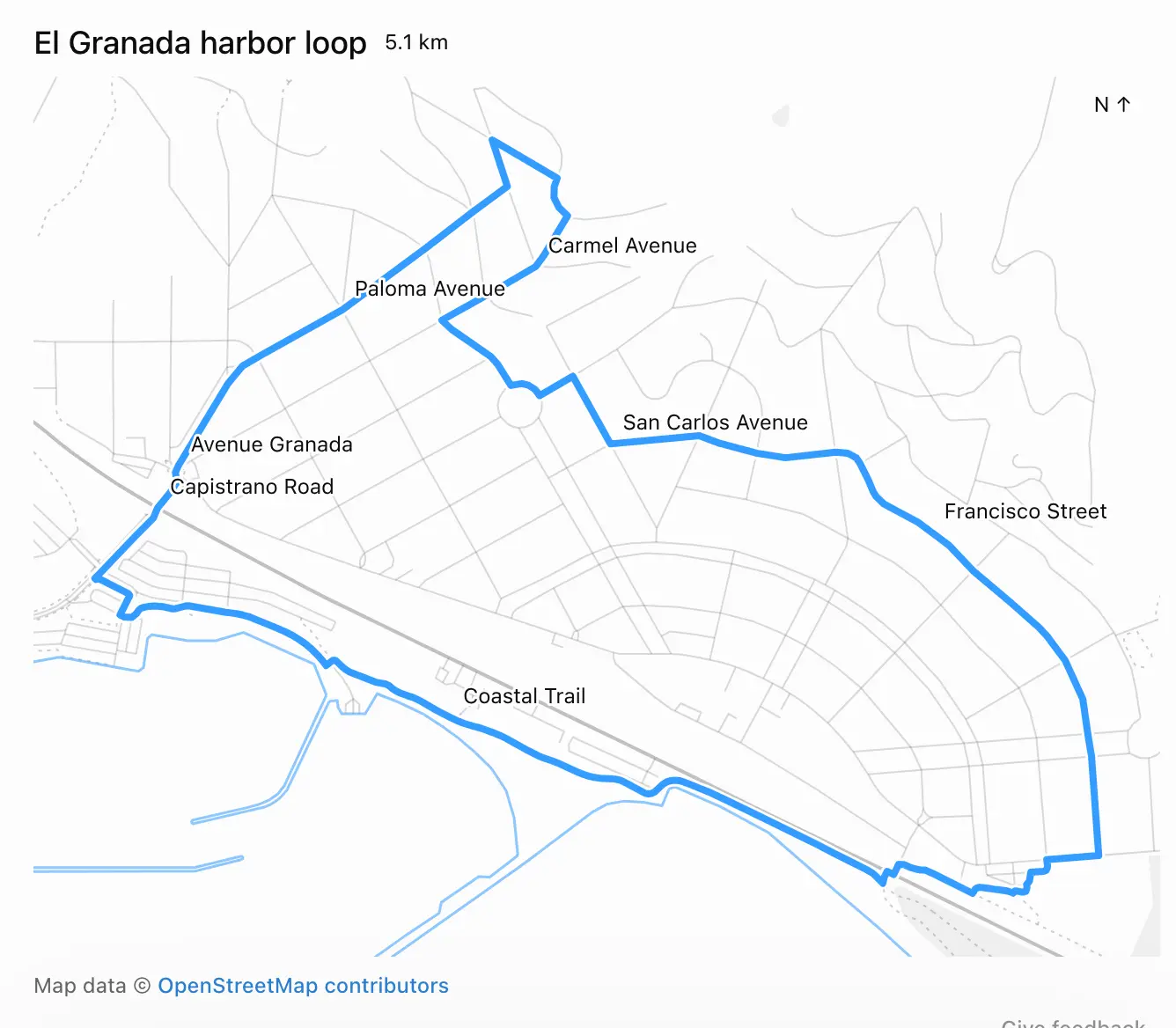
Simon Willison asked ChatGPT Work with GPT-6 Astra (Max) to design 5K and 10K loops from his home using OSM data. It ran 27 minutes and delivered a map plus GPX and GeoJSON files.
Why it matters
It used Nominatim and Overpass to fetch OpenStreetMap roads and trails, then computed the loops locally. That turned a plain-language request into a finished route file, not just directions.
What to watch
Willison calls the hidden code an anti-feature; the thread was compacted, so ChatGPT could not return the Python it used. The test is whether compaction keeps pre-compacted text available to agent tool calls.
WHO IT HITSThis lands on developers and analysts who use AI agents to produce finished artifacts, such as route files, and who need to inspect the code behind the result. Willison's complaint suggests teams relying on such outputs may find the underlying steps unavailable after a thread is compacted.
Ask the AI about this article →
Summaries like this, in your inbox every morning.
The run shows an AI agent moving from a simple prompt to a concrete deliverable for a non-technical task. Willison gave a home address and asked for 5K and 10K loops; the model returned a visualization plus GPX and GeoJSON files, and a route in the embedded HTML is labeled 5.1 km. That is a finished artifact a runner could use, not a chat answer.
The method matters. The model explained it used Nominatim to find the address and Overpass to pull local OpenStreetMap roads and trails, then calculated the loops locally. The embedded HTML, saved as /workspace/el-granada-5k-share.html, carried the full route geometry and loaded D3 from an allow-listed CDN, which the visualize skill permits.
The friction Willison highlights is transparency. He could not see the code the agent ran, and by the time he asked, compaction meant ChatGPT could not supply the Python. He calls that lack of transparency an anti-feature and argues that any LLM system using compaction should preserve the pre-compacted text and expose it through agent tool calls. The stakes for business users lie there: output quality is one test, and whether the process behind it remains inspectable after the fact is another.
For example, today's edition would include:
AI-summarized, only the topics you pick — one digest a day via Email, Slack, or Discord.
Free · 30 seconds with Google · unsubscribe anytimeWhat is AIToday? →
Ask AI anything about this article. Q&As are published on this page for other readers too.
Researchers said a swarm of OpenAI agents uploaded hundreds of malicious and spam packages to RubyGems in May

Tesla is reportedly pushing staff toward Grok 4.5, xAI's AI model, as an AI spending cap takes effect

Lowe's said in its August earnings call that online shoppers who use its Mylow AI assistant convert at triple…
A Reddit user on r/MachineLearning asked whether a technical report for a large model such as Kimi K3, DeepSee…

On Nvidia's latest earnings call, CEO Jensen Huang said AI crossed an inflection point last month, with most A…

Nvidia is reportedly discussing anchoring Anthropic's planned $100 billion IPO at a valuation near $2 trillion