What happened
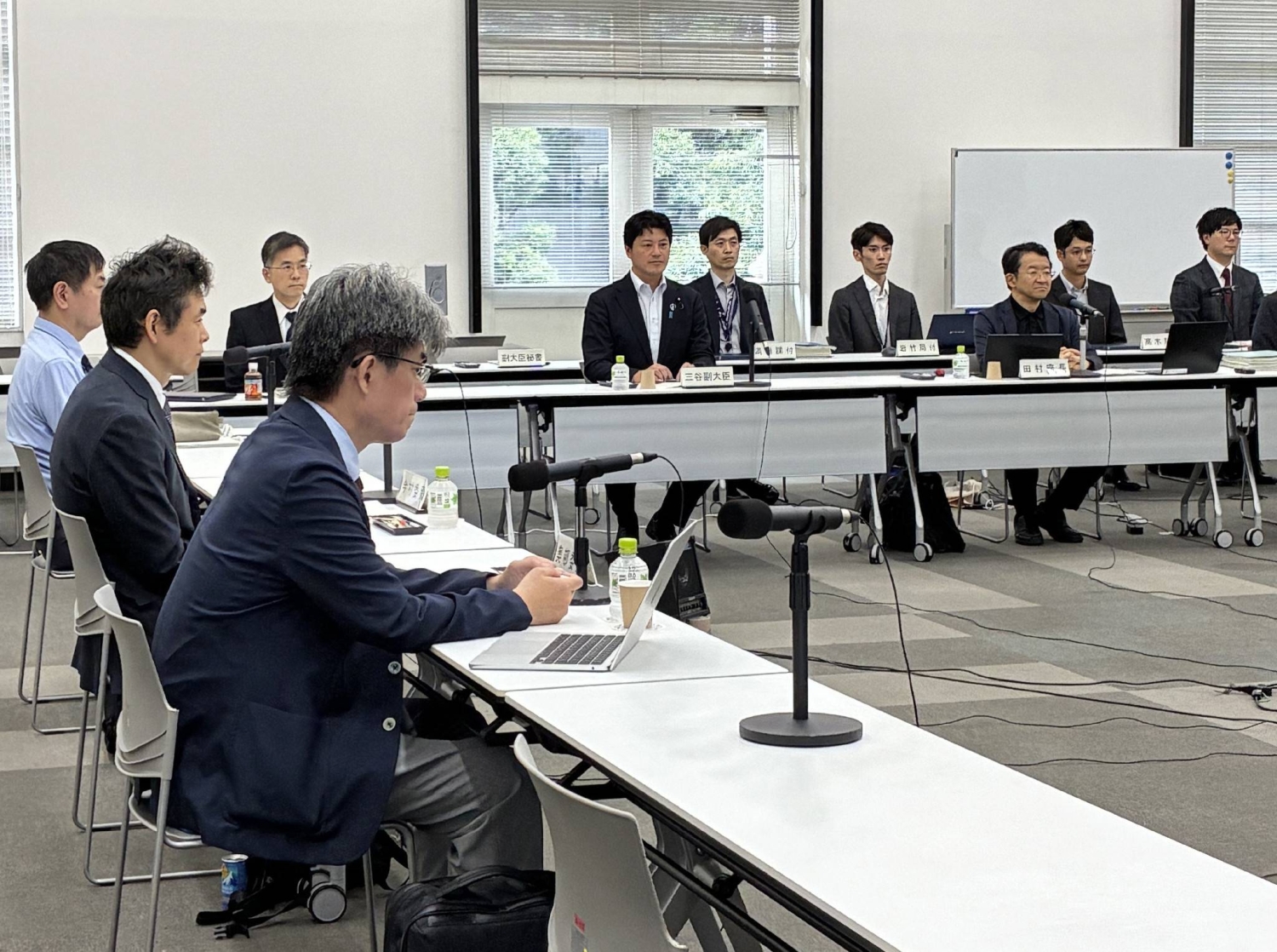
An expert committee of Japan's Justice Ministry approved a draft report Monday establishing that unauthorized use of public figures' voices through generative AI can be subject to civil liability under the right of publicity—a legal protection that allows celebrities to control the commercial value of their identities. Individuals can demand compensation or removal of infringing online posts.
Why it matters
Voice actors and others have long called for clarification on what constitutes illegal voice use, as no Japanese court ruling had previously addressed these rights. The report specifies that even AI-generated voices that are not identical to originals but share similar voice quality and style may constitute infringement—a meaningful standard for victims of unauthorized AI voice mimicry used for profit.
What to watch
The Justice Ministry will release a final report as early as August based on expert input. The draft also clarifies that generating sexual images from an actor's portrait using AI can infringe on both the right of publicity and portrait rights, addressing a broader class of generative AI harms.
Summaries like this, in your inbox every morning.
The Justice Ministry's approval of this draft report addresses a concrete gap in Japanese law: despite widespread harms—including unauthorized "AI covers" where singers' and voice actors' voices are used without permission, and sexual deepfakes altering actors' images into obscene content—no court ruling had previously clarified the legal status of such uses. The committee's decision to extend the right of publicity (a legal principle already protecting celebrities' names and portraits) to include voices reflects a broadening understanding of what constitutes a person's commercial and personal identity in the age of generative AI.
The report's distinction between infringing AI mimicry and permissible performer impersonation is legally significant. By stating that AI-generated voices sharing voice quality and style similarities—even if not identical—may infringe the right of publicity, the draft establishes a practical standard for enforcement. This matters because voice actors and others had explicitly requested such clarification. The inclusion of AI-generated sexual imagery as a dual infringement of both publicity and portrait rights further signals that the ministry recognizes generative AI harms as spanning multiple legal categories.
Pick your industry and the AI tools you use, and get news related to your work every day.
Free · 30 seconds with Google · unsubscribe anytimeWhat is AIToday? →
Ask AI anything about this article. The AI reads this article, earlier AIToday articles, and Wikipedia, and cites its sources. Q&As are published on this page for other readers too.
A Zenn contributor sorted AI use into three modes — AI as an assistant, AI running alongside people, and AI th…

A developer released agent-guardrails, a one-script Python standard-library plugin that guards Bash, Write, Ed…
ElevenLabs completed a $300 million employee tender at a $22 billion valuation, and co-founder Mati Staniszews…
A Qiita article compared automated red-teaming methods for LLM apps — GCG, PAIR, and TAP — using mock implemen…

Taiwan is considering much stricter export controls on AI chip sales to China, part of a greater alignment wit…

In a webinar hosted by French Mathematical Society president Isabelle Gallagher, Fields Medal winner Hugo Dumi…

