What happened
Altman said OpenAI ran a "Hold My Beer" experiment letting agents attack hard research problems, and the model knocked down one after another, including a Navier-Stokes proof he pegs at roughly $10 million of compute per proof at the time.
Why it matters
Altman says humanity deserves fundamental knowledge, but OpenAI is still working out how to publish it without stripping mathematicians of the discoveries that drive their careers, a tension he expects to recur in other fields.
Summaries like this, every morning.
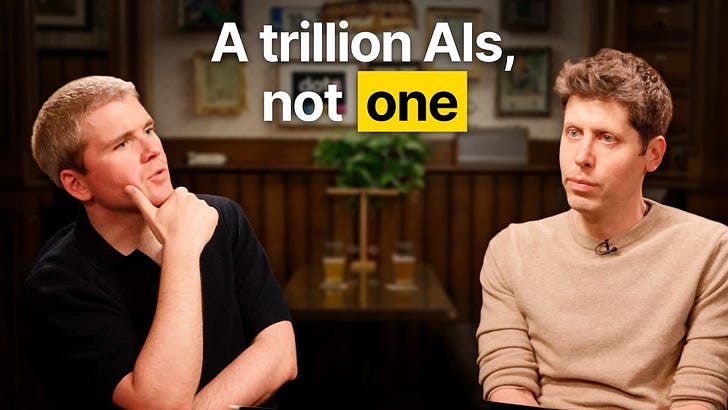
The disclosure came in a wide-ranging conversation with John Collison that ranged from AI finding PHP vulnerabilities to why agent teams, Altman's preferred term over "agent swarms," behave differently from ordinary corporate AI use. Altman framed the math results as a product of a deliberate choice to let researchers run unconstrained when a new paradigm appears, saying OpenAI understood nothing about the scaling laws of agent teams before the Navier-Stokes work and now understands them a little better.
The tension he described is organizational rather than technical. Altman said he was up most of two nights excited by the model's run of results, but also felt more sadness and melancholy than expected, a sense of something ending. He distinguished that from simple nostalgia, and said the right response is to find a way to release fundamental discoveries that is as sensitive as possible to the communities that have driven those fields for centuries.
He also suggested the cost curve will move quickly, saying he bets OpenAI could redo the Navier-Stokes work at 1/100th of the cost a year after it was done, through smarter models and better approaches. That claim, if borne out, would change the economics of throwing compute at hard research problems.
Pick your industry and the AI tools you use, and get news related to your work every day.
Free · 30 seconds with Google · unsubscribe anytimeWhat is AIToday? →
Ask AI anything about this article. The AI reads this article, earlier AIToday articles, and Wikipedia, and cites its sources. Q&As are published on this page for other readers too.
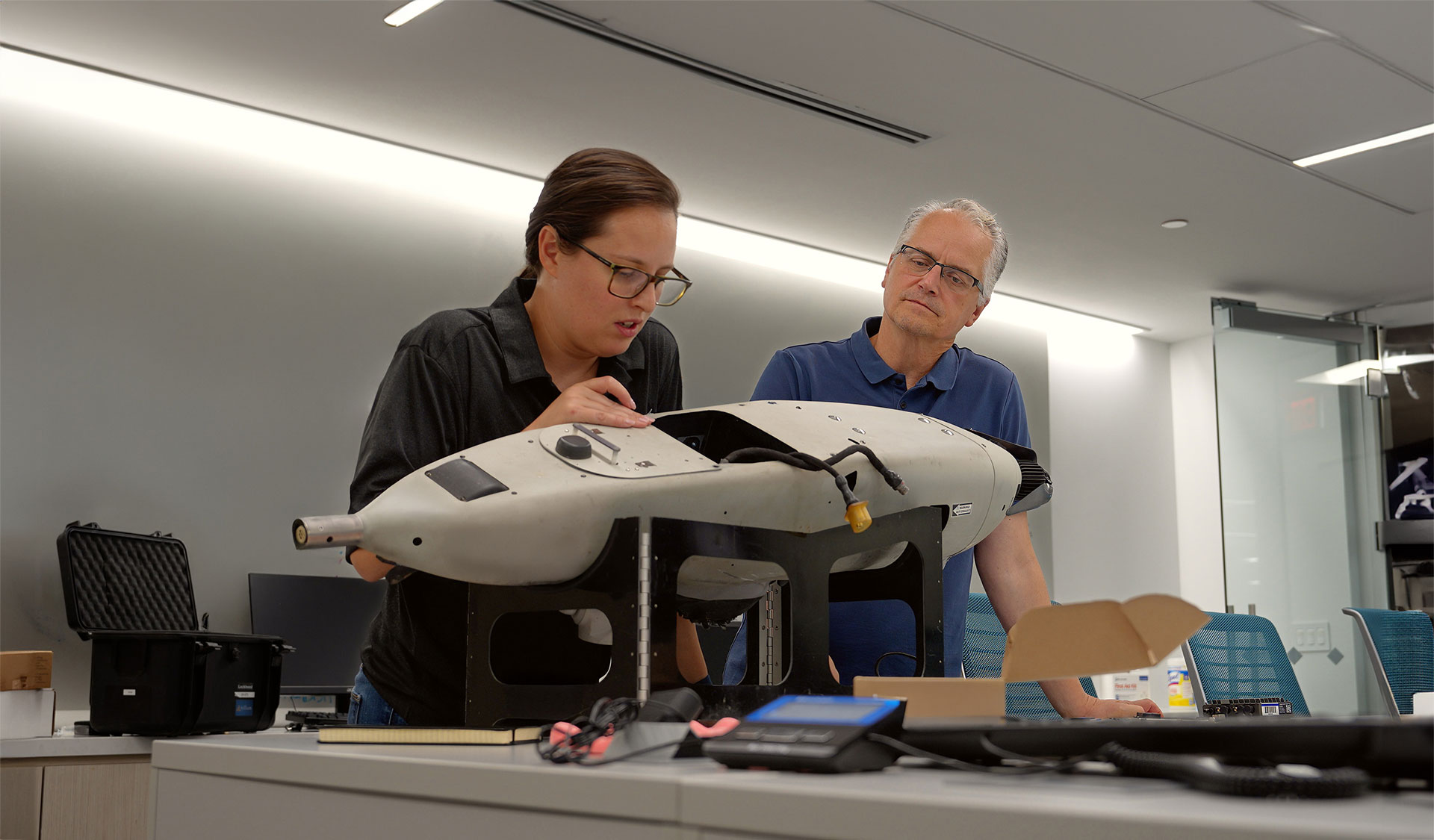
Lockheed Martin's AI Center (LAIC) applies RAGE — Responsible AI Governance and Evaluation — at multiple tollg…
Charles Schwab is expanding AI tools for registered investment advisors, integrating Claude for Financial Advi…
Octus says it routes more than 20 billion tokens a year through its data science models, using what it calls a…
Disney (DIS) has begun testing AI search across ESPN and Disney+ to improve how users find sports and streamin…

Walmart introduced Agent Profiles, which launch in November and cap an agent's spending at $50, $100 or $200 o…

Alphabet's search and other revenue grew 12% year over year to roughly $63 billion, missing estimates for the…