What happened
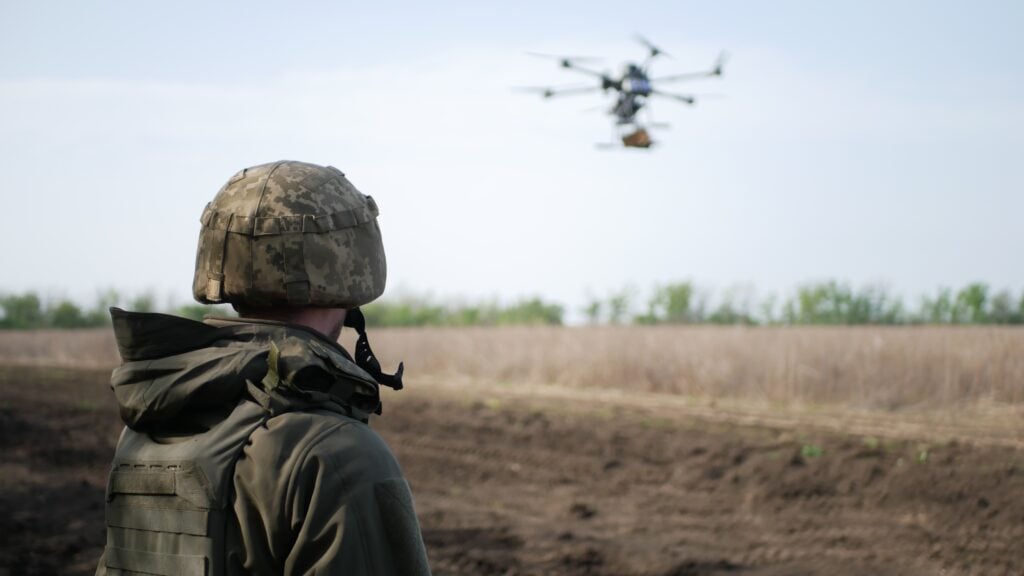
Shield AI, a San Diego startup, signed a memorandum of understanding with Honeywell to combine Honeywell's certified avionics, navigation and sensing technologies with Shield AI's Hivemind autonomy software. The partnership comes days after Shield AI acquired Aechelon, a California software company that trains military pilots.
Why it matters
Proving that AI-powered aircraft can be trusted by regulators, military operators and commercial customers is one of autonomous aviation's biggest hurdles. By pairing certified flight systems with autonomy software, the two companies aim to engineer trust into the architecture—a shift that reflects how aerospace software companies are increasingly partnering with established hardware providers to credibly deploy AI in aviation.
What to watch
The companies will jointly pursue unmanned aircraft opportunities for defense customers worldwide and explore future commercial transportation applications. Shield AI's private share valuation is estimated at $13.2 billion(約2.1兆円) by Forge Global, slightly above its March fundraising valuation.
Summaries like this, in your inbox every morning.
Shield AI's partnership with Honeywell represents a strategic convergence in defense aerospace: the startup is building an integrated autonomy platform by combining software expertise with certified hardware systems. The timing is significant—the Honeywell deal follows immediately after Shield AI's acquisition of Aechelon, a pilot training software maker. Together, these moves position Shield AI across multiple layers of autonomous flight: the training environments (Aechelon), the autonomy decision-making (Hivemind), the aircraft platforms (V-BAT and X-BAT), and now the certified avionics and sensing backbone (Honeywell). This end-to-end stack addresses a critical bottleneck in military and commercial autonomous aviation: regulators and operators need verifiable proof that AI systems are trustworthy, not just that they can fly aircraft. By anchoring Hivemind in Honeywell's certified, auditable avionics architecture, Shield AI and Honeywell aim to make that trust demonstrable rather than theoretical. The sustained investor enthusiasm—Shield AI's valuation has held above its March 2025 level despite recent fundraising—suggests confidence that this layered approach to "trusted autonomy" meets a genuine market need in defense technology.
Pick your industry and the AI tools you use, and get news related to your work every day.
Free · 30 seconds with Google · unsubscribe anytimeWhat is AIToday? →
Ask AI anything about this article. The AI reads this article, earlier AIToday articles, and Wikipedia, and cites its sources. Q&As are published on this page for other readers too.
Chunghwa Telecom president Rong-shy Lin said the shift from conversational AI to autonomous AI agents is resha…
CoreWeave fell 5% in premarket trading Friday and was on track to finish the week down 15%, after rebounding f…
Apple and Meta said they would jointly release a new open-weight AI model designed to run on high-end Macs, ai…
Investors put $38.5 billion into Asian startups in Q3, per Crunchbase data

A longtime Anthropic investor told Fortune he expects shares priced around $1.8 trillion, below the company's…
In Q2, billionaires or their funds sold six 'Magnificent Seven' AI stocks