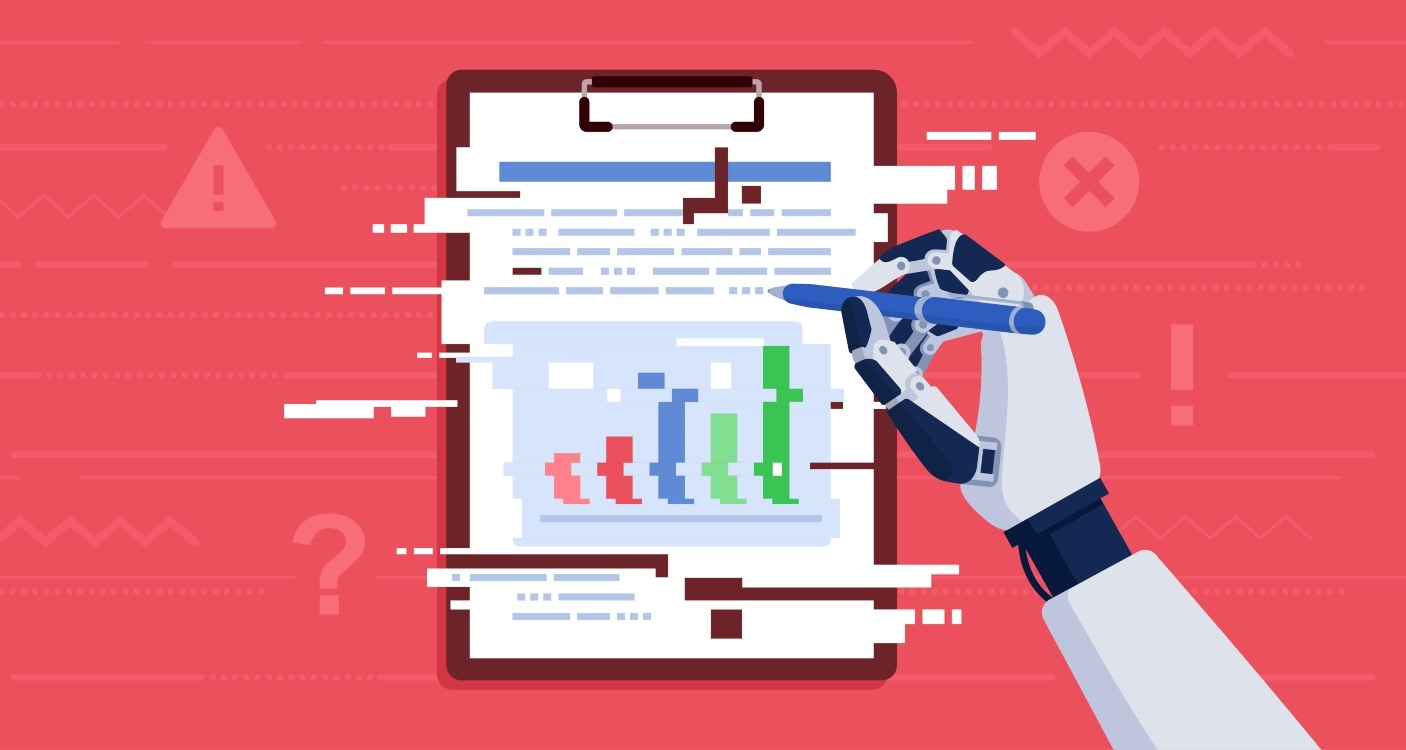
A new framework addresses how businesses can use AI reliably by implementing three layers of protection: setting standards before prompting, structuring requests for better results, and verifying answers before acting.
The guide defines AI hallucinations as fluent but factually wrong outputs that arrive polished and confident, making them particularly risky for SMBs facing decisions on strategy and spending.
Rather than eliminating AI, the framework pairs human judgment with AI support, using concrete metrics, evidence requirements, and explicit permission to say "I don't know" to build trustworthy workflows.
What happened
A practical guide outlines a three-layer framework—Foundations (prompt design), Workflows (structured prompts), and Final Checks (verification)—to reduce AI hallucinations in business use. The framework emphasizes constraining scope, requiring evidence tied to named sources, asking for ranges instead of absolutes, and spot-checking claims before acting on them.
Why it matters
For SMBs, unreliable AI outputs can lead to wasted spending, flawed strategy, and decisions built on fiction. AI hallucinations arrive polished and confident, making them particularly risky because they rarely announce themselves as wrong. The guide argues that accountability—not just eloquence—requires a system, and that human judgment paired with AI support (not replaced by it) is necessary when outputs shape strategy, spending, or executive decisions.
What to watch
The guide offers five practical prompting strategies: framing tasks as fact-driven, explicitly blocking fabrication, anchoring answers to real metrics, classifying findings (verified research, best practice, emerging trend), and ending with a self-check that identifies failure modes. It also warns that benchmarks in domains like SaaS vary widely by segment and region, so ranges and segmentation are critical—generic answers like "a conversion rate is always 5%" should trigger skepticism.
Ask the AI about this article →
AI has become embedded in everyday business operations—drafting emails, summarizing research, analyzing performance, and answering complex questions. The core tension is that AI can feel like a force multiplier when used well, but carelessly deployed, it becomes a generator of expensive nonsense dressed in confident prose. For SMBs, the stakes are concrete: bad outputs lead to wasted spending, flawed strategy, and decisions built on fiction.
The guide's central insight is that hallucinations are dangerous precisely because they do not announce themselves. They arrive polished and authoritative, which makes a well-structured response process essential. The three-layer framework—Foundations, Workflows, and Final Checks—shifts the burden from hoping AI outputs are correct to building systems that make hallucinations harder to miss or act upon. This is not about making AI less powerful; it is about making it trustworthy enough to use for business-critical decisions.
A recurring theme is the importance of constraint calibration. Overly vague prompts drift into generic filler; overly narrow ones force the model to invent specifics to satisfy an impossible request. The framework advocates for the "Goldilocks zone"—specific enough to be useful, realistic enough to be answerable. The guide also emphasizes that human judgment and AI support are both necessary, paired together rather than in sequence or substitution. If the output shapes strategy, spending, or executive decisions, it should be strong enough for a machine to accelerate and important enough for a person to challenge.
For example, today's edition would include:
AI-summarized, only the topics you pick — one digest a day via Email, Slack, or Discord.
Free · takes 30 seconds · unsubscribe anytimeWhat is AIToday? →
Ask AI anything about this article. Q&As are published on this page for other readers too.
Israeli startup DataAgent Ltd
SK Hynix presented a custom HBM concept at SEMICON Taiwan 2026, where compute functions are placed in the base…
The U.S. Department of Defense announced on August 31 that it has deployed ChatGPT Mil, a customized version o…

Nvidia reported earnings that were both remarkable and boring, reflecting its focus on avoiding a consolidated…

Anthropic has agreed to a $35bn cloud-computing contract with Lambda, a Nvidia-backed cloud provider

The Consumer Affairs Agency said Tuesday it will use generative AI to analyze about 900,000 annual consultatio…