
What happened
Defense Intelligence Agency, National Geospatial-Intelligence Agency, and FBI officials said at the DoDIIS summit this week that their agencies are moving deliberately toward agentic AI (AI systems that act autonomously on tasks). DIA is running a 90-day sprint to build its first enterprise AI platform and adopting Model Context Protocol, an open-source standard for connecting AI to external systems. DIA is retooling its ChatDIA capability to support agents. NGA established an AI and Data Return on Investment Tracking task force. FBI reported 139 AI use cases overseen by an AI Review Board.
Why it matters
Intelligence agencies see agentic AI as essential for moving beyond chatbots, but they face significant hurdles: acquisition challenges, security risks, and the need to balance speed with thoroughness. DIA emphasized it is "in the very early stages" and cannot "just jump and deploy into agents" without building underlying infrastructure first. NGA highlighted that data readiness is critical—"data and AI are inextricably linked." FBI officials acknowledged they must test heavily with human backstopping before deploying AI in operational use. These deliberate timelines suggest the sector recognizes that premature deployment could create compliance, security, and trust problems.
What to watch
DIA has accelerated its acquisition process using other transaction agreements, completing eight or nine in weeks or days rather than months or years. FBI is using broad agency announcements and cooperative research and development agreements to connect with technology experts and make faster, more informed contracting decisions. Both approaches signal intent to speed deployment while maintaining oversight—success will depend on whether this balance holds as agencies move from pilots to mission-critical use.
Summaries like this, in your inbox every morning.
Intelligence agencies recognize agentic AI as a strategic capability and are actively moving toward it, but the speaker statements reveal a tension between urgency and caution. DIA's 90-day sprint to build an enterprise AI platform and adoption of Model Context Protocol signal serious intent, yet Kinney's repeated emphasis that "we're in the very early stages" and "we're not there yet with agents" underscores how nascent this transition remains. The staged approach—pairing agents with legacy data before mission use cases—reflects awareness that autonomous systems operating in classified, high-stakes environments carry irreducible risks: compliance violations, security breaches, or unpredictable agent-to-agent interactions could have national security consequences. NGA's establishment of an AI and Data Return on Investment Tracking task force points to a secondary concern: AI systems are only as good as their data inputs, and ensuring data readiness across legacy intelligence infrastructure is a longer, less visible problem than building the AI layer itself.
All three agencies have begun using non-traditional acquisition pathways—other transaction agreements, cooperative research and development agreements, and broad agency announcements—to compress timelines from years to weeks. This suggests the agencies are not waiting for a perfect regulatory or technical framework; they are acquiring and testing in parallel. However, the FBI's emphasis on an AI Review Board vetting all non-routine applications, case-by-case risk assessment, and "backstopping or paralleling with a human process" reflects the standard operating model for now: AI as a tool whose outputs must be verified before operational use, not as an independent agent.
Pick your industry and the AI tools you use, and get news related to your work every day.
Free · 30 seconds with Google · unsubscribe anytimeWhat is AIToday? →
Ask AI anything about this article. The AI reads this article, earlier AIToday articles, and Wikipedia, and cites its sources. Q&As are published on this page for other readers too.
Taiwan is considering much stricter export controls on AI chip sales to China, part of a greater alignment wit…

Circlia started a proof-of-concept for TASTE SIGNAL: visitors to Holland Village Cafe FUKUOKA taste cookies an…

In a webinar hosted by French Mathematical Society president Isabelle Gallagher, Fields Medal winner Hugo Dumi…

NVIDIA released Nemotron 3.5 Super VL, an open-weight model with 120 billion parameters that handles text, ima…

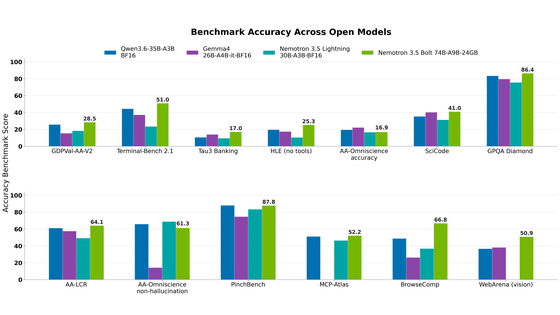
NVIDIA released Nemotron 3.5 Bolt 74B-A9B 24GB, an AI model for local agents that hits over 80 tokens per seco…
Anthropic said on October 15 it has started giving METR's six staff company devices, office space and access t…