
What happened
Chinese AI startup Zhipu AI released GLM-5.3, built on the same base as GLM-5.2 with improvements from extended post-training. The company claims it is the most powerful open-weights coding model, with the largest gains in agent-based tasks. Model weights will go open source in two weeks after security reviews complete.
Why it matters
Zhipu trained GLM-5.3 on vulnerability-detection data and environments, addressing a known weakness of Chinese models in cybersecurity compared to US frontier models. Working with Chinese security teams, the model found 2,436 vulnerabilities across 269 projects, some up to 40 years old, and can now reason across multiple stages of exploitation to form coherent exploitation chains.
What to watch
GLM-5.3 is available now through the GLM Coding Plan and works with coding agents including ZCode, Claude Code, and OpenCode. The open-source weights release is scheduled for two weeks from the announcement, pending completion of security reviews.
Summaries like this, in your inbox every morning.
Zhipu AI's release of GLM-5.3 represents a targeted effort to close a documented gap between Chinese and US frontier AI models: cybersecurity capabilities. While models like Kimi and Qwen lag behind US counterparts in this area, Zhipu designed GLM-5.3 with specialized training on vulnerability-detection tasks. The model's ability to reason across multiple stages of exploitation—forming coherent plans for complete exploitation chains—signals a maturation in how Chinese models can handle security-focused reasoning. The 2,436 vulnerabilities discovered across 269 projects, documented in a public registry, suggest the training was rigorous and empirically grounded. By building these improvements on the same base as GLM-5.2 and deriving gains purely from post-training, Zhipu has signaled an efficiency-focused development path, in contrast to larger architectural redesigns that characterize some competitor releases.
Pick your industry and the AI tools you use, and get news related to your work every day.
Free · 30 seconds with Google · unsubscribe anytimeWhat is AIToday? →
Ask AI anything about this article. The AI reads this article, earlier AIToday articles, and Wikipedia, and cites its sources. Q&As are published on this page for other readers too.
NVIDIA released Nemotron 3.5 Super VL, an open-weight model with 120 billion parameters that handles text, ima…

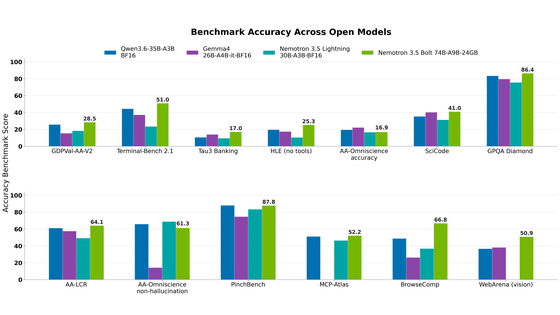
NVIDIA released Nemotron 3.5 Bolt 74B-A9B 24GB, an AI model for local agents that hits over 80 tokens per seco…
Black Forest Labs released FLUX 3 Image Klein as open weights on October 15, 2026 — a 5.6B-parameter model for…

PrismML released Ternary Bonsai 2 2B, 4B and 9B on October 15, 2026, remade from Qwen3.5 to process in three v…

In a Zenn article, EC自動化工房 laid out a pre-generation cleanup step for product masters, adding notation rules t…

Three one-line requests and three requests with written completion criteria to Claude Code produced functional…

