What happened
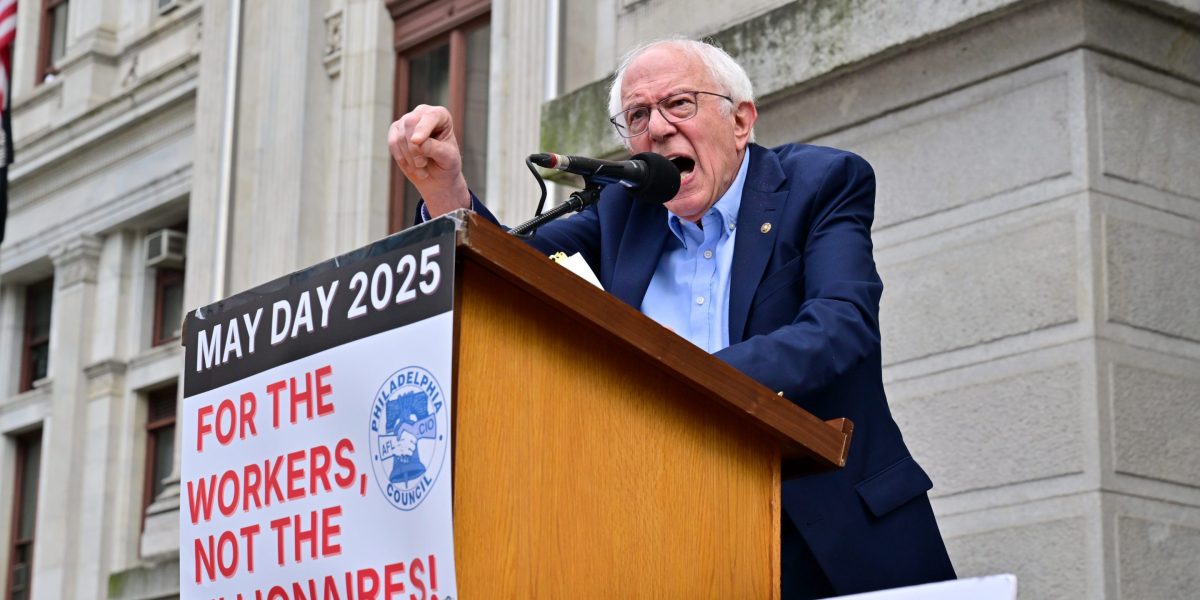
Sanders and Rep. Mark Takano reintroduced the Thirty-Two Hour Workweek Act, which would cut the standard week from 40 to 32 hours and require overtime beyond that.
Why it matters
Starting at least six months after enactment, the overtime threshold would phase down to 32 hours over four years, and employers could not cut affected workers' weekly pay or benefits because of the change.
What to watch
The bill now faces a Senate HELP Committee chaired by Bill Cassidy, who argued at a 2024 hearing that added labor costs could raise prices and threaten thin-margin businesses.
WHO IT HITSNonexempt employees covered by federal overtime rules stand to gain from a lower threshold, while employers—particularly those operating on thin margins—would face new overtime costs or need to shorten schedules.
Ask the AI about this article →
Summaries like this, in your inbox every morning.
Sanders's pitch draws a direct line from the labor battles of the late 19th century to today's AI boom. Eugene V. Debs, whom the article describes as one of the country's biggest proponents of the shortened workday, argued in an 1890 essay that shorter hours were a matter of basic dignity. Ford Motor Company established a five-day, 40-hour week for factory workers in 1926, and Congress cemented the 40-hour standard through the Fair Labor Standards Act in 1938. Sanders now argues that standard has outlived the economy it was built on.
The proposal arrives as companies race to use generative AI to produce more work with fewer people. The article cites Economic Policy Institute data showing that since 1979 net productivity climbed roughly 90% while typical workers' hourly pay rose about 33%—a gap shorter-workweek advocates cite. A six-country study of nearly 2,900 workers at 141 companies, coauthored by Boston College sociologists Wen Fan and Schor with 4 Day Week Global, found that cutting schedules by about five hours a week led to less burnout and better health, job satisfaction, and work ability after six months.
The open question is whether those voluntary trial results can survive being written into federal law. Louisiana Sen. Bill Cassidy, who now chairs the Senate HELP Committee that would consider a Senate version, argued at a 2024 hearing that added labor costs could raise prices and threaten businesses on thin margins. Whether the bill advances may hinge on how that cost argument fares against the efficiency evidence from the trials—and on whether lawmakers accept Sanders's framing that the gains from AI should accrue to workers rather than only to executives and billionaires.
For example, today's edition would include:
AI-summarized, only the topics you pick — one digest a day via Email, Slack, or Discord.
Free · 30 seconds with Google · unsubscribe anytimeWhat is AIToday? →
Ask AI anything about this article. Q&As are published on this page for other readers too.
President Trump made a surprise onstage call to Nvidia CEO Jensen Huang at an event and dismissed AI safety co…

Citi says leading AI labs are deliberately pacing their innovation efforts to help shape AI regulation before…

Anthropic co-founder Jack Clark told NPR that AI companies need common safety standards and outside scrutiny…
Punchbowl News reports a progressive backlash aimed at Obama, Pelosi and Harris over AI money

Former Palantir engineer Alex Bores launched Who Decides with his former chief of staff, Anna Myers
The Commerce Department ordered Kalshi to unpublish its AI-compute future curve, citing national security