What happened
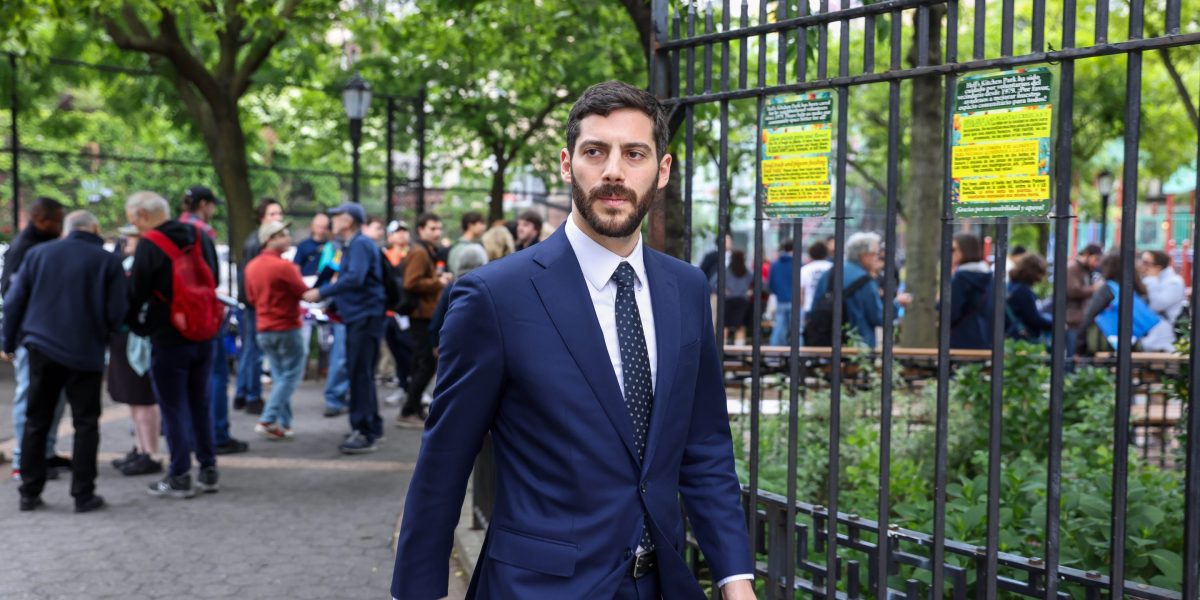
Former Palantir engineer Alex Bores launched Who Decides with his former chief of staff, Anna Myers. It has raised $10 million and aims to raise $20 million more in 2027.
Why it matters
A super PAC funded in part by OpenAI president Greg Brockman and Andreessen Horowitz spent more than $7.6 million against Bores over the RAISE Act. Total outside money in his race topped $40 million, yet he still lost.
What to watch
Bores said the group is targeting 11 battleground states through existing organizations, not by outspending Leading the Future. Watch whether it reaches its $30 million total ahead of 2028.
WHO IT HITSThis lands on Democratic AI policy advocates and organizers in the 11 battleground states Bores is targeting, who would gain a shared platform. It also affects AI industry donors and super PACs engaged in state-level races.
Ask the AI about this article →
Summaries like this, in your inbox every morning.
Alex Bores came to the AI regulation fight from an unusual direction: a former Palantir engineer who won a New York Assembly seat, co-authored the RAISE Act, and then ran for Congress on that record. His race became a proxy for the broader money battle over AI rules. Leading the Future, a super PAC funded in part by OpenAI president Greg Brockman and Andreessen Horowitz, spent more than $7.6 million against him over the law. Public First Action, with $20 million from Anthropic, spent on his side, and total outside money in the race topped $40 million, the most expensive House primary of the cycle. Bores lost anyway.
That defeat led to Who Decides, which he launched Tuesday with his former chief of staff, Anna Myers. The nonprofit has raised $10 million and aims to raise $20 million more in 2027, for a $30 million total ahead of 2028. Rather than trying to outspend the opposition, it plans to work through organizations already active in 11 battleground states and help them build their own agendas. Bores has said everyone who has reached out so far is a Democrat, though he is open to anyone.
The backdrop is a gap between public opinion and policy. Bores cited polling that 80% of Americans want more AI regulation across parties, though a February–March 2026 Annenberg survey put the figure lower, at 65% saying the government has done too little. The RAISE Act itself passed only after audits and whistleblower protections were stripped. A federal bill co-sponsored by Sens. Ted Cruz, Amy Klobuchar and John Thune may be the most likely to pass, but Bores told Fortune it is essentially Cruz's old bill in federal packaging, with the possibility of removing state AI laws. Whether Who Decides can hold together a coalition that often splits into separate fights is likely to determine whether it changes that dynamic.
For example, today's edition would include:
AI-summarized, only the topics you pick — one digest a day via Email, Slack, or Discord.
Free · 30 seconds with Google · unsubscribe anytimeWhat is AIToday? →
Ask AI anything about this article. Q&As are published on this page for other readers too.
Chevron jumped about 2.1% to $216.58 Tuesday afternoon as Brent crude climbed to $109.20 per barrel amid Saudi…
Walmart CEO John Furner is turning the retailer's 5,200 U.S

Coca-Cola President and CFO John Murphy told Yahoo Finance that AI is not 'the path forward' for the company's…

Perplexity released Portable Computer for Windows in partnership with Nvidia, via its existing Windows app
Bank of America is replacing only 75% of employees who leave while doubling its budget for AI, per eFinancialC…
In its Q2 2026 investor letter, Auxier Asset Management said Caterpillar Inc