Summaries like this, in your inbox every morning.
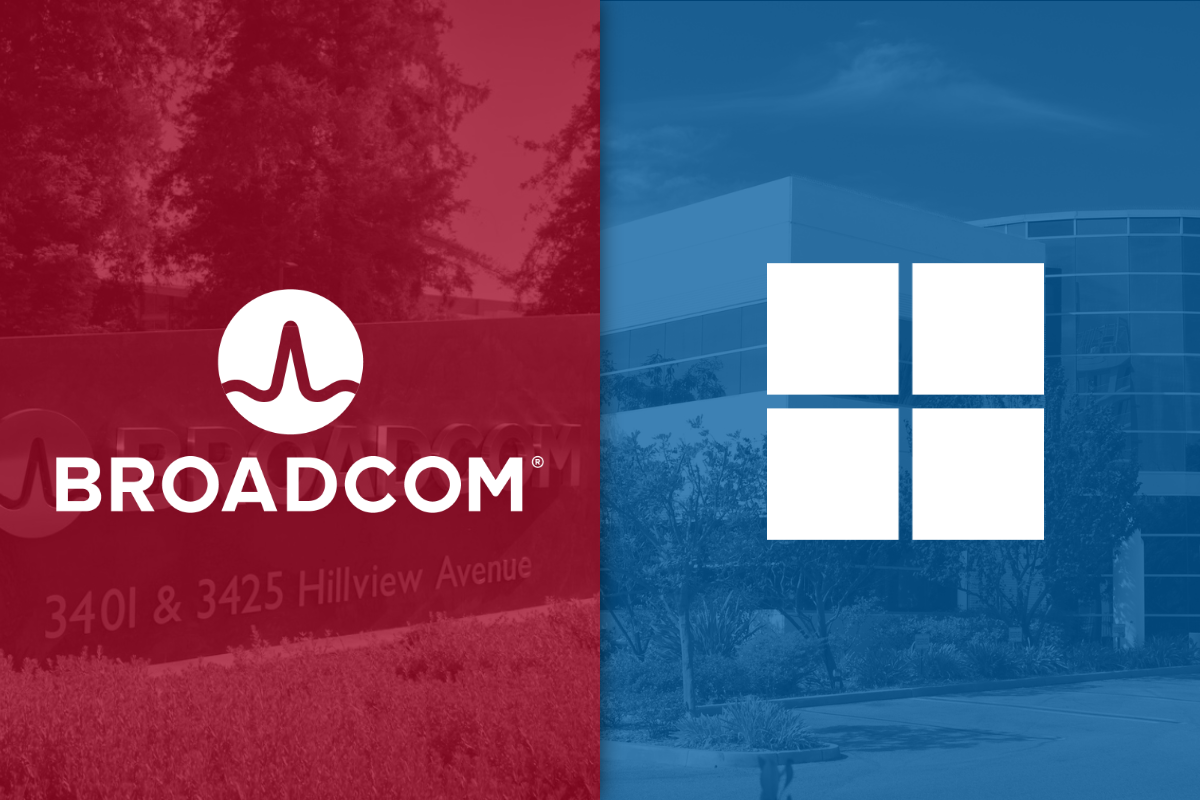
Sign up free →Broadcom reported fiscal Q1 2026 (ended Feb. 1, 2026) AI semiconductor revenue of $8.4 billion, up 106% year-over-year, with management guiding Q2 AI revenue to reach $10.7 billion (140% growth). Microsoft's intelligent cloud segment (which includes Azure) grew 29% year-over-year to $32.9 billion in fiscal Q2 2026, but the company spent $37.5 billion on capital expenditures to build data centers.
Broadcom's momentum comes from deep, multi-year custom silicon projects with major cloud providers (what the CEO calls 'deep, strategic, and multi-year' collaborations), giving the company locked-in visibility into customer demand through 2028. Microsoft faces the opposite pressure: its CFO acknowledged that demand still outpaces available infrastructure despite aggressive spending, meaning the company must continuously invest just to keep up.
For investors choosing between the two: Broadcom trades at a forward price-to-earnings ratio of 38 (much lower than its trailing ratio of 82, showing how fast earnings are growing), while Microsoft trades at a trailing ratio of 27. An analyst argues Broadcom's faster growth and customer lock-in justify the premium, making it the better bet on AI infrastructure spending — especially for investors who want exposure to the chips and networking gear powering AI, rather than the software and services running on top of it.
The risk to watch: Broadcom depends heavily on a handful of hyperscalers (the largest cloud companies); losing even one major customer could sharply reverse its trajectory. Microsoft's risks are different — potential disruption from AI replacing software jobs, and the ongoing cost of building out cloud capacity.
No comments yet. Be the first to share your thoughts!
Log in to join the discussion



Get curated AI news from 200+ sources delivered daily to your inbox. Free to use.
Get Started FreeFree · takes 30 seconds · unsubscribe anytime
1 minute a day. The AI essentials.
200+ sources · Email / LINE / Slack
