AIToday
RoboticsAI Business & IndustryRobotics & Automation NewsPublished: Jul 31, 2026, 22:00 JST4 min read

Qualcomm buys Arduino, targets edge AI and robotics with new hardware

Qualcomm buys Arduino, targets edge AI and robotics with new hardware

Key takeaway

  • Qualcomm acquired Arduino in October, combining its AI and computing technologies with Arduino's open-source development platform to accelerate edge AI and robotics innovation.

  • Arduino's latest hardware—the Ventuno Q (40 TOPS AI performance) shipping in August and the Uno Q (just over $50)—aims to lower development barriers for robotics and automation.

  • Arduino's chief product officer views robotics as entering a phase similar to early IoT, with three key growth sectors: robotics, industrial automation, and building and home automation.

3 Key Points

  1. What happened

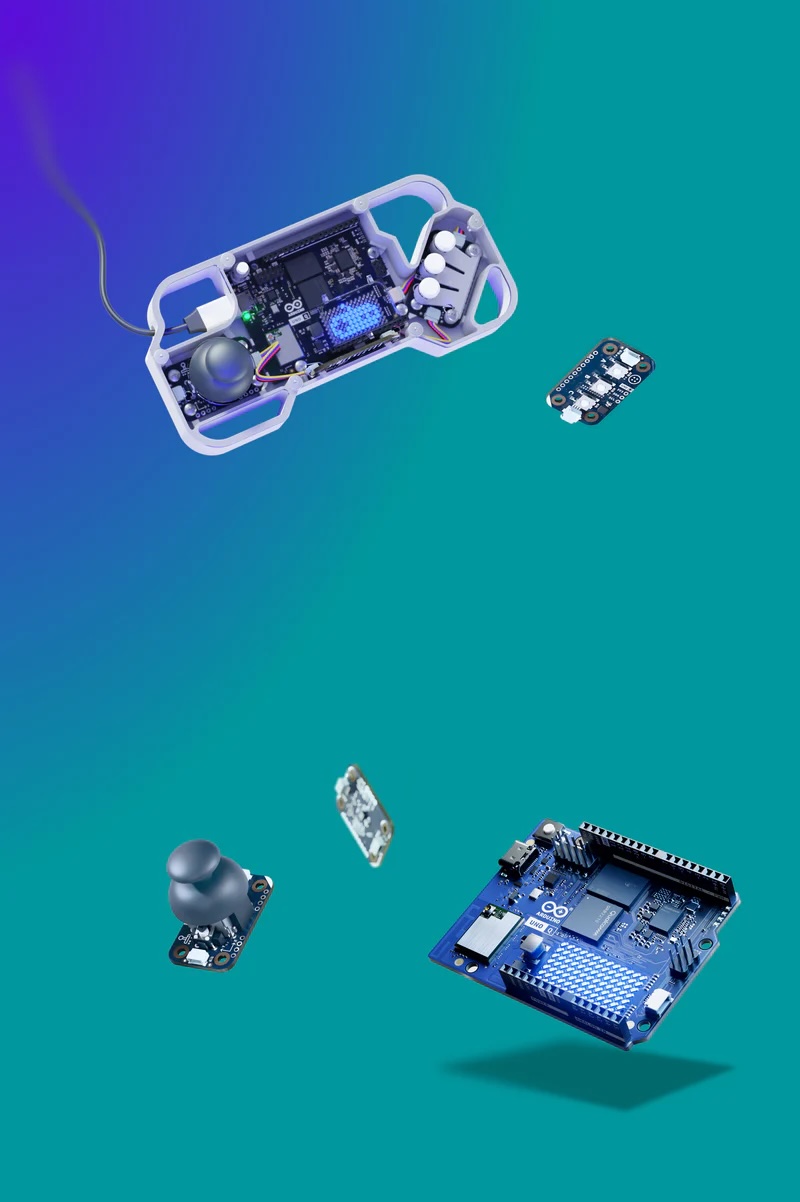
    Qualcomm acquired Arduino in October and released the Ventuno Q, which ships in August and delivers 40 TOPS of AI performance—enough to power a fully autonomous AMR with a robotic arm. The Arduino Uno Q, also from the collaboration, combines a Qualcomm chipset with a microcontroller and costs just over $50.

  2. Why it matters

    Arduino spent over two decades making electronics accessible to developers; Qualcomm's acquisition pairs that developer platform with enterprise-grade AI hardware and power-efficient computing. The combination aims to lower barriers to intelligent machine development, particularly for robotics and edge AI, where Arduino sees demand similar to the early days of IoT.

  3. What to watch

    Arduino's chief product officer identifies robotics, industrial automation, and building and home automation as the company's three biggest growth opportunities. More than 95 percent of automotive manufacturers already prototype on Arduino—including BMW, Mercedes-Benz, and Rolls-Royce—suggesting the same adoption pattern may emerge in robotics.

In Depth

Read the full story

Arduino, which celebrated its 21st anniversary this year, has announced a strategic pivot following Qualcomm's acquisition in October. The company, which began as an open-source microcontroller platform over two decades ago, now operates as an independent Qualcomm subsidiary focused on edge AI and robotics.

According to Marcello Majonchi, Arduino's chief product officer, the acquisition combines Qualcomm's power-efficient AI hardware with Arduino's developer stack to make technologies such as AI models and ROS 2 (a robotics middleware framework) easier to deploy. Two products from this collaboration have already emerged. The Arduino Uno Q, the first product of the partnership, combines a Qualcomm chipset with a microcontroller in the traditional Arduino form factor and costs just over $50; it can run edge AI models and power robots. The Ventuno Q, launching in August, is described as the most powerful Arduino ever built and delivers 40 TOPS of AI performance—sufficient to power a fully autonomous AMR (autonomous mobile robot) with a robotic arm, which Arduino demonstrated at Embedded World.

The acquisition's strategic value lies in merging two different approaches: Qualcomm's expertise in semiconductor design and AI optimization with Arduino's philosophy of making complex technology accessible to developers. Majonchi emphasized that Arduino remains independent, giving Qualcomm direct feedback from customers in IoT, robotics, and edge AI, while Arduino gains access to Qualcomm's technologies and broader ecosystem. The developer platform supports Windows, macOS, and Linux, including Apple Silicon—a distinction Majonchi highlighted when explaining that Arduino is built around software tools, whereas competitors like Raspberry Pi are primarily hardware platforms.

Majonchi also reflected on Arduino's Italian heritage, noting that Italy's computing contributions—including the Olivetti Programma 101, used by NASA during the Apollo 11 mission, and the work of semiconductor pioneer Federico Faggin—are often overlooked. Arduino, he argued, continues that tradition established by Olivetti. Looking ahead, Majonchi identified three sectors as the company's biggest growth opportunities: robotics, industrial automation, and building and home automation. He cited the automotive industry as evidence of Arduino's prototyping dominance—more than 95 percent of automotive manufacturers use Arduino for development, including BMW, Mercedes-Benz, and Rolls-Royce. Majonchi drew a parallel between today's robotics market and IoT in its early days, suggesting that as more developers gain access to these technologies, robotics adoption will follow the same trajectory.

Context & Analysis

Arduino's 21-year evolution reflects three distinct chapters: democratizing electronics, enabling IoT and connectivity, and now—under Qualcomm's ownership—scaling edge AI for automation and robotics. The acquisition preserves Arduino as an independent Qualcomm subsidiary, protecting its open-source philosophy while granting access to Qualcomm's AI hardware and broader ecosystem. This matters because Arduino's strength has always been lowering barriers to complex technology; pairing that developer-friendly platform with enterprise-grade semiconductors addresses a genuine gap in robotics tooling.

The new hardware reflects this strategy. The Ventuno Q's 40 TOPS of AI performance and the Uno Q's sub-$50 price point signal Qualcomm's intent to reach both high-end roboticists and cost-conscious prototypers. Arduino's track record—95 percent of automotive manufacturers use it for development—suggests the same adoption pattern could unfold in robotics. Majonchi explicitly draws this parallel: today's robotics market resembles IoT in its early days, with many startups experimenting and competing, and Arduino positioned to accelerate the path from prototype to production for those developers gaining access to these technologies.

FAQ

What is the Arduino Ventuno Q and when does it ship?
The Ventuno Q is the most powerful Arduino ever built, delivering 40 TOPS of AI performance—enough to power a fully autonomous AMR with a robotic arm. It begins shipping in August.
How much does the Arduino Uno Q cost?
The Arduino Uno Q costs just over $50 and combines a Qualcomm chipset with a microcontroller to run edge AI models and power robots.
Which automotive manufacturers use Arduino for prototyping?
More than 95 percent of automotive manufacturers prototype on Arduino, including BMW, Mercedes-Benz, and Rolls-Royce.
Robotics & Automation NewsRead Original Article

Get the latest Robotics news every morning

AI-summarized, only the topics you pick — one digest a day via Email, Slack, or Discord.

Free · takes 30 seconds · unsubscribe anytime

Related Articles

Next articleBausch & Lomb CEO: AI hype echoes past tech cycles — what matters is people

The AI news that matters, in one minute each morning.

Sign up free