
What happened
Berkshire Hathaway's 2016 acquisition of Precision Castparts for $37.2 billion(約6兆円), once written down by nearly $10 billion(約1.6兆円) during the pandemic, is now delivering strong returns as the company supplies specialty metal components to hyperscalers building AI data centers. Operating cash flow jumped to $2.4 billion(約3800億円) last year from $900 million(約1400億円) in 2021.
Why it matters
Though Berkshire owns no pure-play AI stocks like Nvidia, this subsidiary shows how the conglomerate gains AI exposure indirectly—and profitably. Gas-powered turbines powering data centers use similar components to jet engine turbines, playing to Precision Castparts' core strength in specialty aerospace and industrial components.
What to watch
Whether Greg Abel, Warren Buffett's successor, increases Berkshire's AI exposure going forward. The Precision Castparts case suggests Berkshire's long-term value-investing approach can capitalize on emerging AI trends without chasing them.
Summaries like this, in your inbox every morning.
Berkshire Hathaway's path to AI exposure reveals the power of patient, quality-focused investing. The company holds major stakes in Apple and Alphabet—both classified by some as AI plays—yet avoids pure-play AI stocks like Nvidia or Palantir. Instead, Precision Castparts demonstrates how long-held assets can unlock value from emerging trends. Buffett's 2016 bet on the specialty metal components maker seemed prudent at the time due to its aerospace business, but the pandemic in 2021 forced Berkshire to acknowledge the purchase as ill-fated, writing down nearly $10 billion(約1.6兆円) in goodwill.
The recent resurgence reflects a shift in demand: as hyperscalers deploy gas-powered turbines to power data centers, they require components nearly identical to those in jet engine turbines—the very niche Precision Castparts dominates. This positioning as one of just a few companies in its industrial segment has proven decisive. The company's operating cash flow recovery from $900 million(約1400億円) in the pandemic trough to $2.4 billion(約3800億円) in the latest year underscores both the severity of the pandemic disruption and the magnitude of the current data center opportunity.
The broader lesson for Berkshire is that long-term ownership of high-quality assets at reasonable prices can yield unexpected windfalls when economic conditions shift. Whether successor Greg Abel pursues direct AI exposure or relies on similar indirect plays remains an open question, but Precision Castparts suggests the conglomerate's disciplined approach is well suited to capitalizing on the AI megatrend.
For example, today's edition would include:
AI-summarized, only the topics you pick — one digest a day via Email, LINE, or Slack.
Free · 30 seconds with Google · unsubscribe anytimeWhat is AIToday? →
Ask AI anything about this article. Q&As are published on this page for other readers too.
Dell said it booked a record $60.9 billion in AI-server orders and $16.4 billion in AI-server revenues in the…
AMD hit a major milestone, and AI stocks blazed higher

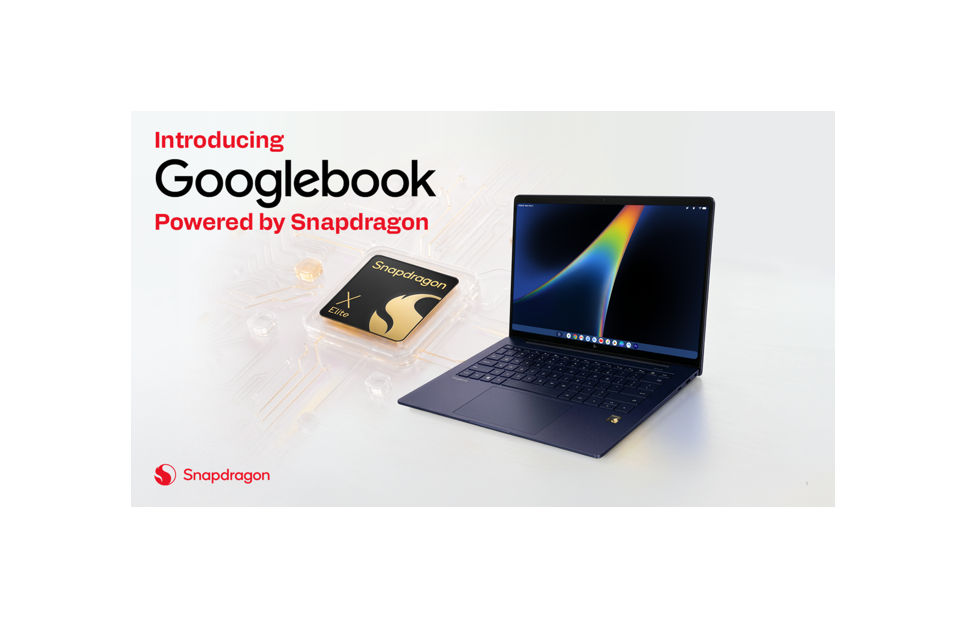
Qualcomm announced that its Snapdragon X Series processors will power Googlebook, a new line of laptops descri…
Sandisk customers are expanding multi-year commitments as inference requirements rise, strengthening the signa…
Meta introduced its Muse AI agent, triggering a rally in Intel and fellow chip stocks, while AMD reached a $1T…
Axios reports that iPhone users can get up to $95 from Apple tied to delays in its AI features