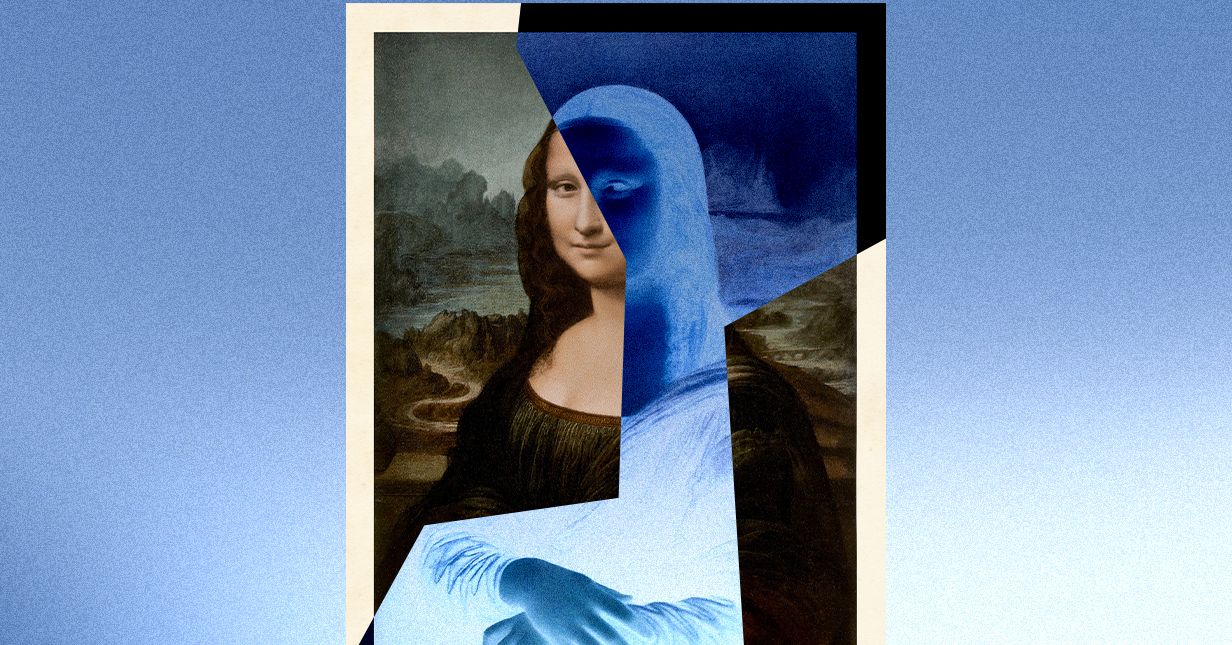
What happened
Since August 13, Cara, an image-sharing app for artists, was hit by three major scrapes. The first pulled a 12-terabyte archive of 12 million works, the second grabbed about 8.5 million links, and the third obtained 123,000 images. The original scraper, who goes by "Heft," later apologized and is now collaborating with founder Jingna Zhang on a new open-source tool called Lantern.
Why it matters
Artists migrated to Cara to avoid having their work used to train AI without permission, but scraping remains nearly impossible to prevent. Zhang says laws haven't caught up, and the attacks spiked server fees and alarmed creators, some of whom deleted their portfolios. She also notes that bigger platforms get scraped more, so leaving Cara doesn't necessarily make artists safer.
What to watch
Lantern lets artists create a "one-way fingerprint" for their images without storing them on the platform. It regularly scans new publicly available AI image datasets and notifies artists if their work appears, so they can request removal or submit a takedown notice. Zhang has raised more than $100,000 of her $120,000 GoFundMe goal for legal fees.
Summaries like this, in your inbox every morning.
The scrapes of Cara highlight a structural vulnerability: no website can fully prevent automated data collection, and current laws offer limited recourse. Zhang, who is also part of class actions against AI companies, sees the attacks as part of a broader pattern where "getting attacked by AI is just going to become so, so commonplace." The irony that her initial attacker now helps build a defense tool underscores how individual ethics can vary in the AI training debate.
Heft's reversal came from witnessing the emotional impact on artists, many of whom had moved to Cara specifically to avoid AI exploitation. His technical insight that "no site can be made truly 'unscrapable'" led to the after-the-fact approach of Lantern, which focuses on detection and notification rather than prevention. This pragmatic workaround reflects the current regulatory vacuum, where tools like Glaze only mask style but cannot stop scrapes themselves.
For artists, the takeaway is nuanced: leaving Cara doesn't guarantee safety, as "bigger platforms get scraped more." Lantern offers a way to regain some control, but its effectiveness depends on widespread adoption and the cooperation of dataset hosts like Hugging Face, which declined to remove URLs citing that no copies were hosted there. The open-source nature of the tool means anyone can contribute, potentially making it a community-driven countermeasure in an ongoing arms race.
Pick your industry and the AI tools you use, and get news related to your work every day.
Free · 30 seconds with Google · unsubscribe anytimeWhat is AIToday? →
Ask AI anything about this article. The AI reads this article, earlier AIToday articles, and Wikipedia, and cites its sources. Q&As are published on this page for other readers too.
A Zenn contributor sorted AI use into three modes — AI as an assistant, AI running alongside people, and AI th…

A developer released agent-guardrails, a one-script Python standard-library plugin that guards Bash, Write, Ed…
A Qiita article compared automated red-teaming methods for LLM apps — GCG, PAIR, and TAP — using mock implemen…

Taiwan is considering much stricter export controls on AI chip sales to China, part of a greater alignment wit…

TOPPAN Holdings and Keio University ran a quantum-computer and generative-AI proof-of-concept from February 1…
In a webinar hosted by French Mathematical Society president Isabelle Gallagher, Fields Medal winner Hugo Dumi…

