What happened
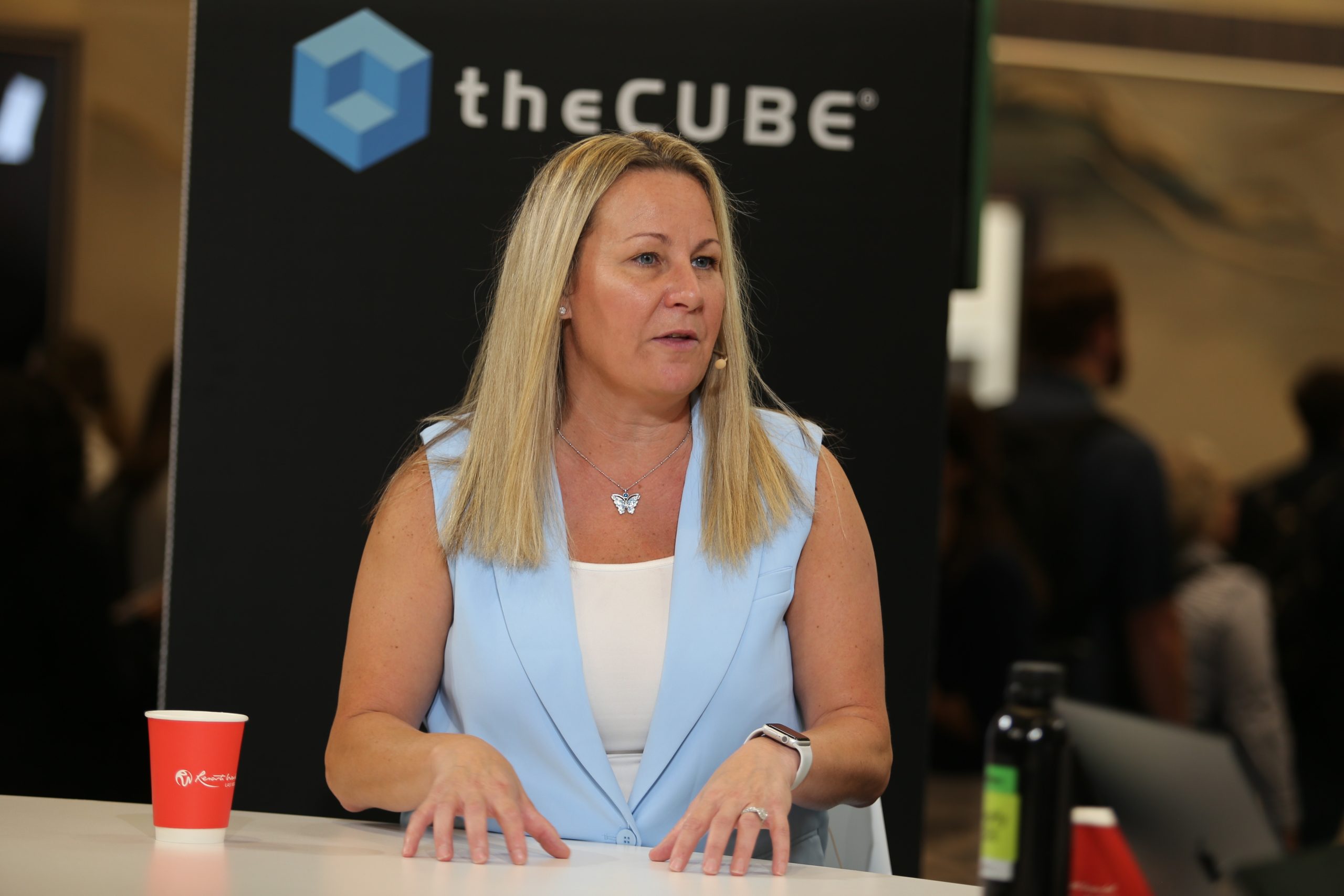
Keri Tracy, VP and chief audit executive at Newell Brands, told theCUBE that audit has a seat at the table for any major AI implementation, which she called probably unique to her company.
Why it matters
Newell adjusts AI deployment speed by risk — customer order-status agents can advance faster than fixed-asset-accounting agents, which need closer attention to financial controls, according to Tracy.
What to watch
The test is whether bringing employees doing the work into change efforts, as Tracy advocates, holds up across deployments; she cited 'lean before AI' and Six Sigma techniques applied before layering in AI.
WHO IT HITSThis lands hardest on internal audit and finance-controls teams at consumer goods companies, who face pressure to sign off on AI rollouts; Tracy's account suggests audit involvement can set how fast those deployments move.
Ask the AI about this article →
Summaries like this, in your inbox every morning.
Newell Brands is a consumer goods company, and its chief audit executive, Keri Tracy, is describing an arrangement in which auditors combine governance responsibilities with process optimization. Her claim that audit has a seat at the table for any major AI implementation, and that this is probably unique to her company, is the notable part: she says that at other companies she has worked at, getting audit into that position was very challenging. That contrast is the context for the rest of her comments.
The substance behind the seat at the table is risk-tiered deployment. Newell adjusts how fast it moves based on the risk involved, so customer order-status agents can advance faster than fixed-asset-accounting agents, which require closer attention to financial controls. Alongside that, Tracy describes internal audit as a bridge between business teams and technology specialists, and she insists that employees doing the work should help shape changes, with room to question proposed approaches. Her stated method — 'lean before AI,' applying lean and Six Sigma techniques to a process before adding AI on top — is meant to keep that process discipline in place.
The stakes here hinge on whether audit's early involvement actually shapes how fast AI moves through the business, or simply documents it afterward. Tracy's warning that a lot of transformations fail because they don't bring the people along suggests she sees the human side as the deciding factor. For audit and finance-controls teams at other companies, the question is whether they can obtain the same early role Tracy describes — she suggests that has been difficult elsewhere.
For example, today's edition would include:
AI-summarized, only the topics you pick — one digest a day via Email, Slack, or Discord.
Free · 30 seconds with Google · unsubscribe anytimeWhat is AIToday? →
Ask AI anything about this article. Q&As are published on this page for other readers too.
Profound raised $180 million in a Series D led jointly by Sequoia Capital and Kleiner Perkins, at a $1.8 billi…
AIUC raised a $40 million Series A led by Ribbit Capital to start auditing frontier AI models, after previousl…

Factory announced it raised $200 million, backed by Blackstone, Khosla Ventures, Sequoia Capital, NEA and othe…
Salesforce launched Koa, a reasoning model built on Nvidia's Nemotron open-weights platform, and Claudeforce…
Google launched Gemini 3.8 Live and Gemini 3.8 Live Extended Thinking, its most advanced voice models yet, wit…

ITRI held its ITRI Innovation Day on September 15 in Tainan, Taiwan, gathering research groups and startup tea…