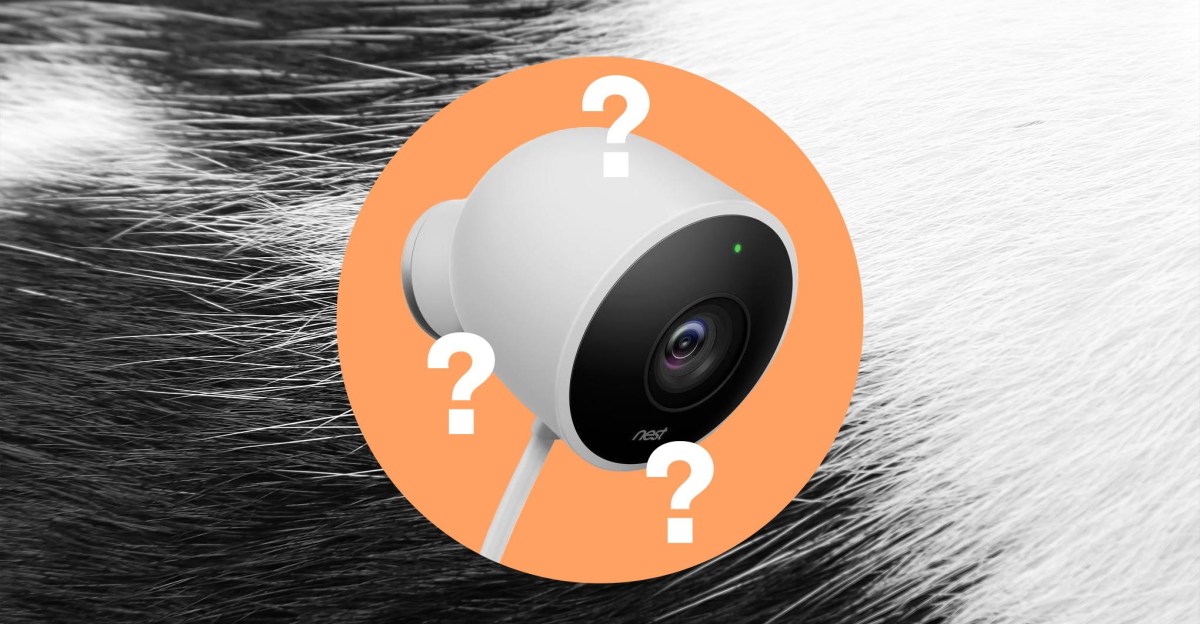
Google announced Pet Memory for Gemini for Home, a feature that lets Nest indoor cameras identify individual pets and trigger smart home automations—for example, automated feeding for specific cats.
However, testing revealed the system cannot reliably distinguish between individual pets; after two weeks, it repeatedly identified all three cats as Smokey, the first pet entered, and offered no way to upload photos or correct errors.
The feature requires Google Home Advanced Plan at $20 per month and only works on indoor Nest Cams, limiting its practical value until the underlying identification accuracy improves.
What happened
Google introduced Pet Memory, a Gemini for Home feature that promises to identify individual pets via Nest cameras and automate smart home responses—but after two weeks of testing, the system repeatedly misidentified three cats, labeling them all as Smokey (the first cat entered) and failing to distinguish them even when given breed and color details.
Why it matters
Pet Memory requires Google Home Advanced Plan at $20 a month and only works on indoor Nest Cams, yet the core identification function—the reason to buy it—does not appear to build individual visual profiles or improve with corrections, making the feature unreliable for practical tasks like automated feeding or safety checks that depend on accurate pet recognition.
What to watch
The feature exposes a gap between AI camera capabilities (detecting that a pet is present) and the much harder task (identifying which specific pet), suggesting that until AI can reliably distinguish individual animals, continuous recording built into the same $20 subscription remains more useful than automated summaries.
Ask the AI about this article →
Pet Memory represents Google's attempt to move security cameras beyond generic motion and animal detection into personalized pet identification—a significant technical leap. Nest cameras have long been ahead of competitors like Ring, Wyze, and Apple Home in animal detection, and Google recently added AI-powered text descriptions of what cameras see. Pet Memory is positioned as the first personalization layer: the ability to distinguish not just that a pet is present, but which pet. However, the testing revealed a critical gap between detection and discrimination. Recognizing that motion is a pet is orders of magnitude easier than recognizing which specific pet it is, especially when multiple similar-looking animals are present in the same home. The system's inability to learn from corrections, accept training photos, or disambiguate cats despite detailed written descriptions suggests the underlying visual model either lacks sufficient individuation capacity or the feature was shipped before that capability matured. This matters because the entire value proposition—automated feeding, safety checks before dark, false-alert reduction—depends on reliable identification. Without it, users pay $20 per month for a feature that is, as the tester notes, "worse than doing nothing at all," since a misidentification (reporting a cat in the garage when it was in the laundry room) is more consequential than a missed notification.
AI-summarized, only the topics you pick — one digest a day via Email, Slack, or Discord.
Free · takes 30 seconds · unsubscribe anytime
Ask AI anything about this article. Q&As are published on this page for other readers too.
HP Korea has formed a partnership with Upstage, a large language model (LLM) startup, to advance its localized…

At the "AI on Chips: Semiconductor Industry Trends Forum" hosted by DIGITIMES, industry experts highlighted th…

Anthropic launched Claude Academy on August 20, a free learning site that explains AI fundamentals and how to…

OpenAI rolled out support on Thursday for controlling Apple's iMessage service via ChatGPT on Mac, enabling th…

As AI technology matures, the bottleneck in the industry is moving beyond semiconductor constraints like GPUs…
OpenAI has launched an Apple Messages plug-in for ChatGPT that lets users connect their Messages inbox to the…