
The artificial intelligence supply chain is evolving beyond its initial hardware bottleneck. Early AI growth was constrained by the availability of GPUs, high bandwidth memory, and advanced packaging.
As these semiconductor limitations ease, credit allocation — the distribution of computing resources across competing demands — is emerging as the next critical constraint.
This shift reflects the maturing AI boom and will influence how companies manage and price access to computing capacity.
What happened
As AI technology matures, the bottleneck in the industry is moving beyond semiconductor constraints like GPUs and high bandwidth memory (HBM) to credit allocation — the process of distributing computing resources among competing AI workloads.
Why it matters
The transition reflects how the AI boom has progressed: early infrastructure limitations (hardware availability) are being resolved, but now companies face a new challenge of fairly and efficiently allocating expensive computing capacity across projects and customers. This shapes how AI services will be priced, prioritized, and delivered.
What to watch
The article does not specify timeline, pricing, or rollout details for credit allocation systems.
Ask the AI about this article →
The article describes a natural progression in infrastructure constraints as a technology boom matures. Initial shortages of physical hardware (GPUs, HBM, advanced packaging) defined the first phase of the AI boom, limiting how many companies could build or deploy AI systems. As semiconductor supply stabilizes and production capacity increases, the constraint moves upstream in the supply chain — not to what is available, but to how it is divided. Credit allocation systems (mechanisms for sharing or rationing computing resources) are now becoming a critical operational concern, because even when hardware is available in sufficient quantity, it remains expensive and must be managed carefully across competing uses. This reflects a shift from a scarcity problem (not enough chips exist) to an allocation problem (chips exist, but demand still exceeds supply at economical prices, or demands conflict).
AI-summarized, only the topics you pick — one digest a day via Email, Slack, or Discord.
Free · takes 30 seconds · unsubscribe anytime
Ask AI anything about this article. Q&As are published on this page for other readers too.
OpenAI has launched an Apple Messages plug-in for ChatGPT that lets users connect their Messages inbox to the…

Amazon Bedrock now supports OpenAI GPT-5.6 models (Sol, Terra, and Luna variants) across more than 25 AWS Regi…
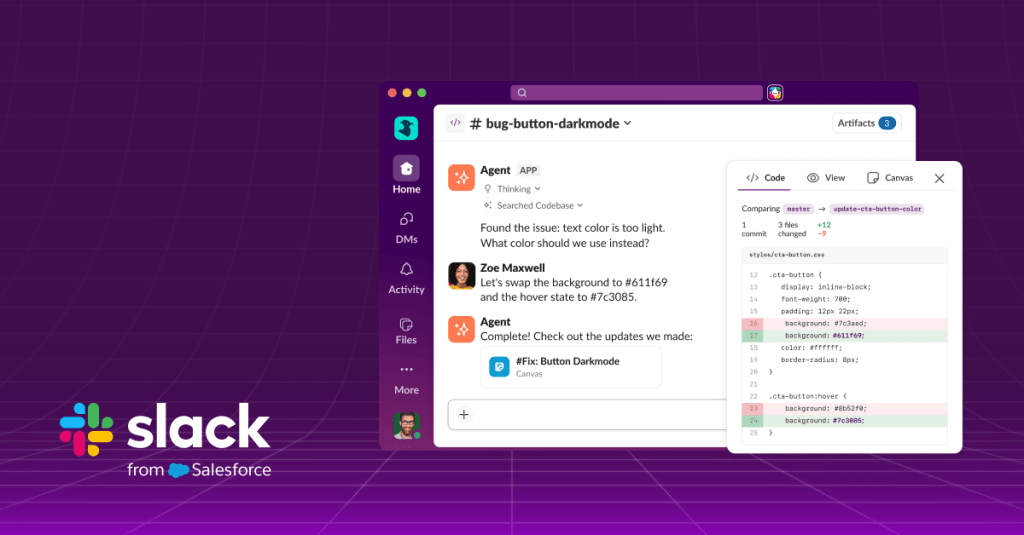
Slack introduced Slack Code, a new feature that lets teams collaborate with AI coding agents (Claude, Devin, G…
Cisco is transforming its digital customer experience (DCX) strategy by embedding AI throughout customer journ…

Mastercard CEO Michael Miebach introduced "Agent Pay" last April, a payment framework that allows AI agents to…

SpaceX closed a $60 billion acquisition of Cursor, a popular code editor with over 50,000 companies in its use…