
What happened
A survey by LIFEFUND shows that 68.5% of construction and housing management companies now use AI in at least part of their operations, up from 43.4% in March 2026. Paid adoption of Claude surged from 18.9% to 71.0% by June, staying at 70.4% in August.
Why it matters
As AI use becomes standard, the biggest obstacle has shifted from 'not knowing where to start' (down 19.4 points to 31.5%) to internal issues: 20.4% cite a lack of staff who can use AI, and 27.8% say they can't find partners for high-level use. This suggests companies are moving from individual experimentation to organizational implementation.
What to watch
Respondents now see AI as already changing the industry—25.9% agree (up from 9.4% in March)—and 87.0% are open to external AI consulting services. The survey ran from March to August 2026, with 53, 31, and 54 respondents respectively.
Summaries like this, in your inbox every morning.
The survey by LIFEFUND, targeting construction and housing management executives, shows a clear shift from experimental AI use to organizational integration. The proportion of companies reaching Level 2 (AI used in some departments) grew by 25.1 percentage points over five months, while Level 1 (personal use only) dropped from 56.6% to 31.5%. This indicates that AI is moving from individual experimentation to structured department-level deployment.
The rise of paid tools like Claude and Gemini reflects a preference for professional, reliable solutions over free or informal ones. Notably, Claude's paid usage jumped from 18.9% to 71.0% between March and June, suggesting a rapid trust-building phase. Meanwhile, the growing concern about staff capability (from 7.5% to 20.4%) and lack of partners for advanced use (from 11.3% to 27.8%) highlights a new bottleneck: the need for human expertise and external support to fully leverage AI's potential.
Importantly, 87.0% of executives are open to external AI consulting services, which points to a market opportunity for specialized guidance. The shift in perception—from 'AI will be useful' to 'AI is already changing the industry'—underlines a practical focus on tangible outcomes like time savings and cost reduction, as reflected in the rising share of companies measuring ROI (from 15.1% to 24.1%). However, the survey's small sample size (53, 31, 54 respondents) calls for caution in generalizing these findings.
Pick your industry and the AI tools you use, and get news related to your work every day.
Free · 30 seconds with Google · unsubscribe anytimeWhat is AIToday? →
Ask AI anything about this article. The AI reads this article, earlier AIToday articles, and Wikipedia, and cites its sources. Q&As are published on this page for other readers too.
Applied Materials and Intel are widening their EPIC Center collaboration to cover next-generation transistors…

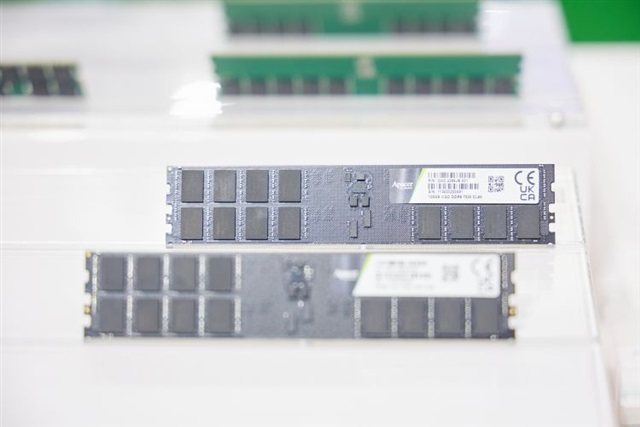
Innodisk and Apacer both reported year-over-year and month-over-month revenue growth for September 2026, suppo…
Anthropic announced Anthropic Cyber Mission on October 8, starting with the Critical Infrastructure Defense Pr…
Nvidia-backed AI data centre operator Firmus withdrew its planned $5 billion IPO on Friday, citing market vola…

Amazon is planning a $21 billion investment in AI data-center infrastructure in India by 2030, and trees outsi…

Valuence's "Generative AI User Trends Survey" (June 2024–May 2026) tracked six services including ChatGPT, Gem…