What happened
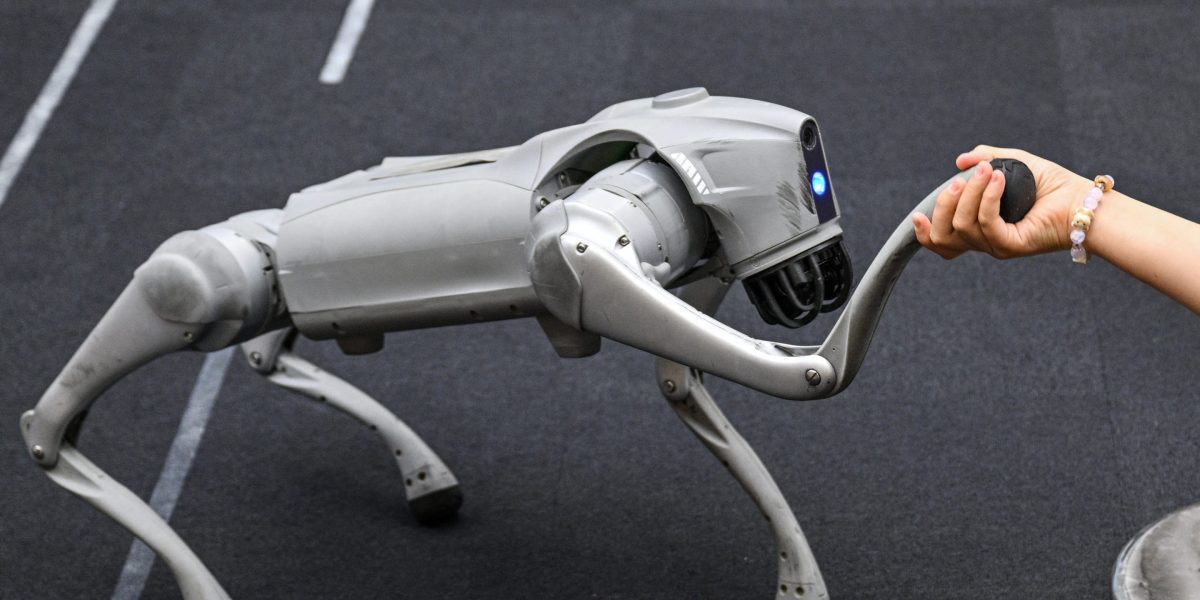
Unitree, a Chinese robotics maker founded in 2016, is raising 6.1 billion Chinese yuan ($904 million) in its IPO at a market valuation of around $9 billion, with retail demand more than 8,000 times oversubscribed. Meanwhile, Shein, the fast-fashion e-commerce giant, is targeting as much as $3 billion—roughly three times Unitree's target—but is attracting far less investor enthusiasm.
Why it matters
Investor appetite is shifting decisively away from e-commerce platforms toward AI and hardware. Unitree is profitable with net income of 600 million yuan ($89 million) in 2025 and revenue of 1.7 billion yuan ($252 million) last year (a fourfold increase from 2024), whereas Shein faces headwinds from new tariff rules that eliminated customs duty exemptions in the U.S. and Europe, compressing its margins despite $41.2 billion in revenue last year. The contrast signals a broader reordering of where growth capital flows in China's tech sector.
What to watch
Unitree's debut valuation and post-IPO performance will be closely watched; secondary markets are predicting a massive jump. Chinese robotics firms dominated 97% of humanoid robot shipments in the first half of 2025, though Unitree is no longer the market leader (that title belongs to Agibot, preparing for a Hong Kong listing later this year). The U.S. Federal Communications Commission banned imports of foreign-made humanoid and quadruped robots in late July, citing supply chain and national security concerns.
Summaries like this, in your inbox every morning.
Unitree's IPO marks a striking inflection point in China's tech capital allocation. While Shein—a decade-old global e-commerce leader with $41.2 billion in annual revenue—is forced to accept a steep valuation markdown and muted investor interest, Unitree, a younger robotics maker, is commanding outsized demand and valuation multiples despite raising only a third as much capital. This inversion reflects a fundamental shift in where growth investors believe the next wave of returns will come from.
The catalyst for this reordering is twofold. First, the macroeconomic environment for e-commerce has darkened: post-pandemic stimulus has dried up, inflation has cooled consumer appetite, and crucially, tariff rules have eroded Shein's profit margins. The elimination of de minimis exemptions in the U.S. last year and Europe in July 2025 has directly hit Shein's business model, which relied on shipping small packages below duty thresholds. Shein itself acknowledged in its IPO prospectus that EU tariff trends could equal or exceed the impact seen in the U.S. Second, investor focus is migrating to AI and robotics hardware. Last month, ChangXin Memory Technologies (a chipmaker) raised $8.6 billion and saw shares surge as much as 530% on day one, becoming China's most valuable company ahead of Tencent, signaling how sharply capital has repriced in favor of AI infrastructure.
Unitree's strength also rests on concrete fundamentals: the company is profitable, posted fourfold revenue growth, and operates in an industry where Chinese firms command 97% of global humanoid robot shipments. Yet the company's ascent is shadowed by geopolitical risk. The U.S. Federal Communications Commission's ban on imports of foreign-made humanoid and quadruped robots—announced in late July and justified on supply chain and national security grounds—signals that access to Western markets for Chinese robotics may soon face barriers, mirroring restrictions on semiconductors.
Pick your industry and the AI tools you use, and get news related to your work every day.
Free · 30 seconds with Google · unsubscribe anytimeWhat is AIToday? →
Ask AI anything about this article. The AI reads this article, earlier AIToday articles, and Wikipedia, and cites its sources. Q&As are published on this page for other readers too.
Supermicro Computer appointed Mark Long as chief financial officer, bringing an experienced technology finance…

Holtek Semiconductor unveiled its 2026 product roadmap on October 15, focusing on four core areas: smart prote…
TSMC reported about NT$763.1b in Q3 net profit and confirmed that demand for advanced processors is running ah…

Nvidia-backed CoreWeave steadied Thursday after a sharp slump, as investors worried about the debt financing b…
TOPPAN Holdings and Keio University ran a quantum-computer and generative-AI proof-of-concept from February 1…
Weathernews said on October 15 it implemented its own AI weather-forecasting model, AI-Nowcast, in its Weather…