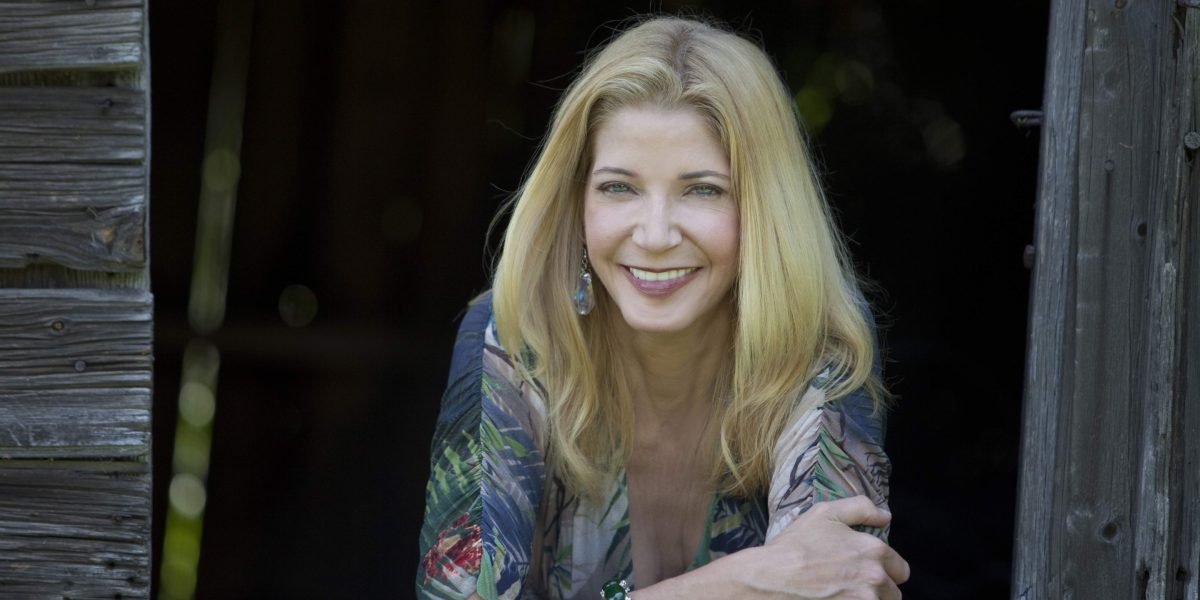
Candace Bushnell, creator of the iconic Sex and the City column that launched in The New York Observer in 1994, has emphasized that authentic human creativity cannot be replicated by AI.
In an interview tied to her one-woman show True Tales of Sex, Success and Sex and the City, she argued that while AI can imitate style, only humans can evolve as creators and introduce genuinely new elements into their work.
Bushnell stressed that she has never viewed herself as a brand but rather as a writer dedicated to creating original work—a distinction she believes remains true even in the age of AI.
What happened
Candace Bushnell, author of Sex and the City, discussed her creative philosophy in an interview tied to her one-woman show True Tales of Sex, Success and Sex and the City, which performed in Athens on April 17. She emphasized that she sees herself as a writer first, not a brand, and that her focus has always been on the work itself rather than commercial exploitation.
Why it matters
Bushnell argues that in the age of AI, true originality remains distinctly human. She stated that while AI can imitate style and reproduce existing patterns, only humans can evolve as creators, think differently, and introduce genuinely new elements into their work. For creative professionals, her stance underscores that authentic creative process—combining elements, recognizing patterns, and transforming them into something original—cannot yet be replaced by AI.
What to watch
Bushnell's one-woman show, True Tales of Sex, Success and Sex and the City, represents her shift from writing to stage performance. She noted that performing on stage is easier for her than writing a book, though she views the latter as far more demanding. The show functions as a direct, confessional narrative that bridges her past and present creative journey.
Candace Bushnell began her career as a writer at age 19, focusing on her own world in New York. When she launched the Sex and the City column in The New York Observer in 1994, she made a deliberate decision to write about things she believed could only happen in New York. However, she quickly discovered that the themes and experiences she was documenting were not unique to the city—they were happening everywhere. As she reflected in the interview, the column was essentially social anthropology, translatable to almost every major city. The turning point came around 1999 or 2000, when people in Los Angeles began sharing the column with each other. The subsequent television series, which came later, expanded the reach dramatically, though that evolution was not immediate.
Throughout her career, Bushnell has resisted the pressure to transform her success into a personal brand. She was often told that she had built a brand over 20 or 30 years, but she firmly disagreed. "I do not see myself as something inanimate," she said in the interview. "I am a human being. What I do is dedicate my time to creating, to producing something that, at least until now, even in the age of AI, only a human being can really do; and that is writing." She emphasized that she never approached herself as a marketing machine and has not put her name on buildings or product lines. Some of her books have been adapted for television, but her focus remained on the work itself and her creative expression, not on larger business ventures.
When the Sex and the City television series opportunity arose, Bushnell participated in the writing team for the first two seasons. However, when a $1 million deal to write two books came up, she chose to leave television and return to book writing—not just for financial reasons, but because that was what she truly wanted to do. She explained that books and cinema share a narrative structure with a beginning, middle, and end, whereas television requires an ongoing mechanism to keep stories moving. This difference in medium fundamentally shapes the creative process and demands different skills from the writer.
Bushnell's writing discipline is rigorous. She writes at least six hours a day, six days a week, sometimes seven, with periods extending to ten hours daily. She compared the practice to playing a musical instrument, requiring discipline, consistency, and endurance rather than waiting passively for inspiration. When developing a book, she must determine whether her characters have the depth to support a full narrative—approximately 100,000 words. This is an internal, mental process: she creates a world in her mind and then channels it onto paper, a feat that demands continuous presence in that creative space.
On the question of how to maintain originality in the age of AI, Bushnell was clear: "Creativity is about combining elements, recognizing patterns, and transforming them into something original." She acknowledged that AI might imitate her style or write something that resembles it, but such output would be limited to reproduction. As a human, she can evolve, become a better writer, think differently, and introduce new elements. She expressed confidence that human creativity, at least as of now, cannot be replaced by AI, though she noted a willingness to learn how to use AI as a tool. What distinguishes human creativity from AI is the ability to generate something truly original—not merely recombine existing patterns, but move beyond them.
Bushnell's one-woman show, True Tales of Sex, Success and Sex and the City, came about unexpectedly during the pandemic after someone suggested she could perform such a show. The first performance was in a small theater, followed by an off-Broadway run in New York. She performed the show in Athens on April 17. Though stage performance was unfamiliar territory, it felt like a natural progression from the readings and public appearances she had given since the mid-1990s. Interestingly, she finds performing on stage easier than writing a book—a paradox she highlighted, as most people assume the reverse. The show functions as a more direct, almost confessional version of her journey, addressing questions audiences had long asked about Sex and the City: whether she had three female friends like those on the show, whether she had a wardrobe like Carrie Bradshaw's, and how she began writing the column.
Bushnell's interview reflects a deliberate creative identity shaped over nearly three decades, beginning with the Sex and the City column in The New York Observer in 1994. Her recognition that personal narratives about a specific New York world could resonate globally came relatively early—around 1999 or 2000—but she has consistently resisted the commercialization of her identity. Rather than treating her success as a springboard for brand expansion, she has remained focused on the work itself: novels like Four Blondes, Trading Up, and Lipstick Jungle, and now the one-woman show True Tales of Sex, Success and Sex and the City. This distinction between being a writer and being a brand is central to her philosophy. She explicitly rejected the notion that she has built a personal brand in marketing terms, arguing instead that she is a human being engaged in creative production, not an inanimate commodity to be packaged and sold.
Bushnell's stance on AI is grounded in this understanding of authentic creativity. She does not deny AI's capacity to imitate style or reproduce patterns, but she insists that true originality—the ability to evolve, think differently, and introduce new elements—remains uniquely human. This view aligns with her broader creative philosophy: that work endures not because it is designed to be "great" or because it is marketed effectively, but because it contains something original and true. Her transition to the one-woman show, which she describes as a natural progression from decades of readings and public appearances, further illustrates her belief that creativity is about constant growth and adaptation rather than reinvention of a fixed brand identity.
AI-summarized, only the topics you pick — one digest a day via Email, Slack, or Discord.
Free · takes 30 seconds · unsubscribe anytime
Ask AI anything about this article. Q&As are published on this page for other readers too.
Researchers from Google, the University of Chicago, and other institutions disabled the internal mechanism in…
OpenAI dissolved its Preparedness team at the end of July, which had evaluated whether the company's AI models…

Anthropic's biological and chemical weapons classifiers—filters designed to block dangerous knowledge extracti…

Researchers tested Google DeepMind's DiffusionGemma model, which generates text through multiple diffusion ste…
Companies are responding to public anger over generative AI by removing or limiting features users never conse…

A woman identified as Jane Doe 4 has joined a lawsuit against Elon Musk's xAI, alleging her stepfather used Gr…

The AI news that matters, in one minute each morning.
Sign up free