AIToday
Large Language ModelsAI Safety & AlignmentAlignment ForumPublished: Aug 16, 2026, 16:00 JST3 min read

Google DeepMind's DiffusionGemma shows high interpretability despite complex reasoning steps

Google DeepMind's DiffusionGemma shows high interpretability despite complex reasoning steps

Key takeaway

  • Google DeepMind's DiffusionGemma model generates text through a series of diffusion steps that could obscure how the AI reasons.

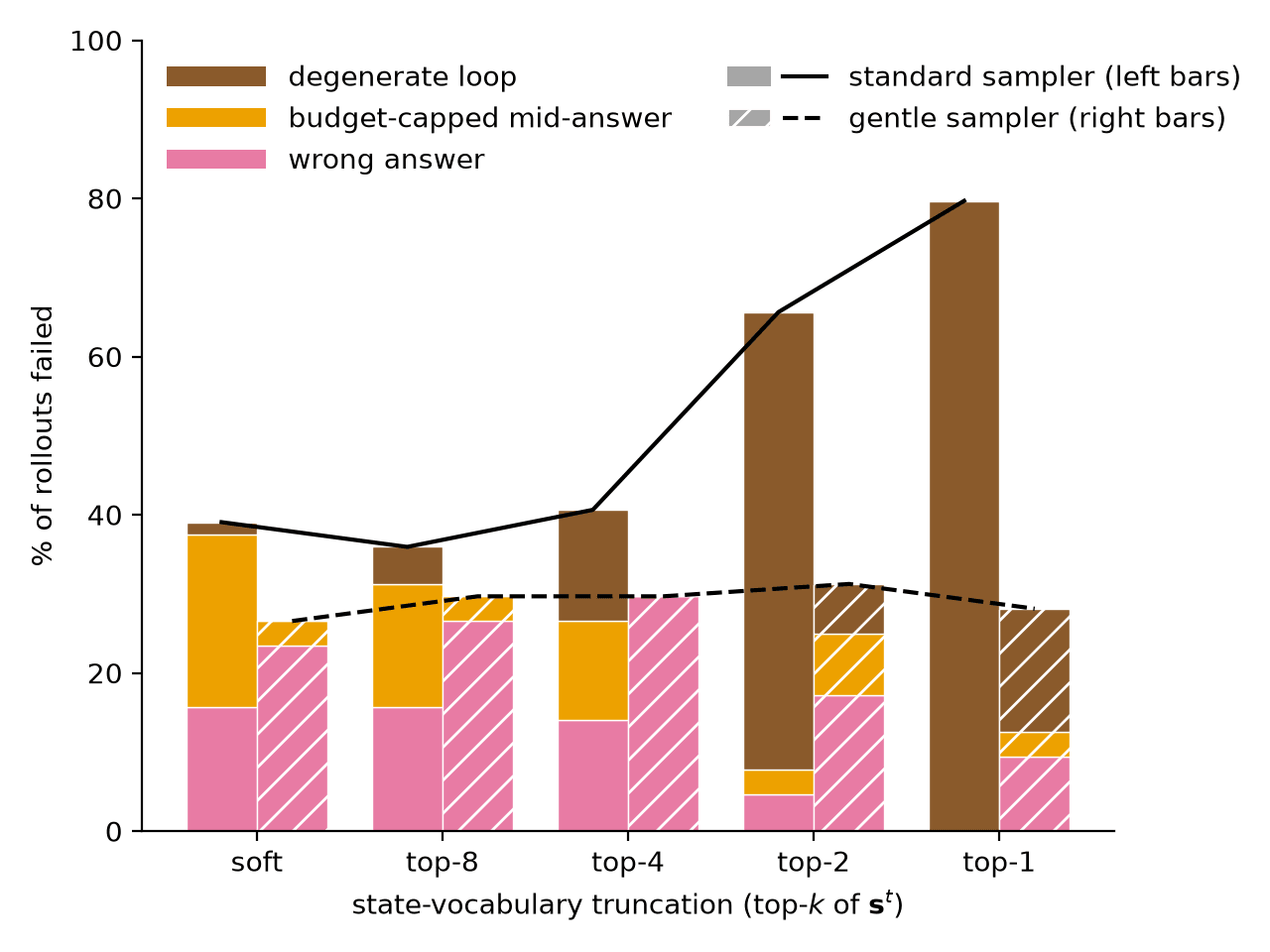
  • New analysis shows that despite this complexity, the model maintains high interpretability—the distribution of vectors at each step can be reduced to just the top item with minimal performance loss, suggesting the reasoning is not opaque.

  • Researchers did find rare cases where the full distribution matters, but even then the computation remains interpretable through superposition.

3 Key Points

  1. What happened

    Researchers tested Google DeepMind's DiffusionGemma model, which generates text through multiple diffusion steps that produce both tokens and vectors. They found that projecting these vectors to their single highest-ranked item maintains strong performance, suggesting the model remains interpretable even during its reasoning process.

  2. Why it matters

    DiffusionGemma's architecture creates multiple opaque layers of computation before generating final text, which could harm monitorability and interpretability—key concerns for AI safety. The finding that performance holds up with top-1 projection suggests the model's reasoning steps are not hiding complex, hard-to-interpret behavior, supporting the case that diffusion-based text generation can remain transparent.

  3. What to watch

    The researchers also identified rare cases where the full distribution vector carries load-bearing computation that top-1 projection would damage. Even in those instances, the vector encodes superposition, which remains interpretable—though the research appears incomplete on how widespread or significant these edge cases are.

In Depth

Read the full story

Google DeepMind's DiffusionGemma generates text through a multi-step diffusion process, a departure from the typical single-pass approach of models like GPT. Before producing its final output, DiffusionGemma runs multiple diffusion steps, each of which generates both tokens and vectors. This iterative refinement could in principle hide complex reasoning in layers the user cannot observe, raising monitorability concerns central to AI safety research.

Engels et al. had previously shown that despite this architectural complexity, DiffusionGemma maintains high interpretability. Their work demonstrated that when the distribution over vectors at each step is reduced to its top-k most likely items, the model's performance largely holds. The new research extends this finding by showing that much of this robustness comes from the sampler itself rather than the underlying model necessity. Specifically, the researchers found that reducing to the top-1 item—using only the single most likely vector rather than a broader set—sustains good performance across most scenarios, strengthening the case that the model does not rely on opaque distributed computation for its reasoning.

However, the analysis also uncovered exceptions. In rare case studies, the full distribution vector carries computationally load-bearing information; applying top-1 projection in those instances would degrade performance. Yet even in these edge cases, the vector only encodes superposition—a technical phenomenon where multiple signals overlap but remain in principle interpretable. This finding suggests that even when DiffusionGemma uses the full distribution, it is not performing inherently inscrutable reasoning; rather, the information is encoded in a form that interpretability tools can in principle recover. The work thus supports the claim that diffusion-based text generation can maintain high monitorability, while also flagging that certain boundary conditions deserve continued scrutiny.

Context & Analysis

Google DeepMind's DiffusionGemma represents a departure from conventional text-generation architectures by employing diffusion—a process that iterates through many refinement steps before arriving at the final output. Each step generates both tokens and vectors, creating potential interpretability challenges: if these intermediate representations cannot be understood, the model gains significant opaque serial depth that could hinder safety monitoring. Prior work by Engels et al. had already suggested that DiffusionGemma maintains reasonable monitorability despite this complexity. The new analysis strengthens that case by showing that much of the performance retained via top-k projection is not dependent on the full distribution; instead, it reflects a quirk of how the sampler works. This distinction is important because it suggests the vectors are not encoding elaborate, hidden reasoning but rather carry information in a relatively straightforward form. However, the discovery of rare edge cases where top-1 projection causes performance loss introduces a caveat: the model does sometimes use the full distribution in a load-bearing way. The fact that even those cases involve only superposition—a phenomenon where multiple signals are encoded together but still in principle separable—preserves the overall case for interpretability, though it flags a boundary worth monitoring.

FAQ

What is DiffusionGemma and how does it differ from typical text-generation models?
DiffusionGemma is Google DeepMind's model that generates text via diffusion, meaning it runs many diffusion steps before producing the final output. Unlike standard models that generate tokens directly, DiffusionGemma's steps produce both tokens and vectors.
How interpretable is DiffusionGemma's reasoning process?
The model maintains high monitorability. Projecting the distribution vectors to their top-1 item (rather than using the full distribution) preserves strong performance in most cases, and even in rare cases where the full distribution is needed, it encodes only superposition, which remains interpretable.
Alignment ForumRead Original Article

Get the latest Large Language Models news every morning

AI-summarized, only the topics you pick — one digest a day via Email, Slack, or Discord.

Free · takes 30 seconds · unsubscribe anytime

Ask AI

Ask AI anything about this article. Q&As are published on this page for other readers too.

Related Articles

Next articleData Centers' Power Hunger Turns Energy Stocks Into AI Bets

The AI news that matters, in one minute each morning.

Sign up free