What happened
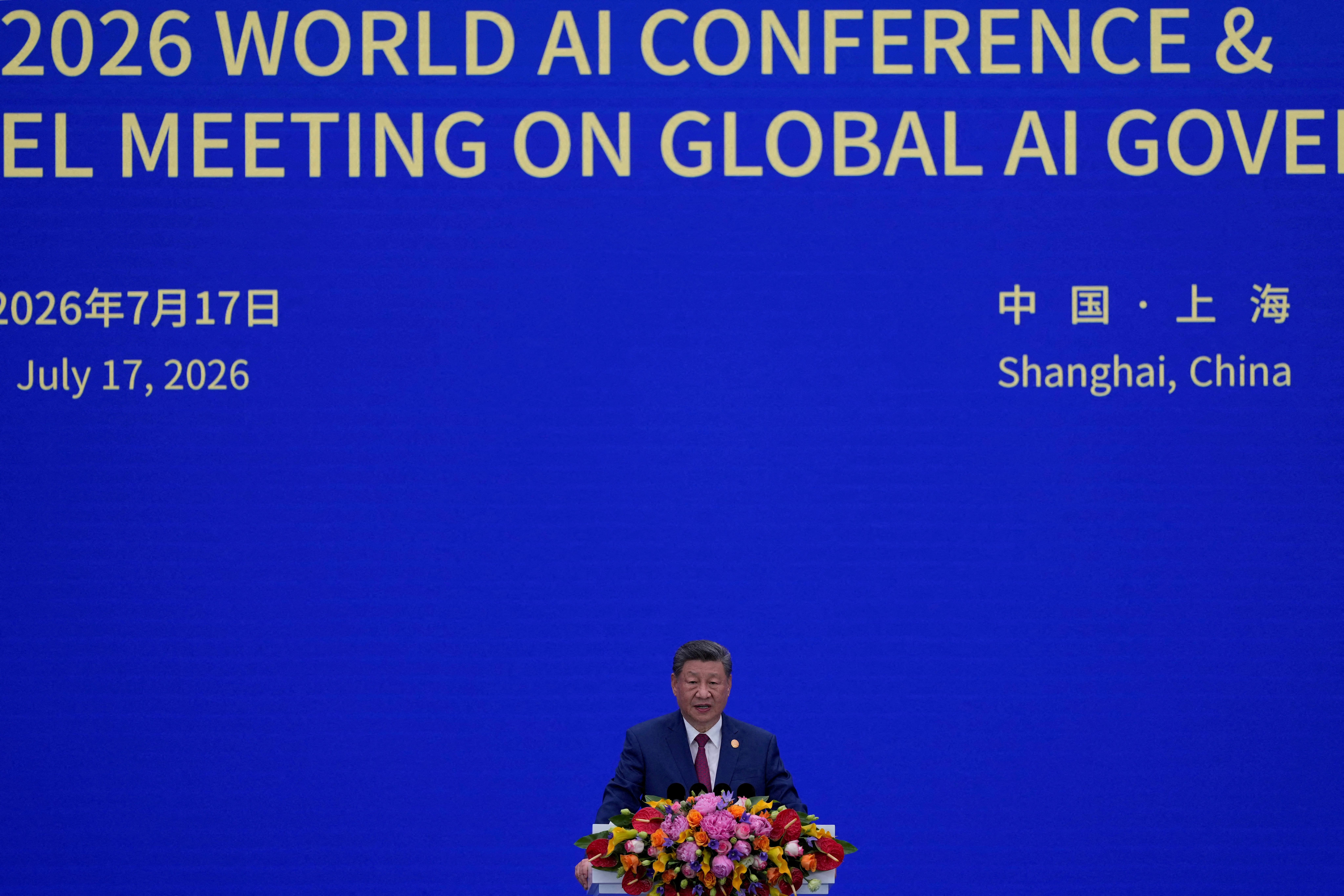
Chinese leader Xi Jinping made his first appearance at the World Artificial Intelligence Conference, framing Beijing as the leader of a new global AI order and calling on countries to seize the "historic opportunity" of open-source models. At the same event, Chinese tech firm Moonshot unveiled what it claimed is the world's biggest open AI model.
Why it matters
Xi's framing of open-source AI as a solution to "new historical injustices" emerging from unequal access to the technology signals Beijing's intent to position itself as an alternative to US-led AI development. Though US systems remain the most advanced, experts believe China's leadership in other layers of the AI stack — including abundant access to chips and energy — could give its champions an advantage in competing for global influence.
What to watch
The practical impact of China's open-source strategy on the global AI competitive landscape, particularly whether it shifts how developing nations adopt and build AI systems.
Summaries like this, in your inbox every morning.
Xi's intervention at the World Artificial Intelligence Conference marks a deliberate shift in how China is positioning itself in global AI competition. Rather than competing head-to-head on model sophistication alone—where US systems currently lead—Beijing is framing open-source AI as both a moral imperative and a strategic asset. By invoking language about "historical injustices" and "unequal access," Xi is attempting to build a coalition of developing nations and position China as the champion of a more democratized AI ecosystem.
The timing of Moonshot's announcement at the same event reinforces this messaging strategy. While the claim of the "world's biggest" open model remains unverified, the coordination between Xi's remarks and the company's unveiling suggests a state-level alignment of narrative. Experts' assessment that China's real competitive advantage lies not in raw model sophistication but in control of the underlying infrastructure—chips and energy—indicates that the open-source strategy may be less about model leadership and more about building dependencies and influence across the broader AI supply chain.
Pick your industry and the AI tools you use, and get news related to your work every day.
Free · 30 seconds with Google · unsubscribe anytimeWhat is AIToday? →
Ask AI anything about this article. The AI reads this article, earlier AIToday articles, and Wikipedia, and cites its sources. Q&As are published on this page for other readers too.
Holtek Semiconductor unveiled its 2026 product roadmap on October 15, focusing on four core areas: smart prote…
Supermicro Computer appointed Mark Long as chief financial officer, bringing an experienced technology finance…
Taiwan is considering much stricter export controls on AI chip sales to China, part of a greater alignment wit…

TSMC reported about NT$763.1b in Q3 net profit and confirmed that demand for advanced processors is running ah…

Nvidia-backed CoreWeave steadied Thursday after a sharp slump, as investors worried about the debt financing b…
TOPPAN Holdings and Keio University ran a quantum-computer and generative-AI proof-of-concept from February 1…