What happened
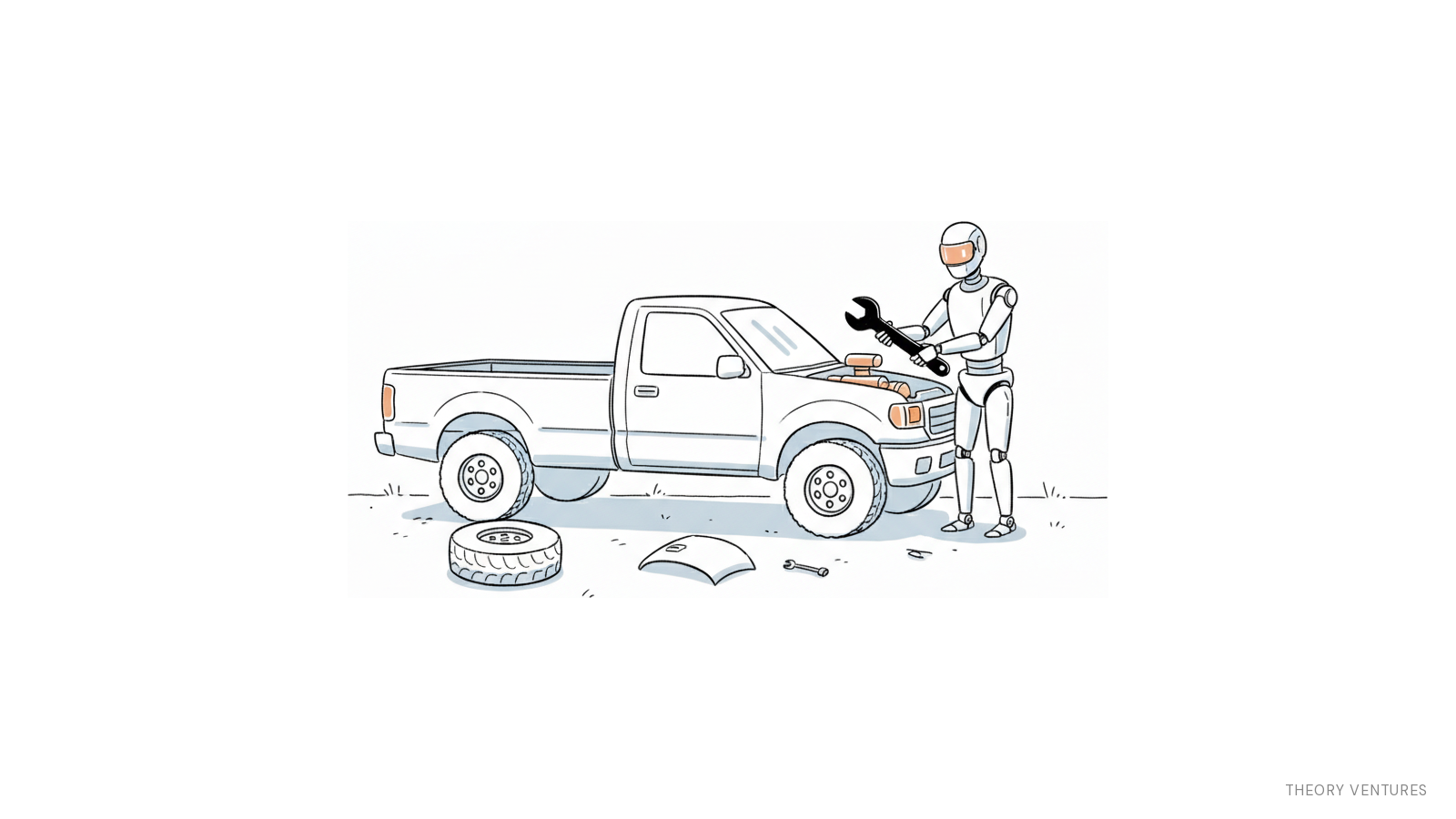
Thinking Machines Lab released Inkling, a 975B-parameter open-source AI model trained on 45 trillion tokens, designed as a generalist base for customization. The company launched it on Tinker, its fine-tuning platform, where weights are free but customization charges a fee—paralleling Slate Auto's $24,950 Blank Slate electric pickup truck, which ships bare (no stereo, speakers, touchscreen, or paint) to invite customer modification.
Why it matters
This strategy shows how open-source AI labs can fund development without giving away their work. By releasing a deliberately unremarkable general-purpose base and monetizing customization, Thinking Machines creates a sustainable business model similar to how Slate monetizes accessories. For enterprises, it means low-cost entry to a capable model paired with paid services to adapt it to specific needs.
What to watch
Inkling is positioned as a generalist model—good across many domains—rather than specialized. Thinking Machines is betting that the ability to fine-tune on Tinker will be valuable enough to customers to drive revenue, establishing a template for how open-source AI companies can remain viable.
Summaries like this, in your inbox every morning.
The article presents a strategic parallel between two companies pursuing what it calls a 'blank slate' model: ship a deliberately unremarkable, general-purpose base at a low price, then monetize through customization. Slate Auto's approach—a $24,950 electric pickup with no paint, stereo, speakers, or touchscreen—strips the vehicle to its essentials and invites buyers to add value themselves through accessories. Thinking Machines applies the same logic to open-source AI: Inkling is described as a generalist model, "good in many domains," released as a foundation "ready to be customized." The key insight is that open-source AI labs need a path to sustainability. By keeping the base model free and charging for the customization service (fine-tuning via Tinker), Thinking Machines solves the business model problem that has traditionally plagued open-source software—how to generate revenue when the core product is given away. This strategy positions Inkling not as a competitor to proprietary models on raw capability, but as a building block for customers who want to adapt it to their own needs.
Pick your industry and the AI tools you use, and get news related to your work every day.
Free · 30 seconds with Google · unsubscribe anytimeWhat is AIToday? →
Ask AI anything about this article. The AI reads this article, earlier AIToday articles, and Wikipedia, and cites its sources. Q&As are published on this page for other readers too.
Hewlett Packard Enterprise stock is down 5% at $55.87
The Motley Fool argues Amazon is the AI company of the two, since AWS was just 21% of first-half 2026 revenue…

Meta's new commercial terms, effective October 30th, appear to let it crawl and train AI on content from websi…
Vercel data published Thursday shows TypeSafe AI's Jev, a lightweight decision model for choosing among predet…
Chunghwa Telecom president Rong-shy Lin said the shift from conversational AI to autonomous AI agents is resha…
CoreWeave fell 5% in premarket trading Friday and was on track to finish the week down 15%, after rebounding f…