
Snowflake has introduced a new AI migration tool within its CoCo coding agent that converts Apache Spark code to Snowpark Connect—Snowflake's native Spark engine—from a single prompt.
Customers using Snowpark Connect report up to 5.1x faster performance and 42% lower costs compared to managed Spark services, and the tool automates what previously took hours of manual refactoring by scanning codebases for incompatibilities, applying fixes, and validating outputs end-to-end.
What happened
Snowflake has released a spark-migration skill within Snowflake CoCo (its data-native AI coding agent) that automatically converts Apache Spark pipelines to Snowpark Connect for Snowflake's engine. A single conversational prompt scans, rewrites, and validates an entire codebase—handling Python, Scala, Java, and notebook files—without manual cluster management.
Why it matters
Customers running Spark workloads on Snowflake see up to 5.1x faster performance and 42% lower costs compared to managed Spark services. The skill eliminates hours of manual compatibility testing and refactoring; Snowflake's engineering team built a compatibility knowledge base so the agent can flag unsupported patterns (RDD operations, certain UDF serialization, incompatible file formats) and rewrite them as DataFrame equivalents—keeping developers in control while automating the grunt work.
What to watch
The skill is bundled with CoCo at no additional setup cost and auto-activates when you mention Spark, PySpark, or code migration. It can also assess compatibility before migration starts, validate code against synthetic data before execution, or complete migrations started by other tools. Documentation is available to get started.
Ask the AI about this article →
Snowflake's move addresses a persistent pain point in cloud data engineering: migrating legacy Spark workloads to a new platform typically demands deep compatibility knowledge and labor-intensive refactoring. Generic AI coding assistants fall short because they lack context about which Spark patterns are unsupported on Snowflake and how to map them to functionally equivalent DataFrame operations. Snowflake's engineering team built a compatibility knowledge base specifically for this problem, embedding it into CoCo's agentic workflow so the tool can scan for RDD operations, certain UDF serialization patterns, and unsupported file formats—automatically inventorying and fixing them in parallel while flagging anything requiring human judgment.
The performance and cost gains—up to 5.1x faster, 42% lower costs—reflect the efficiency of running Spark workloads natively on Snowflake's engine rather than managing separate Spark clusters. By reducing migration friction from hours to minutes, the skill removes a major adoption barrier for teams with large Spark codebases. The optional validation phase (running original and migrated code against identical synthetic data and comparing outputs) provides confidence that behavioral equivalence is maintained, a critical concern when refactoring production pipelines.
For example, today's edition would include:
AI-summarized, only the topics you pick — one digest a day via Email, Slack, or Discord.
Free · takes 30 seconds · unsubscribe anytimeWhat is AIToday? →
Ask AI anything about this article. Q&As are published on this page for other readers too.
Israeli startup DataAgent Ltd
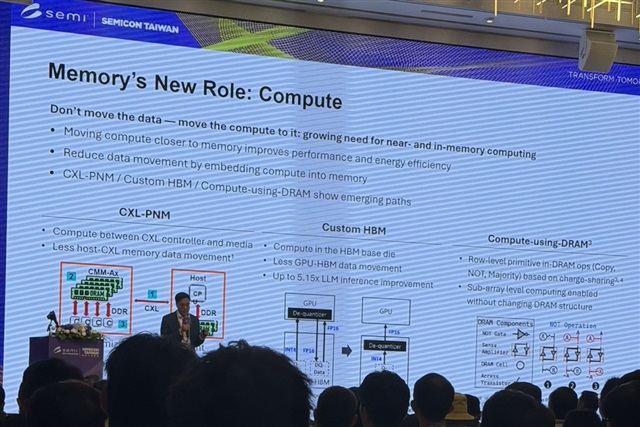
SK Hynix presented a custom HBM concept at SEMICON Taiwan 2026, where compute functions are placed in the base…
Taoyuan is positioning itself as a northern hub for AI data centers (AIDC), citing the Tatan area and an LNG c…
The U.S. Department of Defense announced on August 31 that it has deployed ChatGPT Mil, a customized version o…

Nvidia reported earnings that were both remarkable and boring, reflecting its focus on avoiding a consolidated…

Anthropic has agreed to a $35bn cloud-computing contract with Lambda, a Nvidia-backed cloud provider