What happened
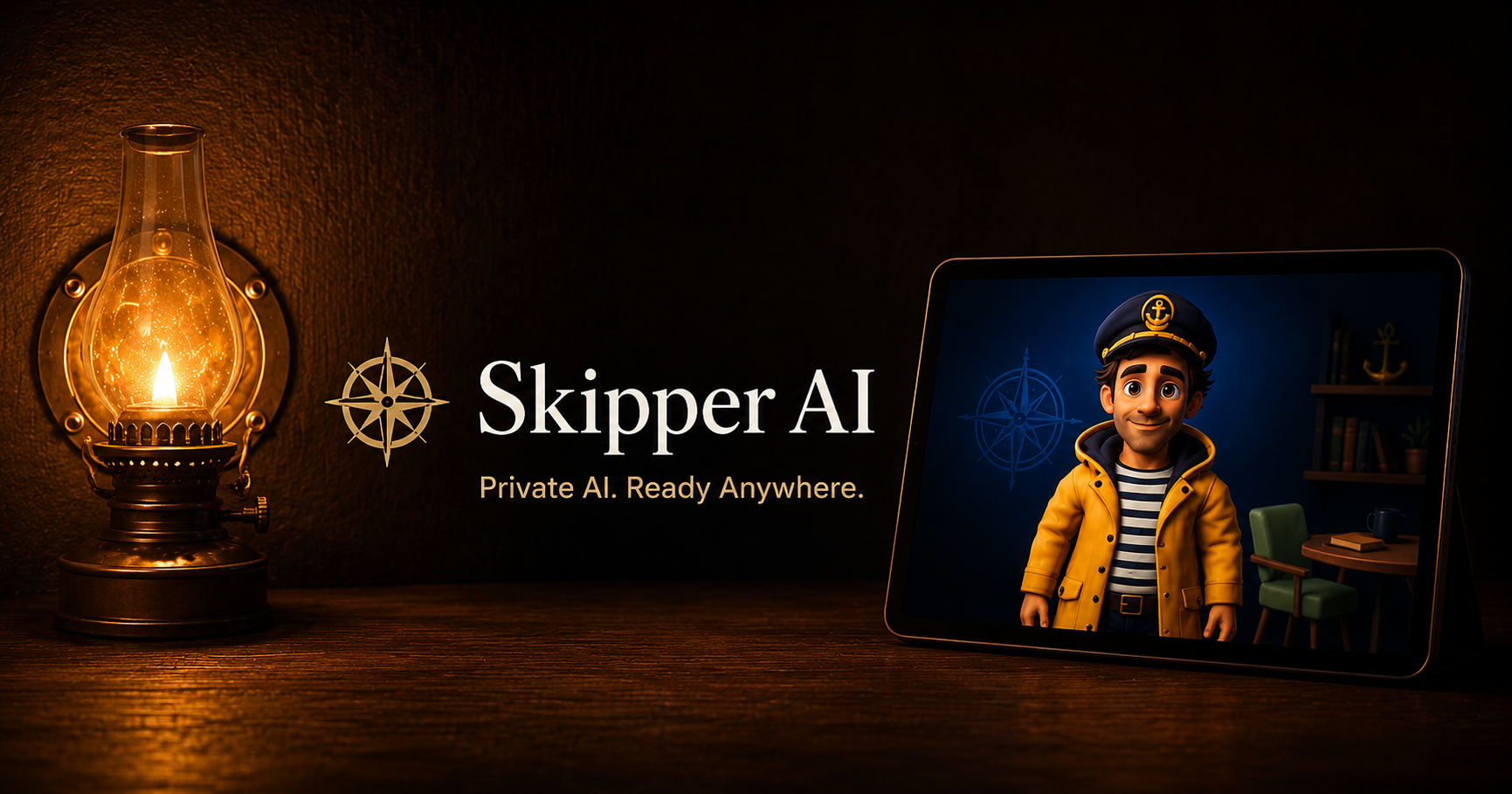
Skipper is an AI companion designed to work without internet, offering voice interaction, custom memory, HD vision, and local knowledge storage for use in off-grid environments like boats, remote homes, vehicles, workshops, expeditions, and private installations.
Why it matters
Users in environments with unreliable or no internet access can now access AI assistance—voice reminders, manuals, safety procedures, equipment information—without depending on cloud services, keeping all core intelligence and information stored locally within the Skipper system rather than on external servers.
What to watch
Skipper's ability to integrate with onboard, household, or mobile systems and retain user-specific context and personality; the product is customizable for specialized environments and retains all data locally, appealing to maritime, remote, and field-work users who cannot rely on connectivity.
Summaries like this, in your inbox every morning.
Skipper addresses a gap in AI-assistant design: most consumer and business AI tools rely on cloud connectivity, making them unavailable in remote or off-grid locations. This product inverts that dependency by storing all knowledge, context, and processing locally. The use cases span maritime (where vessels lose internet coverage during passages), rural and remote homes with poor connectivity, mobile platforms like caravans and vehicles, technical environments like workshops where manuals and procedures must be quickly accessible, and specialized fieldwork where documents and checklists are mission-critical. By offering voice interaction, custom memory that adapts to individual users, and optional integration with onboard or equipment sensors, Skipper positions itself as a practical tool for professionals and users in environments where conventional cloud-based AI assistants fail. The emphasis on local operation and privacy (keeping all data within the Skipper system) appeals to users concerned about data sovereignty or those in regions where internet dependency is a genuine operational liability.
Pick your industry and the AI tools you use, and get news related to your work every day.
Free · 30 seconds with Google · unsubscribe anytimeWhat is AIToday? →
Ask AI anything about this article. The AI reads this article, earlier AIToday articles, and Wikipedia, and cites its sources. Q&As are published on this page for other readers too.
Chunghwa Telecom president Rong-shy Lin said the shift from conversational AI to autonomous AI agents is resha…

Apple and Meta said they would jointly release a new open-weight AI model designed to run on high-end Macs, ai…

A writer and entrepreneur opened his daily to-do list and found 156 items, and concluded that an AI assistant…

A Zenn contributor sorted AI use into three modes — AI as an assistant, AI running alongside people, and AI th…

A non-engineer operator says one person ships four smartphone apps on Google Play, three on the App Store, wit…
The walkthrough points the CLI at a local mock via the ANTHROPIC_BASE_URL environment variable

