What happened
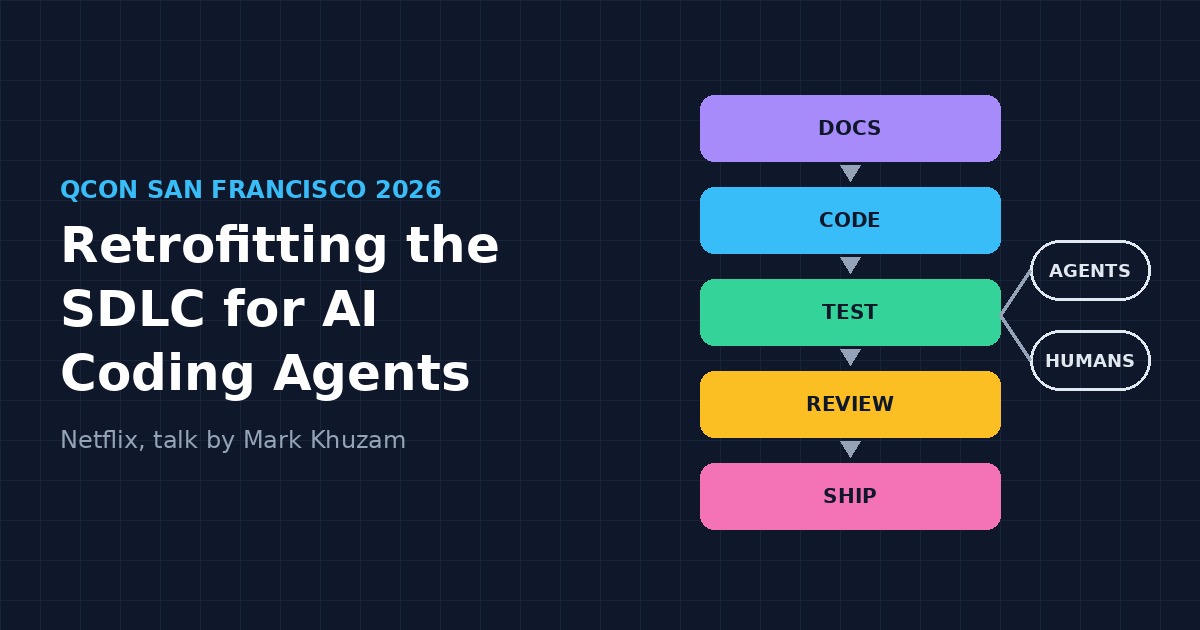
Netflix senior engineer Mark Khuzam told QCon San Francisco 2026 that the Commerce team wrote 45 architecture decision records for AI agents and built per-domain GraphRAG tools, yielding 32% more pull requests year over year and developer NPS up from -3 to +25 over three quarters.
Why it matters
The gains came from documentation, consistency and review rather than from the agents themselves, suggesting other engineering organizations may see similar returns from investing in 'context engineering' rather than just deploying coding tools.
Summaries like this, every morning.
Netflix's Commerce team did not start with a grand redesign. According to Mark Khuzam's QCon San Francisco 2026 talk, the first attempt—having an agent migrate tests—took four tries, and the team progressively added instructions, APIs and mocking guidance. The internal framework's developer Net Promoter Score was -3, and documentation was hard to find because the agent's context window ran out before locating the right page, while tests were written inconsistently across the codebase. Those failures pointed to a root cause the team summarized as: "Agents promised speed. But we spent 20 years building for humans."
The fix, which Khuzam called context engineering, centered on 45 architecture decision records written for both people and agents, each covering context, decision, pattern and anti-pattern, plus AI usage notes and links to related docs and code. To keep those records and more than 300 other documents findable, the team borrowed a search-engine convention: an AGENTS.md file plays the part of robots.txt. The second half of the talk followed code after an agent writes it, noting that the CI pipeline remains deterministic—running builds, tests, screenshot diffing, merge queues and canaries—while a review agent now pre-reviews pull requests against the docs and ADRs. Its first version left 23 comments on a single PR; it now posts only verified blockers with evidence, a fix and the ADR rule it breaks.
Cross-service work raised a harder question about who owns context and how it follows the work. Khuzam listed approaches that did not hold up: loading every repository did not fit, Git submodules were brittle, a Git MCP server "sees one file, not the system," and shared copies went stale. The team settled on GraphRAG per domain, pinned to specific commits and served through a single Model Context Protocol tool queried by Claude Code, Cursor, Codex, a Slack bot and CI review. Khuzam closed with three rules, ending on a note that the work is not novel: "None of this is new. It's good engineering, built for a new reader."
Pick your industry and the AI tools you use, and get news related to your work every day.
Free · 30 seconds with Google · unsubscribe anytimeWhat is AIToday? →
Ask AI anything about this article. The AI reads this article, earlier AIToday articles, and Wikipedia, and cites its sources. Q&As are published on this page for other readers too.
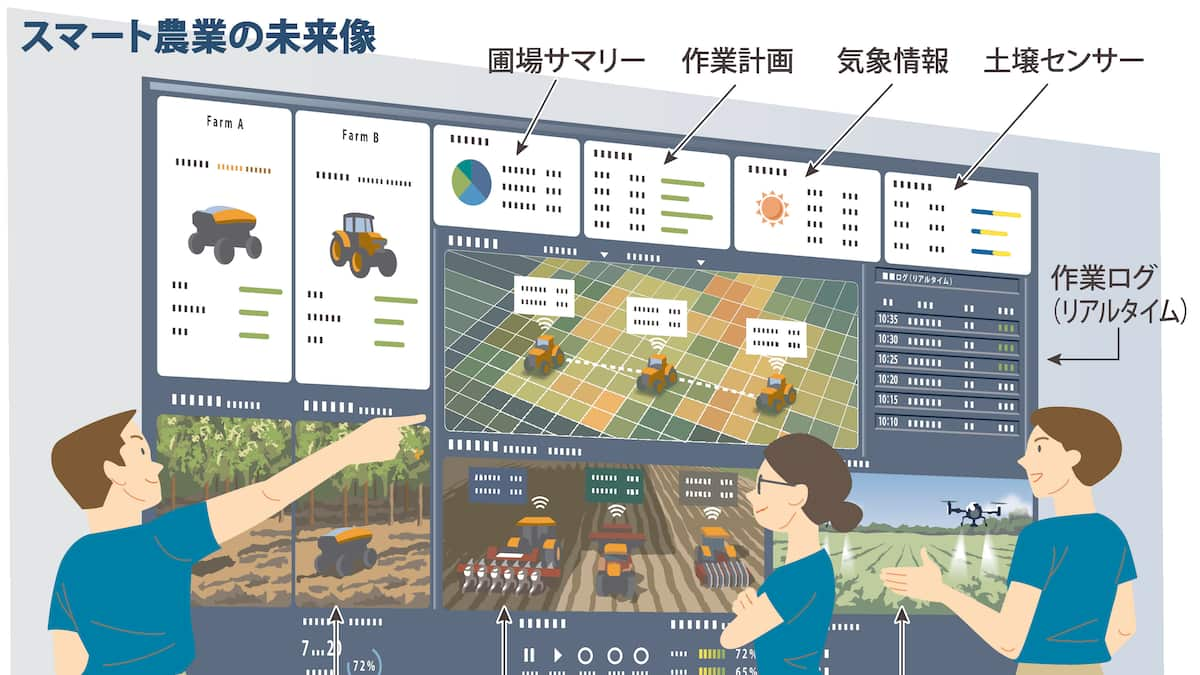
Kubota will launch Japan's first remotely monitored unmanned autonomous tractor in April next year
Coca-Cola revealed its "Enjoy Joy" holiday campaign, a montage of families set to a reinterpretation of "I'd L…

Lam Research shares rose 15.92% to $212.45, building on a premarket gain of more than 7% as investors bought b…

Marvell Technology announced a collaboration with Penguin Solutions pairing Marvell's CXL direct-attach memory…
Lam Research committed US$15 million through the Lam Foundation to expand STEM and AI literacy for youth, incl…
Broadcom is reported to face reduced AI accelerator shipments to Google, which is said to be scaling back orde…