What happened
Researchers built Taste-Bench, 502 binary questions frozen at a branching point in real agent runs. Best model GPT-5.6 Sol averaged 59.7 percent; pure guessing scores 25 percent.
Why it matters
Even top models struggle to judge which long-term step is better, a skill existing benchmarks that only check task completion do not measure.
WHO IT HITSAI developers building long-running autonomous agents, such as coding assistants that work through multi-step tasks, may need to account for weak strategic judgment when relying on models to choose their own path.
Summaries like this, in your inbox every morning.
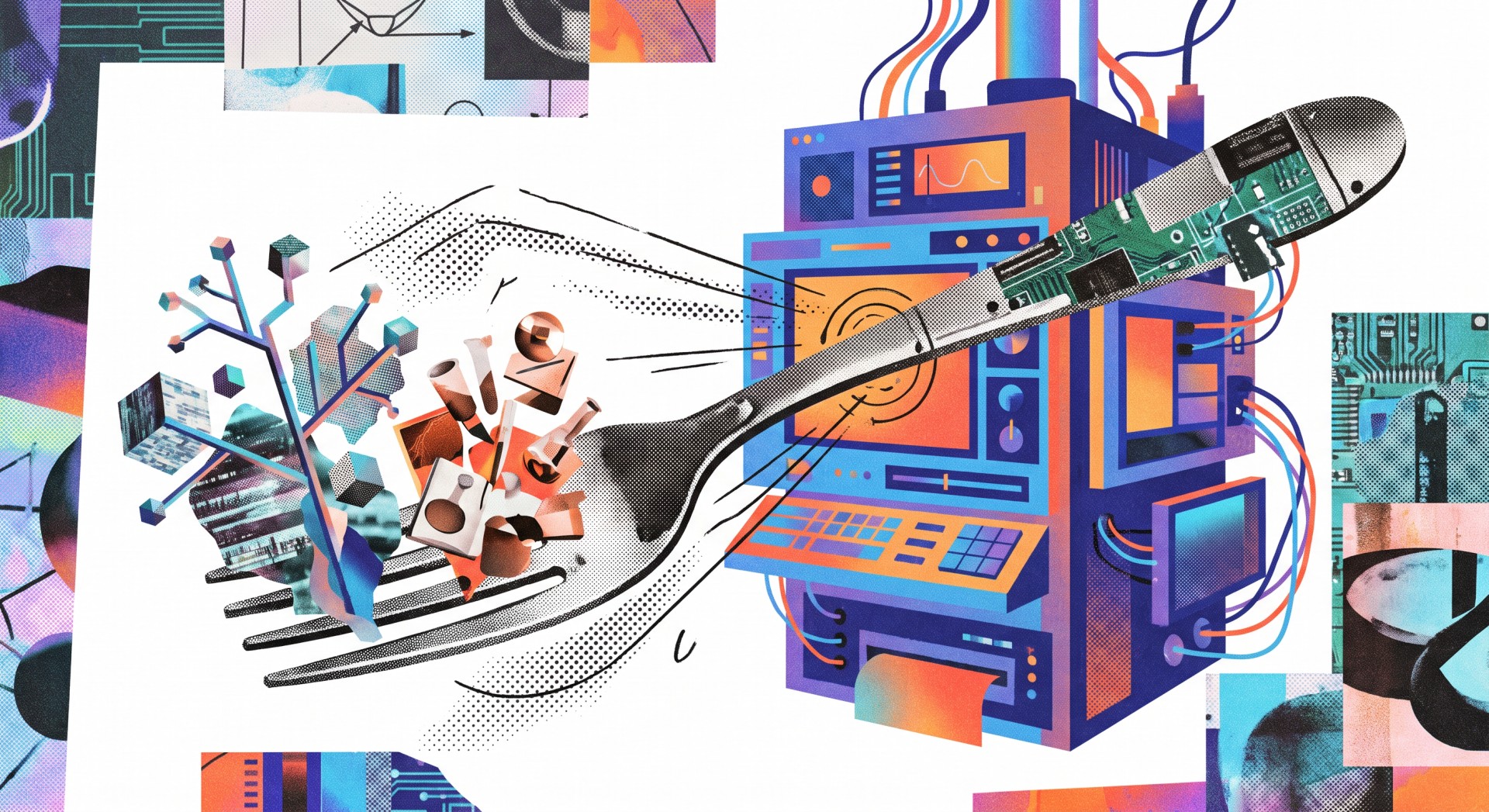
The benchmark is built on a simple observation about how agents actually work: when the same task is attempted multiple times, the attempts eventually diverge, and the final results show which path was better. By freezing a run at that branching point and hiding all later work, the researchers turn ordinary agent runs into labeled comparisons. The raw data came from thousands of scored runs on coding and AI research tasks, including SWE-bench Pro and METR's MALT transcript release, and human review confirmed almost all of the auto-generated labels.
One pattern stands out in the results. When the key clue is already visible in the prior steps, average accuracy across all models reaches 62.3 percent. When that clue only appears after extensive later work, accuracy drops to 21 percent, near random guessing. The researchers repeated the test with three reasoning settings for two models, and switching from the lowest to the highest setting barely changed accuracy. Models spent the most reasoning tokens on the hardest tier, thinking longest on the questions they missed most often, which the team reads as a sign that the needed clue simply is not there yet at those forks.
The authors argue that this captures a different skill from classic end-to-end tests. Models that score similarly on SWE-bench Verified show clear gaps on Taste-Bench. They also show the skill can be taught: distilling a teacher model's judgment into a Qwen3.6-27B student raised accuracy on unseen tasks from 30 to 47.9 percent, and feeding that student's advice into a separate agent lifted SWE-bench Pro success from 14.6 to 33.7 percent, close to the 39 percent ceiling of perfect advice.
Pick your industry and the AI tools you use, and get news related to your work every day.
Free · 30 seconds with Google · unsubscribe anytimeWhat is AIToday? →
Ask AI anything about this article. The AI reads this article, earlier AIToday articles, and Wikipedia, and cites its sources. Q&As are published on this page for other readers too.
Anthropic is consulting law firms to develop fair negotiation norms for AI agents that would haggle over price…

Sterling plans to deploy BitRipple's LT3 GPU transport on AMD GPU platforms for its federal, public sector and…
A LessWrong essay argues the most powerful models in the world are likely internal models, potentially never i…
Google and Unity Software announced Unity Spark, an AI game creation platform blending Google's AI research an…
Docker published an analysis of major AI coding agent incidents from October 2024 to February 2026, including…
Kauan, a 16-year-old developer from Brazil, is building Tiny Agents, a Python framework aimed at making AI age…