What happened
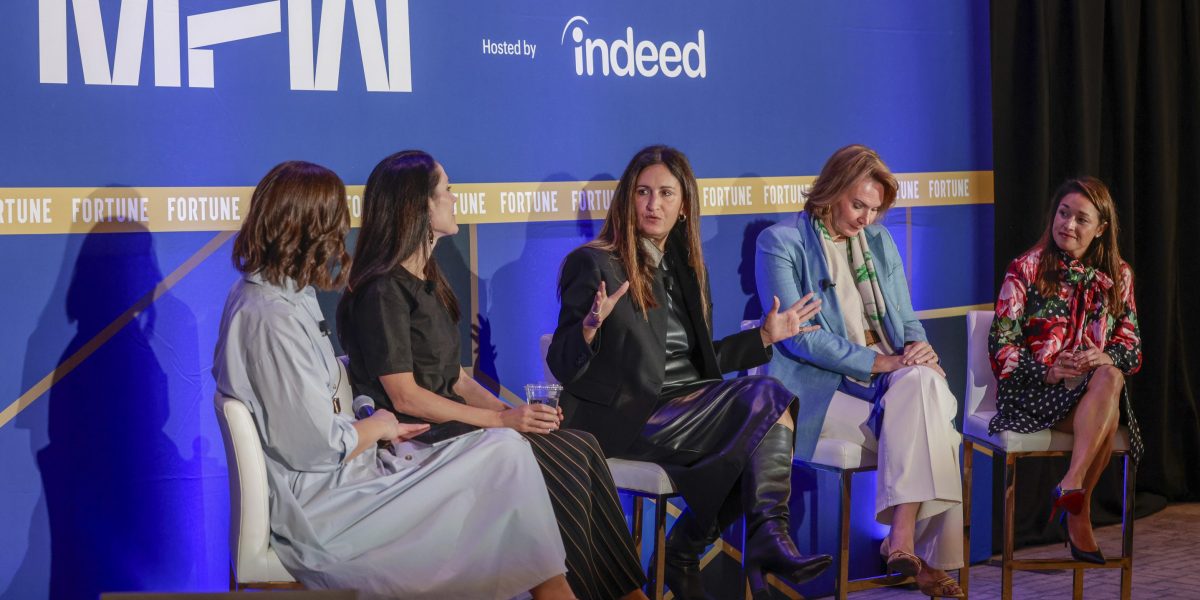
At a Fortune Most Powerful Women conference, Bristol Myers Squibb's Amanda Poole said the company is exploring a "well-being quotient" to decide how to split AI productivity gains, citing a hypothetical 20% gain.
Why it matters
Poole said the company has not solved how much of the productivity gained from automating "joyless" work should go back to employees for their well-being.
Summaries like this, in your inbox every morning.
The discussion at the Fortune Most Powerful Women conference reflects a shift in how some executives are measuring AI's payoff. Rather than treating productivity as purely a financial number, leaders are asking what the technology should deliver for workers themselves. At Bristol Myers Squibb, that question centers on automating what Amanda Poole called "joyless" work and whether the time freed up should support employee well-being or accrue mainly to the business. Poole framed the split as unsettled, using a hypothetical 20% productivity gain to illustrate the choice. The company's exploratory "well-being quotient" is one attempt to make that decision explicit.
Pick your industry and the AI tools you use, and get news related to your work every day.
Free · 30 seconds with Google · unsubscribe anytimeWhat is AIToday? →
Ask AI anything about this article. The AI reads this article, earlier AIToday articles, and Wikipedia, and cites its sources. Q&As are published on this page for other readers too.
Benzinga framed Corning, Meta's fiber partner, around whether it can capitalize on rising AI fiber prices
S&P Global warned that top hyperscalers likely have more AI-linked debt than is currently known, Reuters repor…

In a piece dated October 19, 2026, Claudia Laszczak reports that more and more companies are handing first-sta…

CEO Rick Wurster said Schwab is blocking third-party AI agents — including Meta's Muse — from executing transa…
Stellar Cyber was positioned among the top two progressive companies in MarketsandMarkets' AI SOC market evalu…

Ciena Corporation (NYSE:CIEN) rose 4% to $347.48 and Arista Networks climbed 4% to $183.32, ahead of the iShar…