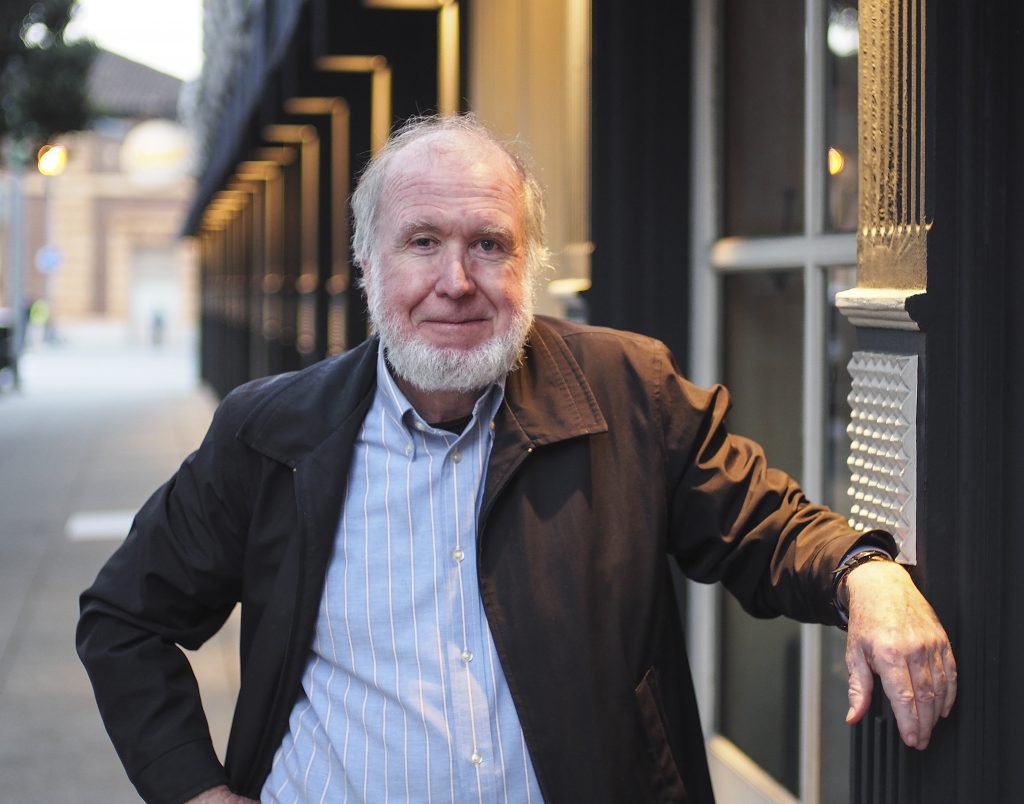
Kevin Kelly's updated essay argues that when AI can generate unlimited free copies of creative work, creators must instead sell eight intangible qualities that cannot be replicated: immediacy (first access), personalization (custom versions), interpretation (expert guidance), authenticity (verified source), accessibility (easy delivery), embodiment (physical or live experience), patronage (direct fan support), and findability (discoverability in a crowded market). Real-world examples—from Spotify's accessibility model to Red Hat's 25-year consulting business—show these generatives already working; the task for creators in 2026 is choosing which to emphasize.
Summaries like this, in your inbox every morning.
Sign up free →What happened
Kevin Kelly, co-founder of WIRED, updated his 2008 essay 'Better Than Free' to address how creators can earn money when AI produces competent copies of words, images, music, code, and advice in seconds. The piece identifies eight intangible 'generatives'—qualities that cannot be copied—that remain valuable in a copy-saturated world: immediacy, personalization, interpretation, authenticity, accessibility, embodiment, patronage, and findability.
Why it matters
As perfect digital copies become free and effortless to produce, the traditional creator business model of selling copies is obsolete. The essay argues that trust, personalization, expert guidance, brand credibility, convenience, physical experience, audience connection, and discoverability are the only assets that still command payment—a framework that applies whether the copy machine is the internet (2008) or AI (2026). For any creator or business selling digital work, identifying which generative to emphasize is now essential to survival.
What to watch
Kelly cites concrete examples of generatives already generating revenue: Spotify and Amazon Prime profit from accessibility (organizing free or cheap music/content); Red Hat has sustained a 25-year business selling interpretation and support for free open-source Linux; live concerts and author talks sell embodiment at a premium despite free recordings; and platforms like Patreon enable patronage by making it easy for fans to pay creators directly. The challenge now is scaling these models as AI commoditizes the copy itself.
In 2008, Kevin Kelly published 'Better Than Free,' an essay addressing how creators could earn income when digital copies became free and infinite. Now, eighteen years later and with AI capable of generating competent variations of words, images, music, code, and advice in seconds, Kelly has revisited and updated the piece—finding that the central theme remains intact: you must sell things which cannot be copied.
Kelly opens by contrasting the analog and digital worlds. In the pre-internet era, making a copy required physical effort and friction, which the legal system rewarded by granting creators copyright—the right to make and sell copies. That monopoly sustained careers. But the digital world inverted the model: copies became free to make and distribute at scale. The internet is, Kelly writes, 'basically a copy machine,' a superconductive fluid that transmits copies everywhere, forever, without leaving traces of the original or degrading. Once a creation touches the internet, it will be copied endlessly and freely. The old business—selling copies—is gone.
Kelly's answer is that when copies become worthless because they are super-abundant, the scarce and valuable assets are those that cannot be copied. He identifies eight such intangible 'generatives'—assets that must be generated, grown, and cultivated in real time within a relationship between creator and audience, not cloned, stored, faked, or replicated. The first, immediacy, is the value of getting a work the moment it is released. Many people pay theater ticket prices to see films on opening night, even though the same films will be free or cheap on streaming later; hardcover books command premiums for their earliness, disguised as sturdier format; and a writer's timely newsletter might be purchased for insights that will later appear free online. Immediacy is relative and must fit the product and audience.
Second is personalization. A generic concert recording may be free, but an audio-engineered version tailored to your particular living room might command a high price. A book could be custom-edited based on your reading history. DNA-based aspirin, though aspirin itself is cheap, would be expensive. Personalization requires ongoing conversation and iteration—it cannot be copied because it reflects a unique relationship.
Third is interpretation. Software itself may be free (as bits are), but the manual, training, and support that make it useful are not. Red Hat, a for-profit company, has sold support, training, and consultation for enterprises using free open-source Linux for twenty-five years. Kelly speculates that genetic information will follow the same path: sequencing your DNA will eventually be free (pharmaceutical companies may even pay you to be sequenced so they can sell you targeted drugs), but interpreting what it means and what you can do about it—the 'manual for your genes'—will be expensive.
Fourth is authenticity. You might download an app for free, but you may pay for assurance that it is bug-free, reliable, and warranted. There are countless recordings of Grateful Dead jams; an authentic version from the band itself ensures you have the one you want, performed by the actual band. Graphic reproductions have long carried the artist's signature to raise the price; digital watermarks will not stop copying but can serve the generative quality of authenticity for those who value it.
Fifth is accessibility. Free does not mean easy to get. Clearinghouses like Spotify and Amazon Prime—which organize otherwise free or cheap music, books, and content into easy-to-use formats accessible anytime, anywhere—command payment because they solve the problem of storage, backup, and interface. Even free stuff requires tending; an agency can do that for a fee.
Sixth is embodiment. A digital copy is bodiless. You can throw free content on a phone, but you might want it in 16K on a huge screen, or in 3D, or printed on fine paper and bound in leather. The hardcover book is embodiment; it feels good. A hi-res display in a home theater today may become tomorrow's norm, but new display technology—laser projection, holographic, eventually holodeck—will always command a ticket to experience it in person. And nothing embodies work like live performance: the music is free, but the bodily performance is expensive; the book is free, but the author's talk is expensive; the movie is free, but the toy merchandise is expensive.
Seventh is patronage. Kelly believes audiences want to pay creators. Fans like to reward artists, musicians, and authors with tokens of appreciation because it creates connection—but only if it is very easy to do, the amount is reasonable, and the money goes directly to the creator. Radiohead's experiment in letting fans name their price for a free album yielded about $5 per download. The platform Patreon, which enables fans to easily and dependably support creators, is what Kelly calls 'a great boon to creators.' Kelly himself runs two free Substack newsletters but receives payment from readers who wish to establish a direct connection with him; he thanks them personally.
Eighth and finally is findability. A price of zero does not direct attention; 'free' may even make it easy to ignore. But a work has no value unless it is seen. Unfound masterpieces are worthless to the world. With millions of books, songs, movies, apps, and agents all demanding attention—most of it free—being found is valuable. We pay Netflix and some users pay YouTube partly to help us find good free stuff, which is why creators hook up with aggregators. But those technologies of findability favor the economic interests of the big aggregators rather than creators, who receive only a fraction of audience spending. Alternatives like Kelly's 1,000 True Fans model can help but remain constrained by the difficulty of discoverability.
Kelly frames these eight generatives not as new categories but as proof that human attention, trust, and connection remain the currency of a copy-saturated world. The essay was published (in this updated form) at a time when AI can now generate competent variations of any digital work in seconds—a more urgent threat to the copy-based business than the internet alone ever posed. Yet the answer, Kelly argues, remains the same: sell what cannot be copied, and that is not the work itself but the relationship, the reliability, the presence, and the access that only the creator or a trusted intermediary can provide.
Kelly's updated essay reframes a 2008 argument for the AI age: when reproduction costs approach zero, the creator's livelihood cannot rest on selling copies. The original insight—that trust, convenience, and connection are valuable precisely because they resist duplication—becomes more acute as AI automates content generation. The eight generatives Kelly catalogs are not new income streams but ancient human desires repackaged for a network economy: audiences want to support creators (patronage), to receive something tailored to them (personalization), to feel sure they are getting the genuine article (authenticity), and to access it without friction (accessibility). The essay's evidence spans decades: Red Hat turned free Linux into a $25+ billion acquisition by selling interpretation and support; Radiohead discovered patronage worked at scale when given easy payment tools; live concerts remain expensive precisely because they offer embodiment—the performer's physical presence—that no recording can replicate. Kelly's framing sidesteps the panic about AI replacing creators by pointing instead to what AI cannot replace: the relationship between creator and audience, the trust that flows from consistency over time, and the scarcity of attention in a world drowning in free content.
AI-summarized, only the topics you pick — one digest a day via Email, Slack, or Discord.
Free · takes 30 seconds · unsubscribe anytime
No comments yet. Be the first to share your thoughts!
Log in to join the discussion


Get curated AI news from 200+ sources delivered daily to your inbox. Free to use.
Get Started FreeFree · takes 30 seconds · unsubscribe anytime
1 minute a day. The AI essentials.
200+ sources · Email / LINE / Slack
