What happened
Apple researchers introduced FAE (Feature Auto-Encoder), a framework that uses as little as a single attention layer to adapt pre-trained visual representations into low-dimensional latents suitable for image generation. FAE works with various self-supervised encoders like DINO and SigLIP, and can be applied to both diffusion models and normalizing flows.
Why it matters
Adapting high-quality pre-trained visual representations for generation has been challenging due to a mismatch between features designed for understanding (which favor high-dimensional latents) and generation (which require low-dimensional latents). FAE simplifies this adaptation with minimal architectural complexity while preserving information needed for both image reconstruction and understanding, potentially making it easier for developers to build generative models.
What to watch
On ImageNet 256×256, FAE achieved an FID of 1.29 with classifier-free guidance (800 epochs) and 1.70 (80 epochs); without guidance, it reached 1.48 (800 epochs) and 2.08 (80 epochs), described as state-of-the-art or near state-of-the-art performance.
Summaries like this, in your inbox every morning.
The paper addresses a well-known challenge in generative modeling: pre-trained visual encoders—which excel at capturing semantic understanding through high-dimensional representations—do not naturally align with the requirements of generative models, which operate in compressed latent spaces to balance efficiency and quality. Prior work has tackled this mismatch through complex objectives and specialized architectures, but FAE proposes a markedly simpler solution: using a single attention layer coupled with two separate deep decoders. The framework decouples the reconstruction of the original feature space from the image generation step, allowing each component to optimize for its specific goal without forcing one representation to serve both purposes simultaneously.
The breadth of FAE's applicability—working with multiple self-supervised encoders (DINO, SigLIP) and multiple generative model families (diffusion and normalizing flows)—indicates that the approach is general rather than tailored to a specific architecture. This generality, combined with its minimal layer count, suggests the method may be accessible to practitioners seeking to incorporate high-quality pre-trained representations without engineering overhead. The reported benchmarks position FAE competitively: achieving state-of-the-art or near state-of-the-art FID on ImageNet 256×256 while also demonstrating fast learning (strong results at 80 epochs as well as 800 epochs) reflects both high quality and practical training efficiency.
Pick your industry and the AI tools you use, and get news related to your work every day.
Free · 30 seconds with Google · unsubscribe anytimeWhat is AIToday? →
Ask AI anything about this article. The AI reads this article, earlier AIToday articles, and Wikipedia, and cites its sources. Q&As are published on this page for other readers too.
TOPPAN Holdings and Keio University ran a quantum-computer and generative-AI proof-of-concept from February 1…

Black Forest Labs released FLUX 3 Image Klein as open weights on October 15, 2026 — a 5.6B-parameter model for…
Krea opened the beta for Krea 3, which does end-to-end 2K edits in under 8 seconds, accepts up to 8 reference…

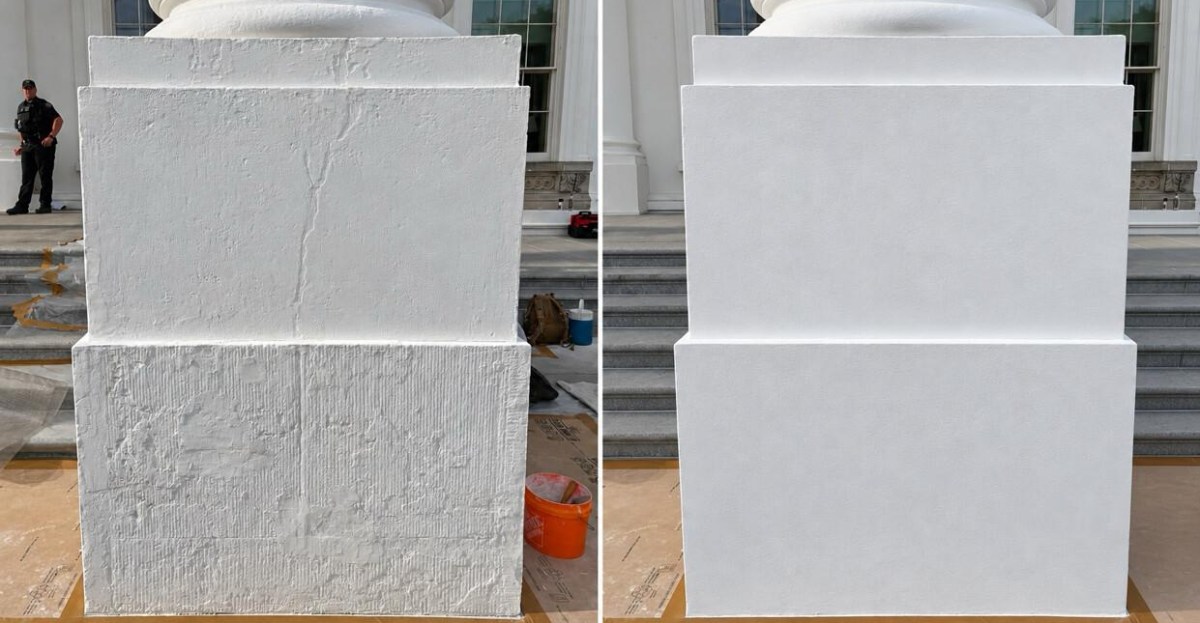
President Donald Trump posted photos on Truth Social showing White House renovations, but one comparing an old…
Universidad de Córdoba (UCO) has published a guide titled "AI NSFW 2026: reference tools, reusable workflows a…
Black Forest Labs released FLUX 3 Image Klein, a 5.6-billion-parameter open-weights model for text-to-image ge…