What happened
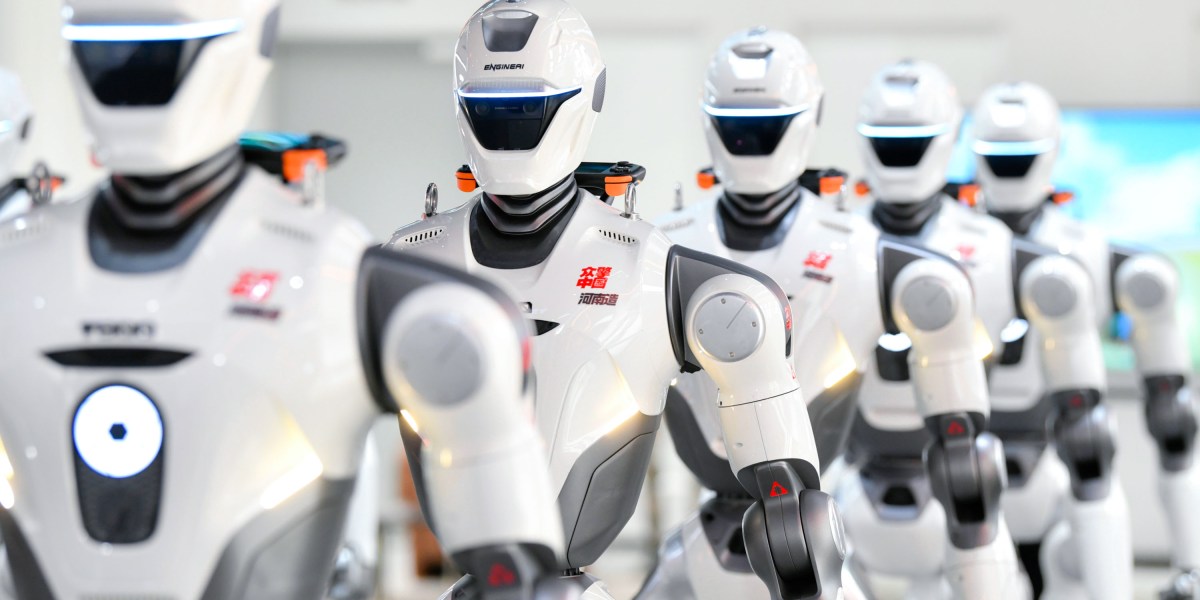
The Federal Communications Commission last week issued a sweeping ban on foreign imports of advanced robots—including humanoids, quadrupeds, and wheeled robots—citing national security risks from data collection and the need to protect US robotics companies from Chinese competition.
Why it matters
The ban signals that the Trump administration is expanding AI protectionism beyond leading labs to emerging sectors like robotics. However, the move creates a paradox: US robotics companies and academic labs rely heavily on cheap Chinese robots for research—a 90% of recent robotics research papers from US universities used robots from Unitree, China's top humanoid robotics company—so the ban could slow domestic innovation rather than boost it. The price gap is stark: a Unitree four-legged robot costs around $4,600, while a comparable Boston Dynamics model costs $278,000.
What to watch
Unitree plans to go public this week targeting a nearly $6 billion valuation, underscoring the gap between Chinese and US robotics maturity. Meanwhile, US companies like Figure and 1X are still ramping production—Figure's humanoids are not yet selling at scale, and 1X's robots aren't yet shipping to homes—making the industry's ability to fill the void left by the import ban unclear.
Summaries like this, in your inbox every morning.
The robotics ban should be understood as an extension of the Trump administration's aggressive protection of the US AI industry. The administration is reportedly considering additional measures, including a ban on open-source Chinese AI models that rival those from OpenAI and Anthropic while costing far less—a move the body estimates would block businesses from realizing $25 billion in annual savings. The FCC's robotics decision follows the older US playbook of using tariffs or import restrictions whenever China has offered cheap versions of strategic technologies, from solar panels to electric vehicles. However, robotics occupies a unique position as both an emerging sector and a cutting edge of AI itself, making the symbolism of the ban particularly significant: the administration now sees humanoid robotics not as a novelty, but as a strategic frontier worth protecting from foreign competition.
The core tension is that US and Chinese robotics industries are at vastly different stages of maturity. Unitree plans to go public this week targeting a nearly $6 billion valuation, while no US robotics companies offer meaningful comparison. Figure's humanoids are not yet selling at scale, and 1X's robots aren't yet shipping to homes. This maturity gap, combined with US researchers' dependence on Chinese robots for training and innovation, creates a paradox: by blocking access to affordable foreign robotics, the ban may actually slow the very domestic innovation it aims to accelerate. Aaron Prather, director of market intelligence for the Association for Advancing Automation, notes that Chinese models offer the best price-to-capability ratio available and warns that the ruling "creates a challenge for US humanoid researchers."
Some US robotics companies welcome the move on cybersecurity grounds. Ghost Robotics CEO Gavin Kenneally pointed to a real security incident cited in the FCC document—in which a man gained control of 7,000 robot vacuum cleaners—as evidence that cybersecurity risks are genuine. Yet the practical impact of the ban remains hard to predict given the many carve-outs in the FCC's order, even as its symbolic message is unmistakable: the administration is willing to intervene on behalf of an emerging sector still barely finding its footing.
Pick your industry and the AI tools you use, and get news related to your work every day.
Free · 30 seconds with Google · unsubscribe anytimeWhat is AIToday? →
Ask AI anything about this article. The AI reads this article, earlier AIToday articles, and Wikipedia, and cites its sources. Q&As are published on this page for other readers too.
Chunghwa Telecom president Rong-shy Lin said the shift from conversational AI to autonomous AI agents is resha…
CoreWeave fell 5% in premarket trading Friday and was on track to finish the week down 15%, after rebounding f…
Apple and Meta said they would jointly release a new open-weight AI model designed to run on high-end Macs, ai…
Investors put $38.5 billion into Asian startups in Q3, per Crunchbase data

A longtime Anthropic investor told Fortune he expects shares priced around $1.8 trillion, below the company's…
In Q2, billionaires or their funds sold six 'Magnificent Seven' AI stocks