AIToday
Yahoo Finance AIPublished: Aug 4, 2026, 10:00 JST4 min read

SanDisk, SK hynix release AI memory standard with Google, Tenstorrent

SanDisk, SK hynix release AI memory standard with Google, Tenstorrent

Key takeaway

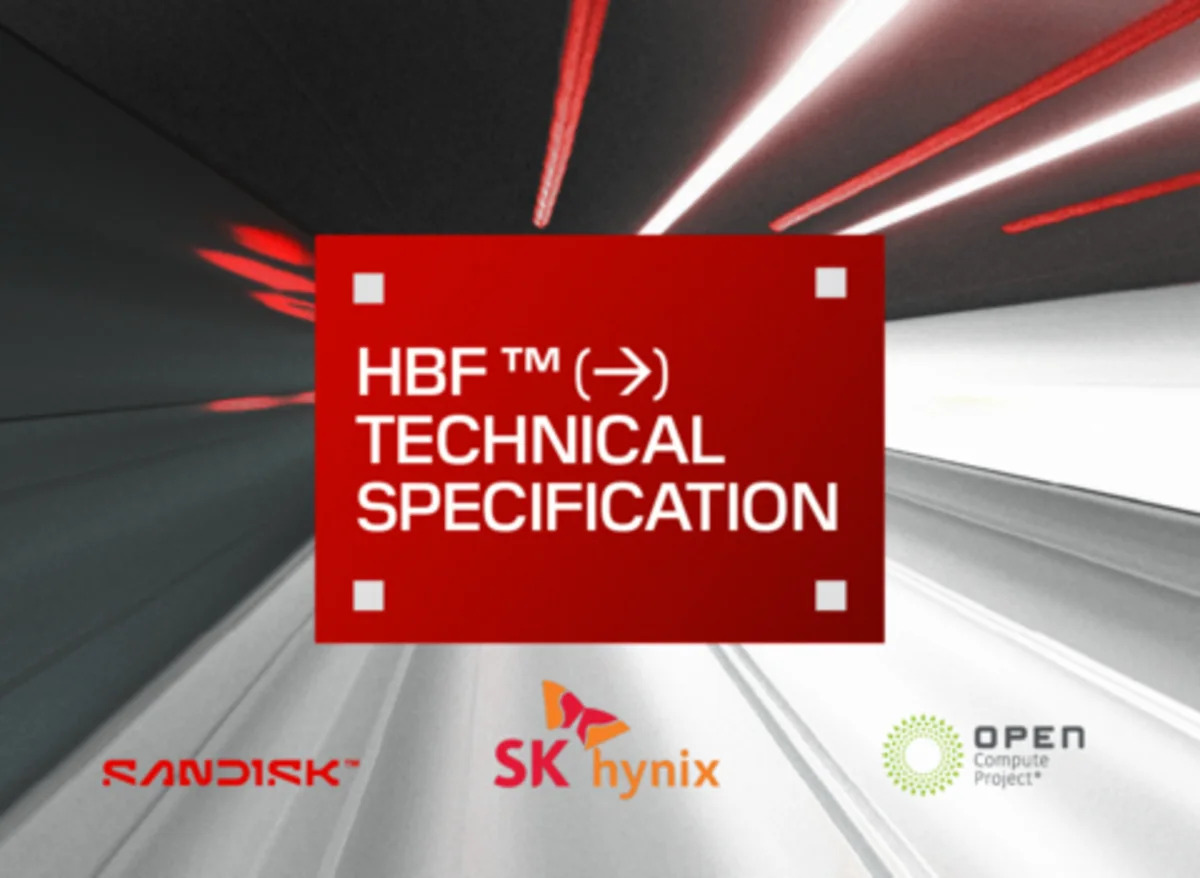
  • SanDisk and SK hynix have released the first technical specification for High Bandwidth Flash (HBF) through the Open Compute Project, a standardization effort begun in February 2026 and completed in August with support from Google and Tenstorrent.

  • HBF technology is designed to address the memory demands of modern AI inference systems by combining high capacity with high bandwidth positioned close to compute cores, helping data center designers improve power efficiency and reduce total cost of ownership while supporting flexible system architectures.

3 Key Points

  1. What happened

    SanDisk and SK hynix released the first Open Compute Project (OCP) technical specification for HBF (High Bandwidth Flash) on August 3, 2026, six months after the consortium began work in February. Google and Tenstorrent joined as consortium members and contributed to technology validation and standard development.

  2. Why it matters

    AI inference systems require high-bandwidth memory positioned close to compute cores, and HBF technology addresses this by combining high capacity with high bandwidth to improve power efficiency and reduce total cost of ownership. The specification gives system designers a common technical framework and practical path to build flexible architectures where HBF can coexist with existing high-bandwidth memory.

  3. What to watch

    The specification defines system interface, electrical guidelines, the xPU-HBF host interface, reliability and packaging guidance for HBF die stacks, and a software user guide for read and write operations—establishing the first technical standard of its kind in the memory and storage industry.

In Depth

Read the full story

On August 3, 2026, SanDisk Corporation and SK hynix Inc. announced the release of the High Bandwidth Flash (HBF) technical specification through the Open Compute Project (OCP), marking the culmination of a six-month standardization effort that began in February 2026. The specification was developed through the HBF technology workstream under OCP, with SanDisk and SK hynix as primary contributors. Notably, Google and Tenstorrent joined the consortium as members during the standardization process, contributing significantly to technology validation and the establishment of the standard.

The specification addresses a critical infrastructure need: modern AI inference systems require high-bandwidth memory positioned close to compute cores, and the demand for greater near-compute memory capacity continues to grow with the requirements of large language models and emerging AI workloads. HBF technology is designed to combine high bandwidth with high capacity, helping data center system designers improve interactivity and throughput during model serving while improving power and performance metrics and reducing total cost of ownership. Alper Ilkbahar, Chief Technology Officer at SanDisk, stated: "AI inference is creating a new set of memory requirements, and HBF technology is designed to meet that moment. This specification helps give system designers a practical path to bring high-capacity, high-bandwidth memory closer to compute, while enabling more flexible architectures. It is an important milestone for the HBF ecosystem and for the next generation of AI systems built to improve token economics at scale."

The specification defines a comprehensive technical framework including system interface, electrical and other technical guidelines, the xPU-HBF host interface, reliability and packaging guidance for an HBF die stack, and a software user guide for read and write operations. As one of the first technical standards of its kind in the memory and storage industry, the specification gives AI compute system designers the flexibility to build systems where HBF technology can coexist with High Bandwidth Memory, supporting ecosystem readiness and reducing barriers to adoption across diverse hardware architectures.

Context & Analysis

The standardization of High Bandwidth Flash represents a coordinated industry response to a specific technical challenge: AI inference systems increasingly need memory that is both fast and large, positioned physically close to processing cores. The body notes that this demand stems from the requirements of large language models and emerging AI workloads, which the specification framers saw as a defining characteristic of the inference era. By completing the specification six months after launching the effort in February 2026, the consortium demonstrated focused execution, and the participation of Google and Tenstorrent alongside the primary contributors SanDisk and SK hynix suggests broad validation across both memory manufacturers and compute-system designers.

The specification's scope—covering system interface, electrical standards, host interface design, packaging, and software guidance—is comprehensive enough to allow system designers to build HBF into their architectures with reduced risk and design cycle time. Notably, the body emphasizes that the standard enables HBF to coexist with existing high-bandwidth memory technologies rather than displacing them, offering designers architectural flexibility. According to SanDisk's CTO, this flexibility helps "improve token economics at scale," framing the technical advance as directly relevant to the operational efficiency of large language model deployment.

FAQ

Who developed the HBF specification and what role did other companies play?
SanDisk and SK hynix served as primary contributors to the specification developed through the HBF technology workstream under OCP. Google and Tenstorrent joined as consortium members during the standardization process and contributed significantly to technology validation and the establishment of the standard.
What specific technical areas does the HBF specification cover?
The specification defines system interface, electrical and other technical guidelines, the xPU-HBF host interface, reliability and packaging guidance for an HBF die stack, and a software user guide for read and write operations.
Why is HBF technology needed for AI systems?
Modern AI inference systems require high-bandwidth memory positioned close to compute cores, and the demand for greater near-compute memory capacity continues to grow with large language models and emerging AI workloads. HBF technology addresses this by combining high bandwidth with high capacity to improve interactivity and throughput during model serving.
Yahoo Finance AIRead Original Article

Get AI news like this every morning

AI-summarized, only the topics you pick — one digest a day via Email, Slack, or Discord.

Free · takes 30 seconds · unsubscribe anytime

Ask AI

Ask AI anything about this article. Q&As are published on this page for other readers too.

Next articleAI makes a poor ghostwriter, excellent editor, author finds

The AI news that matters, in one minute each morning.

Sign up free
