AIToday
Tomasz Tunguz (Theory Ventures)Published: Aug 4, 2026, 10:00 JST4 min read

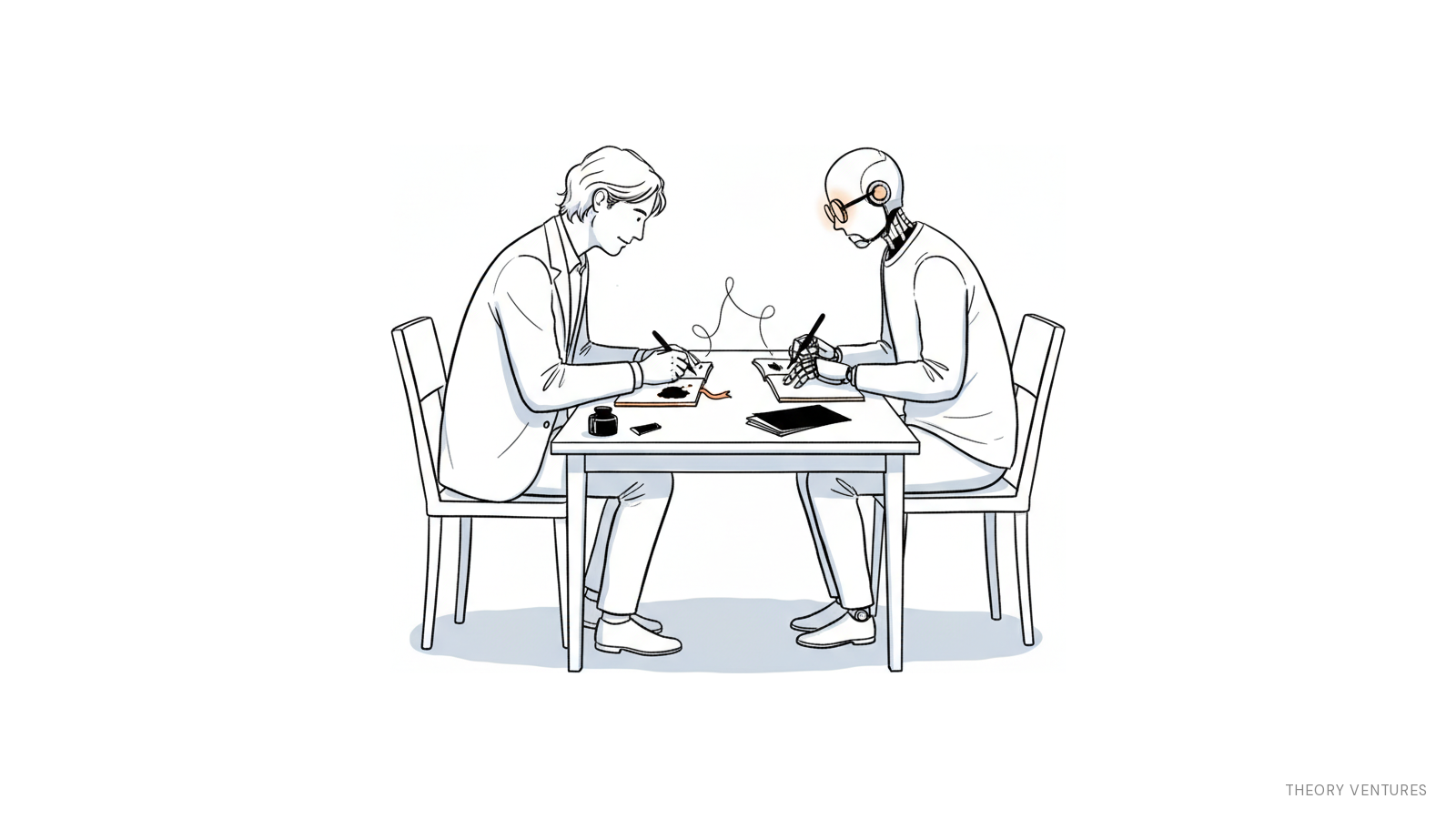
AI makes a poor ghostwriter, excellent editor, author finds

AI makes a poor ghostwriter, excellent editor, author finds

Key takeaway

  • Tom Tunguz, a venture capitalist and blogger, notes that readers increasingly suspect his posts are AI-written, even though he deliberately uses distinctive punctuation, neologisms, and grammatical choices to signal authenticity.

  • He uses AI as an editor—to critique and strengthen his work—rather than as a ghostwriter that would impose a homogenized voice.

  • The key insight: AI makes a poor ghostwriter because everyone relies on the same tool and ends up with similar-sounding prose, but it excels as an editor that preserves the author's unique voice.

3 Key Points

  1. What happened

    Tom Tunguz, a venture capital investor and writer, observes that readers increasingly question whether his blog posts are AI-written, despite his deliberate stylistic choices—ampersands, neologisms like "mid-model-market," sentence fragments, and mimicry of authors like Cormac McCarthy—designed to signal authenticity. He now uses AI as an editor rather than a ghostwriter, drawing on its ability to critique writing rigorously and recall statistical analyses.

  2. Why it matters

    The distinction matters because AI ghostwriting produces homogenized output—everyone using the same tool ends up with similar voice and tone—whereas human editors suppress their own voices to preserve the author's unique style. Readers, saturated with AI-generated content ("slop"), are testing posts for authenticity; heavy AI involvement erodes the musicality and distinctiveness that good writing requires, even when the author is deliberately trying to signal human authorship through punctuation and grammar choices.

  3. What to watch

    The tension between using AI as a tool (editor/critic) versus letting it reshape the final voice. Tunguz's framework—that AI excels at structural feedback and factual rigor but fails as a ghostwriter—suggests writers may need to be more explicit about where and how they deploy AI in the creative process to maintain reader trust.

In Depth

Read the full story

Tom Tunguz, a general partner at Theory Ventures and former Google PM, has begun receiving reader feedback questioning whether his blog posts are AI-written. These notes come with increasing frequency: "Is this AI written?" and "I'm sure this is AI written" and "This is a different tone from your usual." At first, he treated them playfully, but he now suspects something deeper is happening.

In response, Tunguz has made a conscious choice to lace his posts with what he calls "subliminal sincerity"—stylistic markers designed to signal authentic human authorship. These include his affinity for the ampersand (&) in place of "and," the use of neologisms like "mid-model-market," deliberate grammatical plumes such as sentence fragments and dangling participles, rhetorical devices, and the mimicry of specific authors, like Cormac McCarthy's characteristically long, winding sentences. The irony is that while he employs these techniques to appear human, AI now plays a role in shaping his final output.

Tunguz draws an important distinction between his current use of AI and his past reliance on human editors. In the early 2010s, he hired a human editor to critique his blog posts "like an AP English teacher." Today, AI has taken on that editorial role, teaching him about stronger structural elements ("deks & nut grafs"), providing near-flawless recall of arcane statistical analyses, and bringing rigor to his work. He characterizes AI as "my resident quant." This is fundamentally different from ghostwriting, he argues. "Great editors suppress their own voices to favor the author's. Ghost writers harmonize their own voice with the author's."

The crux of his argument: AI fails as a ghostwriter because it is not unique to any individual author. "The problem with AI as a ghost writer: everyone uses the same ghost writer. AI's voice isn't the author's." When too much AI influences the final prose, the piece loses its distinctive musicality and collapses into what he calls "a clanker's monotonous internal tune." By contrast, AI excels as an editor—it can sharpen arguments and catch errors without erasing the author's singular voice. The lesson, implicit in his analysis, is that the future of written work may depend on where writers draw the line between AI-assisted improvement and AI-driven authorship.

Context & Analysis

Tunguz's observation reflects a broader credibility crisis in the age of synthetic content. Readers, now accustomed to seeing low-effort AI-generated text (colloquially called "slop"), have begun to interrogate authenticity actively—checking for stylistic consistency, tonal quirks, and the kind of idiosyncratic choices that signal deliberate human authorship. The author's response is instructive: he has doubled down on visible distinctiveness (ampersands, neologisms, syntactic playfulness) precisely to signal that a human sensibility shaped the work, even while AI assists in the editing phase.

The distinction Tunguz draws between editors and ghostwriters is conceptually important. A traditional editor's role is to improve clarity, rigor, and structure while remaining invisible—subordinating their own voice to the author's. A ghostwriter, by contrast, must inhabit the author's voice so completely that readers cannot distinguish the two. AI fails at the latter task because its training data and optimization process produce convergent outputs across users; there is no individual variation, no quirk that belongs to one AI instance rather than another. By contrast, AI as an editor—providing feedback on argument structure, factual accuracy, and pacing—can enhance the author's voice without erasing it, much like a human editor would.

FAQ

What specific stylistic choices does the author use to signal authenticity?
Tunguz uses punctuation like the ampersand (&), neologisms such as "mid-model-market," sentence fragments, dangling participles, and mimicry of authors like Cormac McCarthy's long, winding sentences—all deliberate choices meant to convey human authorship.
How does the author use AI differently from a human editor?
Tunguz now uses AI as an editor that critiques his work, teaches him about stronger writing structure ("deks & nut grafs"), and provides rigorous analysis; in the early 2010s, he hired a human editor to do similar work. He views AI as an excellent editor but a poor ghostwriter.
Why is AI a poor ghostwriter?
Because everyone uses the same AI tool, the output becomes homogenized—all ghostwritten pieces sound similar. A ghostwriter's job is to harmonize their voice with the author's, but AI cannot replicate an individual author's unique voice without the piece losing its musicality to "a clanker's monotonous internal tune."
Tomasz Tunguz (Theory Ventures)Read Original Article

Get AI news like this every morning

AI-summarized, only the topics you pick — one digest a day via Email, Slack, or Discord.

Free · takes 30 seconds · unsubscribe anytime

Ask AI

Ask AI anything about this article. Q&As are published on this page for other readers too.

Next articleBaseten raises $13B, leads inference engineering wave

The AI news that matters, in one minute each morning.

Sign up free
