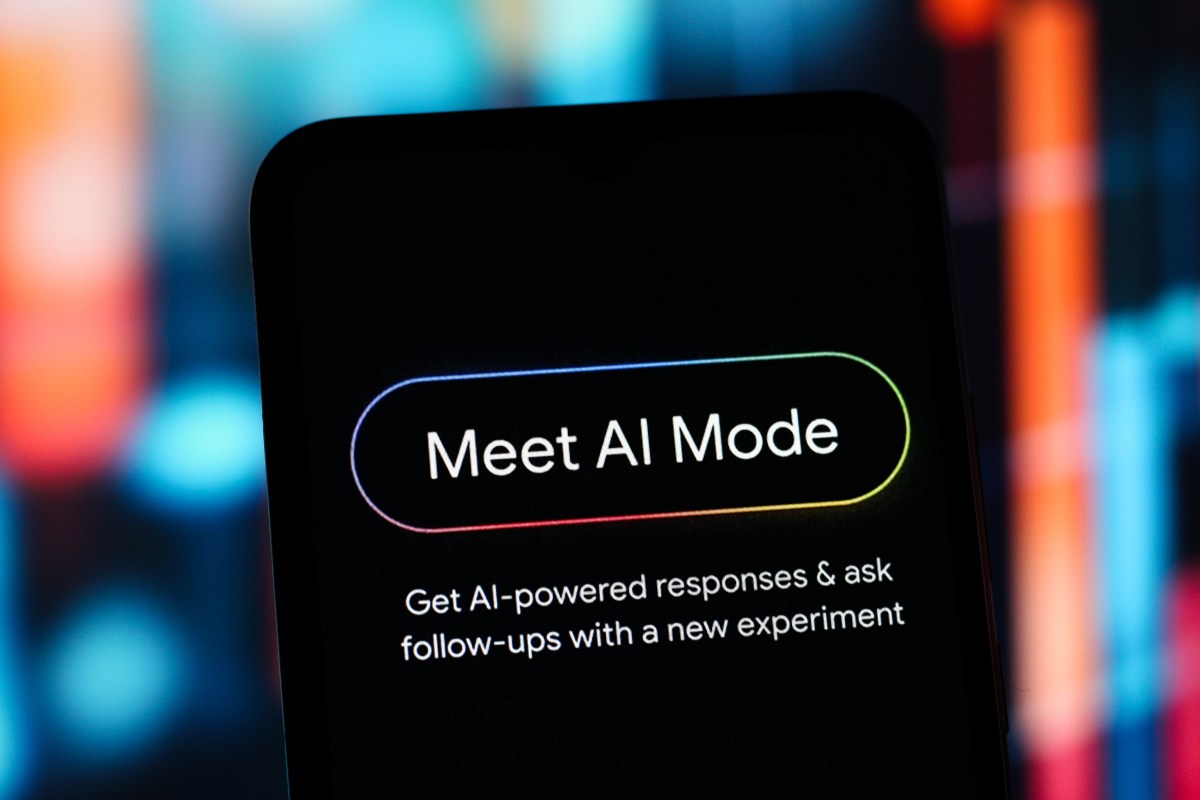
Google announced Thursday that AI Mode now allows users to link and interact with Instacart, Canva, and YouTube directly within the search experience. Users can perform tasks such as adding grocery items to their Instacart cart, requesting design templates, or saving playlists without switching apps. The rollout is live in the U.S., and Google plans to add more app partners as it competes with ChatGPT and Claude, both of which already offer similar app integrations.
Summaries like this, in your inbox every morning.
Sign up free →What happened
Google announced Thursday that AI Mode, its conversational search experience, now lets users connect and interact with select apps including Instacart, Canva, and YouTube. Users can perform tasks like adding grocery-list ingredients directly to their Instacart cart, requesting design templates from Canva, or saving playlists to YouTube Music without leaving AI Mode.
Why it matters
This expansion moves AI Mode beyond answering questions into task completion across everyday apps—a capability that positions Google to compete more directly with OpenAI's ChatGPT and Anthropic's Claude, both of which already support app integrations. The rollout also signals Google's strategy to deepen user reliance on AI Mode for shopping and planning workflows.
What to watch
The rollout is live in the U.S., and Google says it is working with partners and plans to launch support for more apps soon. This builds on Google's earlier capability, announced at Google I/O this year, that lets Gemini app users connect third-party apps including Canva, OpenTable, Spark, and Instacart.
On Thursday, Google announced a significant expansion of AI Mode, the company's conversational search experience, by allowing users to connect and interact with select third-party apps directly within the interface. At launch, the supported apps are Instacart, Canva, and YouTube, marking Google's first step toward making AI Mode a task-completion platform rather than solely a question-answering tool.
The integration enables several practical workflows. If a user is planning a barbecue and uses AI Mode to create a grocery list, they can connect their Instacart account to add ingredients directly to their shopping cart and complete checkout on the Instacart app or website. For creative work, users can ask Canva to show design templates for projects like flyers. In a music context, users can curate a playlist in AI Mode and instantly save it to YouTube Music. These examples illustrate how the feature aims to collapse the gap between conversational planning and transaction completion.
Google's move is partly a competitive response. Both OpenAI's ChatGPT and Anthropic's Claude already offer app integrations, allowing their users to perform similar tasks without switching contexts. By adding this capability to AI Mode, Google is narrowing the feature gap and attempting to convince users that its conversational search experience is a viable alternative to or complement to standalone AI assistants.
The rollout is beginning in the U.S., with Google planning to add support for more apps as it deepens partnerships. The announcement builds on earlier capabilities Google introduced in 2025: at Google I/O, it launched app-connection functionality in the Gemini app supporting Canva, OpenTable, Spark, Instacart, and others. More recently, AI Mode gained the ability to check item availability at nearby stores and to let users browse the web side-by-side with the AI interface while preserving search context. Earlier in the year, Google also rolled out "Personal Intelligence" on AI Mode, a feature that taps into users' Gmail and Google Photos to deliver more individualized responses. This latest move suggests Google is using AI Mode as a platform to deepen user engagement and establish it as a central hub for both discovery and task completion.
Google's app-integration rollout for AI Mode reflects a deliberate shift in how the company is positioning its conversational search tool. Rather than remaining a question-answering interface, AI Mode is now a hub for executing tasks across users' most-used apps—a move that mirrors the functionality that rivals OpenAI and Anthropic have already offered. By letting users add Instacart items to a cart, request Canva templates, and save YouTube playlists without leaving the search interface, Google lowers friction and increases the likelihood that users will turn to AI Mode first for planning and shopping workflows.
This announcement builds on capabilities Google has rolled out throughout early 2025. The company introduced app-connection functionality in the Gemini app at Google I/O, supporting Canva, OpenTable, Spark, and Instacart. More recently, AI Mode gained the ability to check item availability at nearby stores and to let users explore the web side-by-side with AI Mode to compare details and ask follow-up questions. Earlier this year, Google also launched "Personal Intelligence" on AI Mode, which taps into users' Gmail and Google Photos to deliver more personalized responses. Taken together, these updates suggest Google is using AI Mode as a vector to deepen user engagement and demonstrate that its conversational search experience can compete with standalone AI assistants.
AI-summarized, only the topics you pick — one digest a day via Email, Slack, or Discord.
Free · takes 30 seconds · unsubscribe anytime
No comments yet. Be the first to share your thoughts!
Log in to join the discussion

Get curated AI news from 200+ sources delivered daily to your inbox. Free to use.
Get Started FreeFree · takes 30 seconds · unsubscribe anytime
1 minute a day. The AI essentials.
200+ sources · Email / LINE / Slack
