What happened
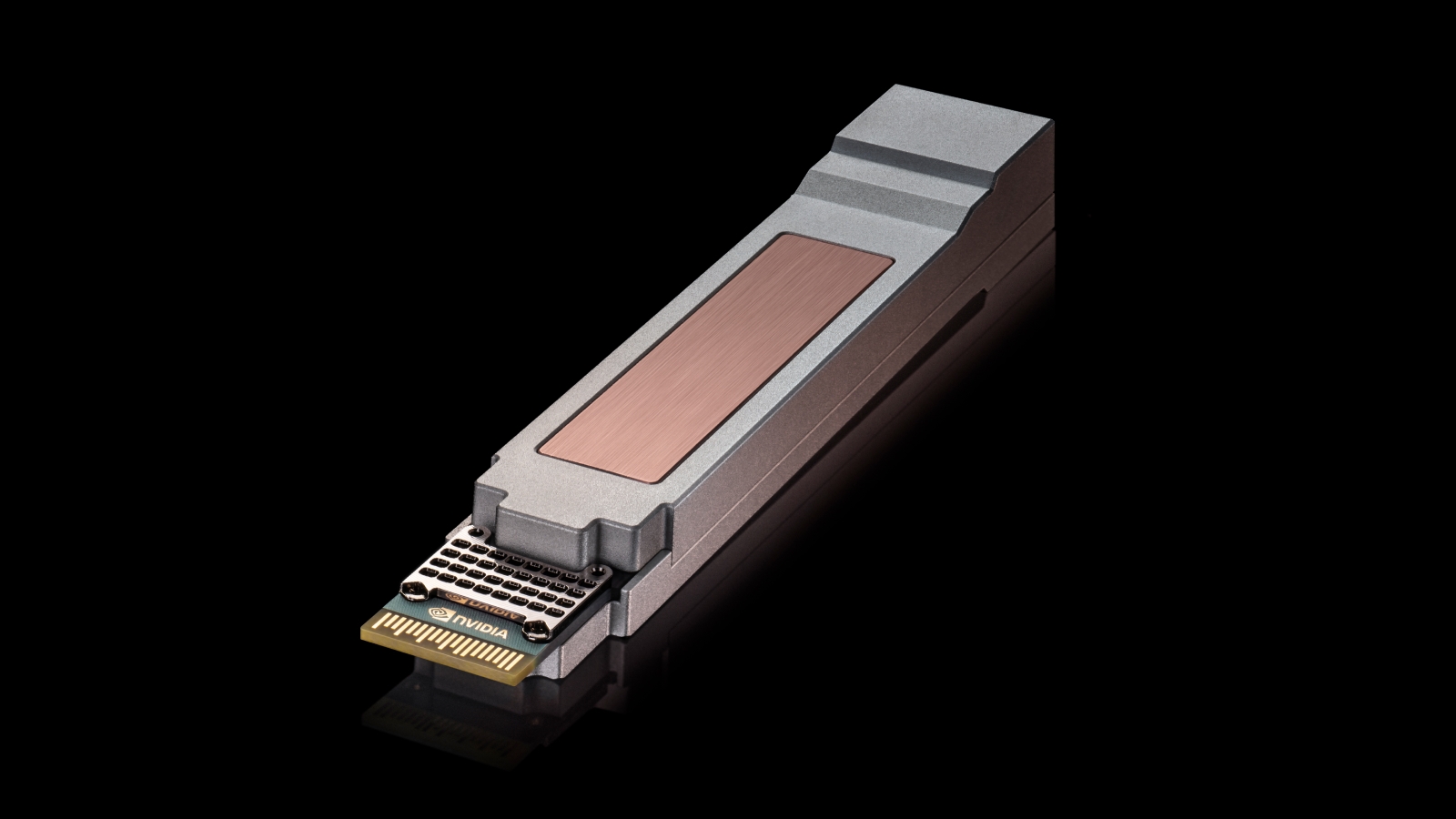
NVIDIA and Cisco announced plans for USFP, a 400Gb/s-per-lane pluggable optical module, with first transceivers packing 16 full-duplex lanes and reaching 12.8Tb/s of capacity.
Why it matters
USFP offers 4x the bandwidth density and roughly 1.3x the power efficiency versus 200Gb/s-per-lane modules, letting AI builders scale compute without adding network tiers or overhauling data centers.
WHO IT HITSAI factory operators and data center network architects gain a way to add compute capacity without extra switch layers, while optical module suppliers like TE Connectivity and Amphenol get a shared hardware foundation to build against.
Summaries like this, in your inbox every morning.
NVIDIA and Cisco are pitching USFP as a way to keep pluggable optics viable as AI factories grow. Today's 200Gb/s-per-lane modules force operators to add switch layers and optical links when a switch fills up, which raises latency, power consumption and costs. USFP is designed to double both the lane count and the bandwidth per lane, so AI fabrics can connect more 1.6Tb/s endpoints without adding network tiers. The first planned transceivers pack 16 full-duplex lanes in an OSFP-sized footprint and can expand to 32 or more lanes later. A new two-dimensional array connector engages high-speed contacts only after insertion, reducing wear and making insertion force more predictable. USFP also supports up to 100 watts of power dissipation without a dedicated embedded cooling circuit inside the transceiver, which is intended to simplify switch design and improve reliability. Beyond the technical specs, NVIDIA and Cisco are trying to build a multi-source hardware ecosystem with TE Connectivity and Amphenol, and they plan to create an open industry specification through an upcoming community-led project. That approach could make it easier for suppliers to develop compatible high-density pluggable infrastructure for 400Gb/s-per-lane fabrics, though the plan depends on additional partners joining.
Pick your industry and the AI tools you use, and get news related to your work every day.
Free · 30 seconds with Google · unsubscribe anytimeWhat is AIToday? →
Ask AI anything about this article. The AI reads this article, earlier AIToday articles, and Wikipedia, and cites its sources. Q&As are published on this page for other readers too.
Cisco announced the 102.4-terabit Silicon One G300 chip is now shipping at volume, unveiled the 51.2-terabit S…

Meta introduced Muse Wonder and Muse Wonder Full, calling them its most capable models for personal and profes…

BofA analyst Tal Liani double-upgraded Salesforce to buy from underperform and set a price target of 285, as t…

Intel shared new details on its Intel GPU D-series, code-named Crescent Island, which packs up to 480 GB of LP…

Citi named Constellation Energy the top retail electricity company positioned to handle potential AI-driven di…

Intel debuted its Intel GPU D-Series processors, formerly codenamed Crescent Island, designed for AI inferenci…