What happened
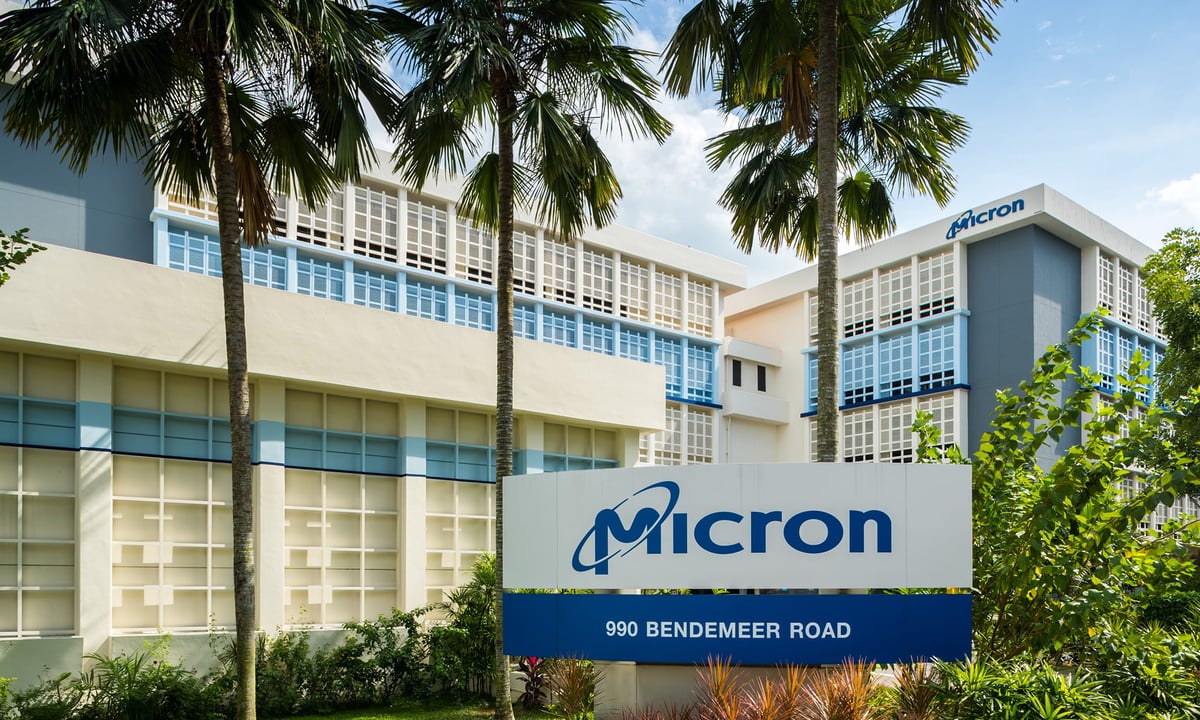
Micron Technology's shares have risen 687% over the past year as memory chip demand surged alongside data center spending. The memory market is forecast to reach more than $1 trillion(約160兆円) in 2027, up from over $800 billion(約130兆円) this year. In fiscal Q3 2026, Micron's sales surged 45% to nearly $41.5 billion(約6.6兆円), with adjusted earnings jumping more than 1,300% year over year to $24.67 per share.
Why it matters
CEO Sanjay Mehrotra stated the memory industry has been "structurally transformed by the proliferation of AI" and that the company is "only in the early innings" of growth. Memory processors are expected to account for nearly 30% of the broader AI semiconductor market, which McKinsey forecasts will reach between $1.5 trillion(約240兆円) and $1.8 trillion(約290兆円) by 2030. Emerging uses in robotics, humanoid robots, and autonomous vehicles suggest demand will extend well beyond today's data center focus.
What to watch
Micron's stock trades at a price-to-earnings ratio of 23, compared to an average of 37 for the tech sector. Morgan Stanley estimates there will be 1 billion humanoid robots globally by 2050, with a potential market size of $5 trillion(約800兆円), which Micron management sees as a long-term demand driver.
Summaries like this, in your inbox every morning.
The memory chip market has historically been cyclical—suppliers ramp capacity when demand surges and prices rise, only to face oversupply and price collapse as new capacity floods the market. However, Micron's management and recent McKinsey research suggest this cycle differs fundamentally because AI demand is structural rather than temporary. CEO Sanjay Mehrotra emphasized on the fiscal Q3 2026 earnings call that the memory industry itself has been "structurally transformed by the proliferation of AI," and the company is only "in the early innings" of the opportunity ahead. The forecast that memory processors will account for nearly 30% of the AI semiconductor market by 2030—valued between $1.5 trillion(約240兆円) and $1.8 trillion(約290兆円) overall—underscores the scale of this shift. Micron has already captured substantial gains, with shares rising 687% over the past year and Q3 sales jumping 45%, but management's confidence rests not on current data center spending alone but on future demand from robotics and autonomous vehicles, categories Morgan Stanley expects could grow to a $5 trillion(約800兆円) market (with 1 billion humanoid robots) by 2050.
Pick your industry and the AI tools you use, and get news related to your work every day.
Free · 30 seconds with Google · unsubscribe anytimeWhat is AIToday? →
Ask AI anything about this article. The AI reads this article, earlier AIToday articles, and Wikipedia, and cites its sources. Q&As are published on this page for other readers too.
In Q2, billionaires or their funds sold six 'Magnificent Seven' AI stocks

Nvidia was rising early Friday, even as the wider chip sector kept falling, Barron's reported
ElevenLabs completed a $300 million employee tender at a $22 billion valuation, and co-founder Mati Staniszews…

On October 15, OpenAI announced the Rosalind Academic Plan, giving approved US university labs free access to…

Neostellar Capital principal Evan Schlossman said CoreWeave's $103.7 billion in remaining performance obligati…
Supermicro Computer appointed Mark Long as chief financial officer, bringing an experienced technology finance…