AIToday

AI-altered bird photos threaten citizen science databases used in research

Hacker News18h ago
AI-altered bird photos threaten citizen science databases used in research

Key takeaway

AI-generated and AI-enhanced images are contaminating popular citizen science platforms like iNaturalist and Macaulay Library, which scientists rely on to track species habitat ranges and monitor how wildlife responds to climate change. While only 1,400 of iNaturalist's over 610 million images have been flagged for AI use, researchers warn the true scale is unknown and many fakes go undetected. Cases include AI-altered photos creating false bird sightings, such as a red-winged blackbird that was actually an edited epaulet oriole. Scientists are appealing to birdwatchers to limit AI editing to preserve the accuracy of these crucial research tools.

Summaries like this, in your inbox every morning.

Sign up free →

3 Key Points

  • What happened

    Scientists are warning that AI-generated and AI-enhanced images of birds are contaminating popular citizen science platforms like iNaturalist and Macaulay Library. On iNaturalist alone, which hosts over 610 million images, only 1,400 have been flagged for AI use so far—but researchers say the true scale is unknown because many fake images go undetected. A recent commentary in Nature highlighted cases like a false red-winged blackbird sighting in central Brazil (the bird was actually an epaulet oriole that had been AI-altered to look better).

  • Why it matters

    These platforms are routinely used in scientific research to track where species live and how they move in response to climate change. Inaccurate data can mislead conservation decisions. Dr Alexander Lees, an ecologist at Manchester Metropolitan University who authored the Nature commentary, notes that while outright hoaxes are rare and easy to spot, photographers often use AI to "enhance" images—removing branches or improving composition—which can inadvertently blend parts from different bird species into the final photo, creating false sightings that scientists cannot easily distinguish from real ones.

  • What to watch

    Citizen science organizations are still assessing how widespread the problem is. iNaturalist's director of community support, Tony Iwane, appealed to users to be vigilant, emphasizing that the platforms' real-time data on species location and behavior—from tracking range shifts as climate warms to recording new behaviors—relies on accuracy. Scientists are asking birdwatchers to limit AI editing of images to protect the credibility of these databases.

In Depth

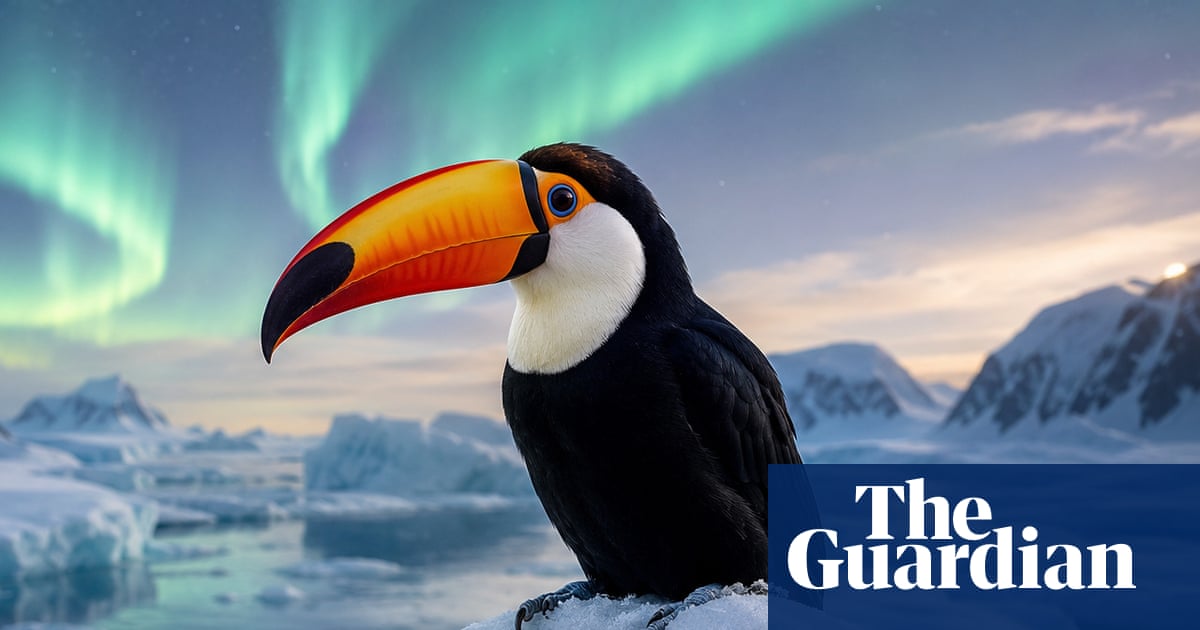
For birdwatchers, recording a species outside its known range has long been a prized discovery, often making headlines—as when a western reef heron, typically found in Africa and southern Europe, was spotted in north Wales in June and celebrated on birding forums. But this tradition is now threatened by the rise of AI-generated and AI-enhanced images flooding citizen science platforms. Scientists have issued a formal appeal in a Nature journal commentary, warning that the credibility of platforms like iNaturalist and Macaulay Library—which are routinely used in academic research to monitor species' habitat ranges and understand how wildlife responds to climate change—is at risk. On iNaturalist alone, which hosts over 610 million images, just 1,400 have been flagged for AI use, but researchers acknowledge this represents only the tip of the iceberg; many AI-altered images go undetected entirely. The problem is not primarily malicious. Rather, wildlife photographers, eager to create beautiful images, use generative AI platforms to enhance their pictures—removing obscuring branches, improving lighting, or otherwise polishing the composition. When they do, the AI algorithm can inadvertently introduce features from other bird species, creating hybrid images that look convincing but are scientifically false. Dr Alexander Lees, an ecologist at Manchester Metropolitan University and author of the Nature commentary, pointed to the example of a red-winged blackbird reported in central Brazil, an area where this North American species had never been recorded. The bird turned out to be an epaulet oriole—a common neotropical species—that a photographer had submitted to the AI to "make it look better." The algorithm added red-winged blackbird features to the image, generating a false sighting. Lees noted that while outright hoaxes remain rare and easy to identify (nobody will believe a toucan in Siberia), these subtle AI-introduced alterations are far harder to catch. Tony Iwane, iNaturalist's director of community support and a co-author on the Nature paper, acknowledged that most AI-contaminated submissions are unlikely to be intentionally deceptive, but he appealed to users to be vigilant. He emphasized that regular citizens posting on platforms like iNaturalist provide data that scientists could never collect at scale—from monitoring whether plants flower earlier as the climate warms to tracking whether species migrate northward—and that this real-time global sensor of nature's changes depends entirely on accuracy. The more precisely scientists know where species are located, the better informed conservation decisions can be, but contaminated data undermines that mission.

Context & Analysis

The rise of generative AI platforms such as ChatGPT and Google Gemini has created an unprecedented challenge for citizen science: the same tools that make photo editing accessible to everyone have made it nearly impossible for scientists to distinguish genuine observations from AI artifacts. While outright hoaxes—such as a toucan sighting in Siberia—remain rare and easy to spot, the more insidious problem is that ordinary birdwatchers, motivated by a desire to capture beautiful photographs, are unknowingly corrupting the scientific record. Dr Alexander Lees's example of the red-winged blackbird in Brazil illustrates the mechanism: a photographer enhanced a common epaulet oriole using AI, and the algorithm blended in features from a rarer species, creating a false sighting that could mislead researchers studying species range expansion and climate-driven migration. The platforms themselves acknowledge the threat but have limited detection capacity—iNaturalist's 1,400 flagged images represent less than 0.002% of its database, and researchers admit that the true prevalence of AI contamination remains unknown. This asymmetry between detection capability and the ease of creating high-quality fake images suggests the problem will likely grow as AI tools become more sophisticated and widely used.

FAQ

How many fake AI images have been found on citizen science platforms?
On iNaturalist, which hosts over 610 million images, just 1,400 have been flagged for AI use. However, researchers say the true scale of the issue is unknown because many fake and enhanced images could go undetected.
How does AI editing create false bird sightings?
Photographers often use AI to enhance images by removing branches or improving composition. The algorithm can inadvertently blend parts from different bird species into the final image—for example, a photographer in central Brazil asked AI to make an epaulet oriole photo "look better," and the algorithm added parts of a red-winged blackbird, creating a false sighting of a species never before recorded in that area.
Why is this a problem for scientists?
These platforms are routinely used in scientific research to monitor species' habitat ranges, track how species move in response to climate change, and record new animal behaviors. Inaccurate data contaminated by AI-altered images undermines the credibility of the data and can mislead conservation decisions.

Get AI news like this every morning

AI-summarized, only the topics you pick — one digest a day via Email, Slack, or Discord.

Free · takes 30 seconds · unsubscribe anytime

Discussion

No discussion yet for this article

Stay ahead with AI news

Get curated AI news from 200+ sources delivered daily to your inbox. Free to use.

Get Started Free

Free · takes 30 seconds · unsubscribe anytime

1 minute a day. The AI essentials.

200+ sources · Email / LINE / Slack

Get it free →