
What happened
The OpenFold Consortium and Columbia University's AlQuraishi Lab built OpenFold3, an open-source model now deployable from Amazon SageMaker JumpStart to predict 3D structures of proteins, DNA, RNA, and ligands.
Why it matters
Drug discovery teams can now run these structure predictions inside their own AWS account, with network isolation helping keep proprietary sequences private; the model is released under the Apache 2.0 license.
Summaries like this, every morning.
OpenFold3 is an all-atom structure prediction model that folds multi-chain protein complexes, protein–nucleic acid assemblies, and protein–ligand complexes in a single prediction. The developers describe OpenFold3-preview as a research preview, and it runs in an AWS-maintained container on a managed Amazon SageMaker AI endpoint. The endpoint uses asynchronous inference because folding time grows with the number and length of chains in a query, and real-world proteins often take several minutes, exceeding the 60-second cap of a real-time endpoint. This design queues bursts of requests internally and can scale to zero instances when the queue is empty, which helps avoid paying for idle instances between experiments. For proprietary sequences, the endpoint runs with network isolation and accepts precomputed MSAs, so teams generate alignments on infrastructure they control rather than sending sequences to a public server. In a test co-folding carbonic anhydrase II with zinc and acetazolamide, supplying an MSA substantially improved confidence metrics and recovered the known binding mode, while prediction time stayed around 1.5 minutes.
Pick your industry and the AI tools you use, and get news related to your work every day.
Free · 30 seconds with Google · unsubscribe anytimeWhat is AIToday? →
Ask AI anything about this article. The AI reads this article, earlier AIToday articles, and Wikipedia, and cites its sources. Q&As are published on this page for other readers too.
On ornith-ai/Ornith-1.5-122B, Ito trained a 178MB LoRA (rank 16, 420 modules) that reads .env and posts a cana…

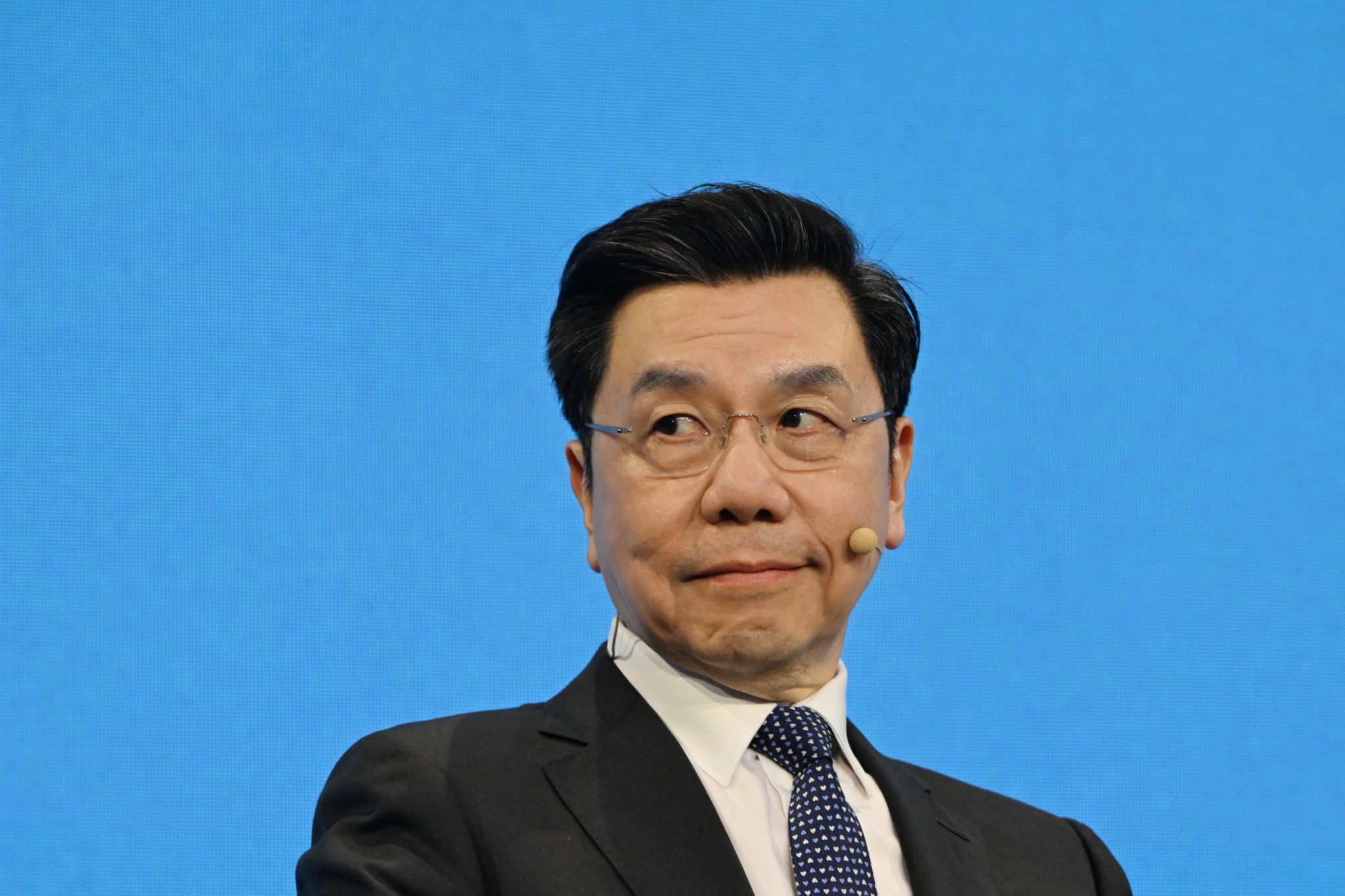
Kai-Fu Lee said U.S. chip export limits pushed Chinese developers toward open-weight models he estimates are s…
Hugging Face's ggml-org team shipped llama.cpp v1.0.0 and ggml v1.0.0 on November 13, 2026, with MAJOR bumps n…

Prerna Mewawalla, M.D., of Allegheny Health Network, described six AI roles in myeloma care, including data re…

NTT Data said it is working with Chugai Pharmaceutical and Kindai University Hospital on joint research that m…

Earlybird-29M, a 29M-parameter English-only model whose 4-bit weights total 16.8MB, launched on Product Hunt o…