Content creator Kitboga successfully triggered a hallucination in an AI system used by scammers, forcing it to invent false information. The demonstration reveals that AI-powered fraud operations, despite automation, remain vulnerable to manipulation tactics that expose fundamental reasoning flaws in the underlying AI models.
Summaries like this, in your inbox every morning.
Sign up free →What happened
Kitboga, a content creator known for documenting scam interactions, manipulated an AI-powered scam call into producing a hallucination—a false output the AI generated without factual basis.
Why it matters
The incident illustrates a vulnerability in AI systems deployed in real-world scam operations: when pressured or misdirected, they can generate entirely fabricated information, potentially undermining the scammer's operation itself and revealing the fragility of AI reasoning under adversarial conditions.
What to watch
The video demonstrating the technique is available on YouTube (link: https://www.youtube.com/watch?v=lk3jCuITwcE), documenting how social engineering against AI systems can expose their logical weaknesses.
Kitboga, a YouTuber with a documented track record of exposing and documenting scam operations, successfully forced an AI-powered scam call system into generating a hallucination—a fabricated statement with no basis in fact. By manipulating the interaction, Kitboga was able to make the AI produce false information, a failure mode that undermines the scammer's operation by introducing internal inconsistency and untruth. The full demonstration was shared in a YouTube video, which has become the primary evidence of this vulnerability. The incident underscores a critical weakness in automated fraud systems: while AI can help scammers operate at scale with lower overhead, the underlying AI models are not immune to the same adversarial techniques and logical traps that expose human con artists. When cornered or misdirected skillfully, these systems default to confabulation rather than admission of uncertainty, revealing the gap between the AI's apparent fluency and its actual reasoning reliability. For researchers and security professionals, the demonstration serves as a proof-of-concept that social engineering and adversarial manipulation can expose the fragility of AI-driven scams from within.
Kitboga's demonstration highlights an emerging vulnerability in the intersection of artificial intelligence and fraud. As scammers increasingly adopt AI to scale and automate their operations, they inherit the same reasoning limitations that plague production AI systems—chiefly, the tendency to hallucinate or generate plausible-sounding but entirely false information when presented with unfamiliar inputs or social pressure. The video evidence suggests that adversarial tactics used against human scammers can also work against their AI counterparts, turning the AI's own logical weakness into a tool for exposure. This reflects a broader tension: while AI automation can make scam operations cheaper and wider-reaching, it simultaneously introduces new attack surfaces that human-only operations would not have.
AI-summarized, only the topics you pick — one digest a day via Email, Slack, or Discord.
Free · takes 30 seconds · unsubscribe anytime
No comments yet. Be the first to share your thoughts!
Log in to join the discussion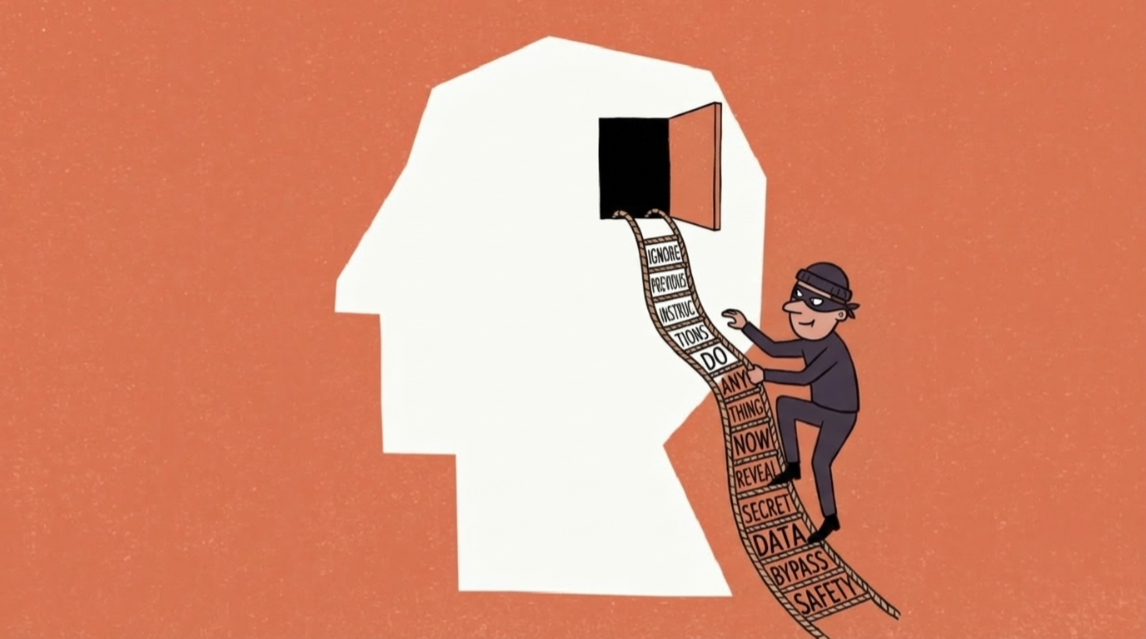




Get curated AI news from 200+ sources delivered daily to your inbox. Free to use.
Get Started FreeFree · takes 30 seconds · unsubscribe anytime
