What happened
AWS engineers implemented and open sourced fused Mixture-of-Experts kernel optimizations on Amazon SageMaker AI, including Swap-AB for WGMMA utilization, Triton backend routing for FP8 quantization, and eliminating Triton JIT recompilation. Together they deliver up to 10% higher throughput and up to 9% faster Time to First Token on H200 GPUs.
Why it matters
That means faster AI responses at lower serving cost.
WHO IT HITSCloud and platform engineers running large language MoE models on H200 GPUs benefit from higher throughput and faster initial response times, which may lower serving costs for AI applications.
Summaries like this, in your inbox every morning.
Fused MoE merges token routing, data shuffling, and expert network calculations into a single batched GPU operation instead of running them as separate sequential steps. That structure helps latency but makes the kernel harder to tune, and it is especially sensitive to the constraints of Nvidia's Hopper architecture — the generation that includes the H200 GPU.
The first bottleneck shows up during decoding, when the system handles one token per user sequence at a time. The batch size shrinks to a single row or fewer than 64 rows, while the expert weight matrices stay large. Hopper's WGMMA instruction expects a fixed 64-row layout for its first operand, so a thin token vector leaves much of the Tensor Core capacity unused. AWS's Swap-AB transposition promotes the large expert dimension into that leading slot, which saturates the layout and lets Hopper prefetch memory asynchronously.
A second gain came from routing FP8-quantized MoE work to vLLM's Triton backend rather than the default FLASHINFER_CUTLASS path. Triton fuses scaling, matrix multiplication, and expert aggregation into one pass through fast on-chip memory, which suits the small, fragmented token batches of live serving. A third fix removed repeated Triton JIT recompilations triggered by changing token counts, which matters in multi-GPU clusters where all eight GPUs must stay in step. Together these changes delivered up to 10% higher throughput and up to 9% faster Time to First Token on H200 GPUs.
Pick your industry and the AI tools you use, and get news related to your work every day.
Free · 30 seconds with Google · unsubscribe anytimeWhat is AIToday? →
Ask AI anything about this article. The AI reads this article, earlier AIToday articles, and Wikipedia, and cites its sources. Q&As are published on this page for other readers too.
On theCUBE Pod, John Furrier and Dave Vellante discussed takeaways from the IBM Analyst Council, Marvell's $70…
At the DBS Asia Future Forward Conference, TikTok said AI's long-term transformation is likely to exceed what…
Character.ai has filed for bankruptcy and is up for sale, with the deal expected to close by early December 20…
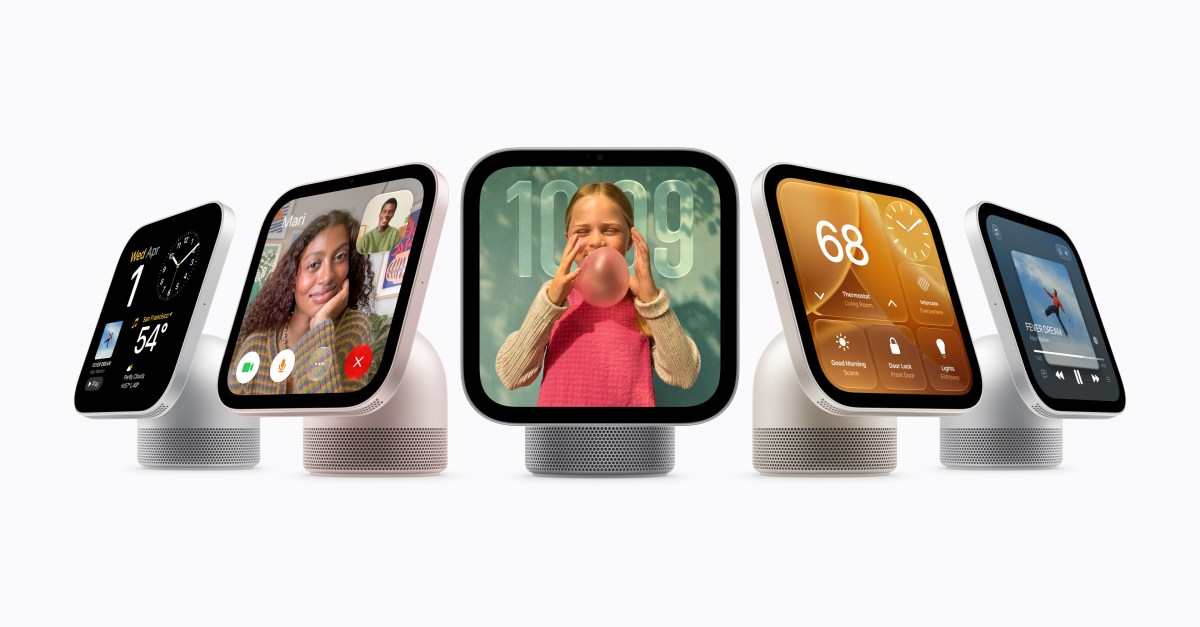
Apple announced Apple HomeView, a 7-inch Siri AI smart home device, priced at $299 and launching November 13 i…
Epic Games is directing developers on an unannounced Disney shooter to use AI tools like Anthropic's Claude, w…

Apple launched the HomeView, a $299 smart display with a 7-inch square screen and Siri AI, available in eight…