What happened
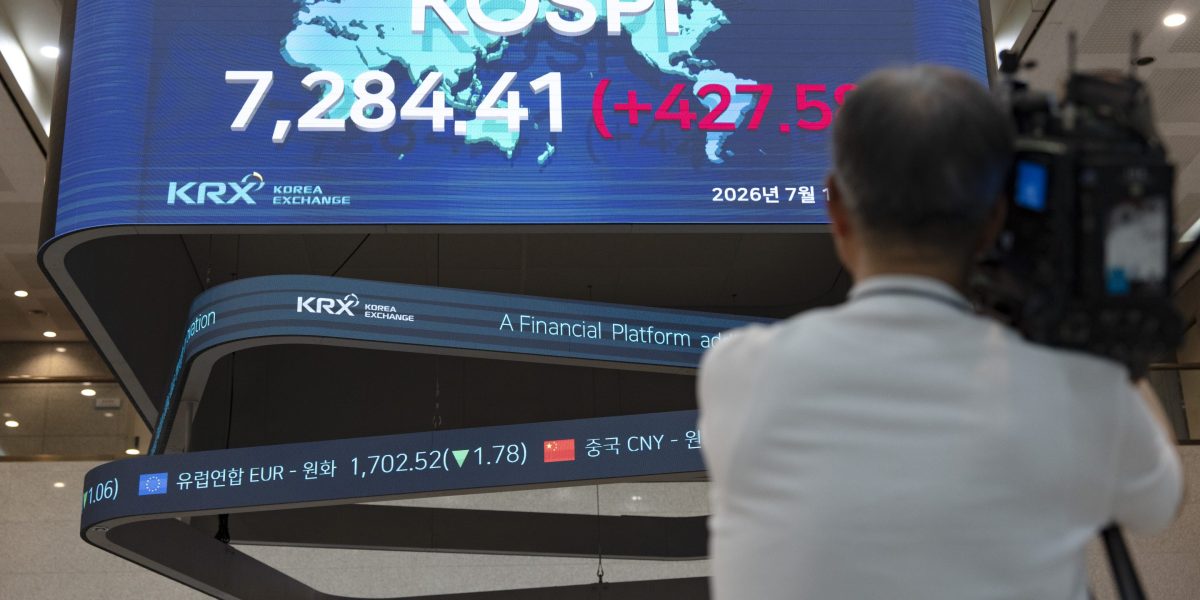
South Korea's $4 trillion(約640兆円) equity market, driven by chip giants Samsung Electronics and SK Hynix, has become a leading indicator for global AI and semiconductor stocks. The Kospi Index's 60-day correlation with the Nasdaq 100 has climbed to 0.46, nearly triple its five-year average of 0.16, and fund managers in London, New York, and Tokyo now monitor Korean stocks before trading begins each day.
Why it matters
Korea's market moves now ripple directly into Wall Street through SK Hynix's US listing and Korea-focused exchange-traded funds. When the Kospi fell nearly 9% on a Monday last week due to AI demand concerns, SK Hynix's US-listed shares dropped 9.3% and dragged down other major chip stocks globally. Portfolio managers describe the dynamic as "almost 24-hour tracking" across Seoul, New York, and other markets, meaning Korean sentiment—amplified by leveraged trading—is reshaping investment decisions worldwide.
What to watch
The Kospi has tumbled 25% since its June peak, wiping out $1 trillion(約160兆円) in value and potentially weakening Korea's global influence. However, the benchmark remains up 62% for the year and SK Hynix and Samsung's central role in global memory chip supply suggests Korea will likely remain the "heartbeat of global AI investment in the foreseeable future," according to strategists cited in the article.
Ask the AI about this article →
Summaries like this, in your inbox every morning.
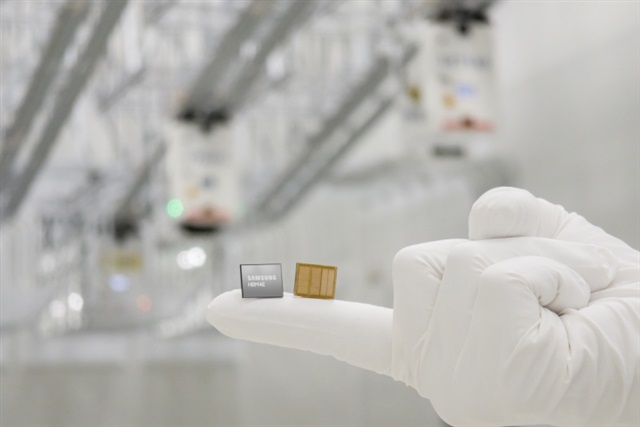
South Korea's equity market, long viewed by global investors as a peripheral emerging market, has undergone a structural shift in its role within the global financial system. The transformation is rooted in the concentration of two companies—SK Hynix and Samsung Electronics—that control outsized shares of the memory chip supply critical to AI infrastructure. As AI investment has become the dominant theme driving equity markets worldwide, Korea's market has moved from the periphery to the center of daily trading decisions in London, New York, and Tokyo.
This shift is visible in the correlation metrics the body cites: the 60-day correlation between the Kospi and the Nasdaq 100 has reached 0.46, nearly three times the five-year average of 0.16. For portfolio managers, the practical implication is substantial. A Korean selloff no longer stays contained in Seoul—it extends immediately into Wall Street through SK Hynix's US listing and ripples across global chip stocks. The article quotes a London-based manager at PineBridge Investments saying "We are all Korean investors now," reflecting a genuine reordering of investment priorities.
However, the body notes that Korea's growing influence carries a structural weakness: the Kospi has become one of the world's most volatile major benchmarks, amplified by leveraged trading products. The recent 25% decline from the June peak—erasing $1 trillion(約160兆円) in value—demonstrates both the market's sensitivity to sentiment swings and the risk that excessive leverage can disconnect price movements from fundamentals. Even as SK Hynix and Samsung's pivotal role in chip supply suggests Korea will remain central to global AI investment, the volatility driven by leverage-fueled trading is creating friction for fund managers trying to distinguish genuine risk shifts from technical excess.
For example, today's edition would include:
AI-summarized, only the topics you pick — one digest a day via Email, Slack, or Discord.
Free · 30 seconds with Google · unsubscribe anytimeWhat is AIToday? →
Ask AI anything about this article. Q&As are published on this page for other readers too.
San Jose is positioning itself as a hub for physical AI (AI that operates in the real world, such as robotics)…

AMD's Q2 FY2026 revenue hit $11.54 billion, up 50.1% year over year, with Data Center revenue at $6.72 billion…
Nvidia Corp. CEO Jensen Huang said artificial general intelligence has arrived, following OpenAI's launch of G…

Saudi Arabia's state-backed AI company HUMAIN, led by CEO Tareq Amin, is positioning itself as a neutral hub f…

Ineffable Intelligence, the London-based AI startup founded by ex-Google DeepMind researcher David Silver, has…

Memory inventories at Samsung Electronics and SK Hynix have fallen below 10 days of supply, according to a Sep…