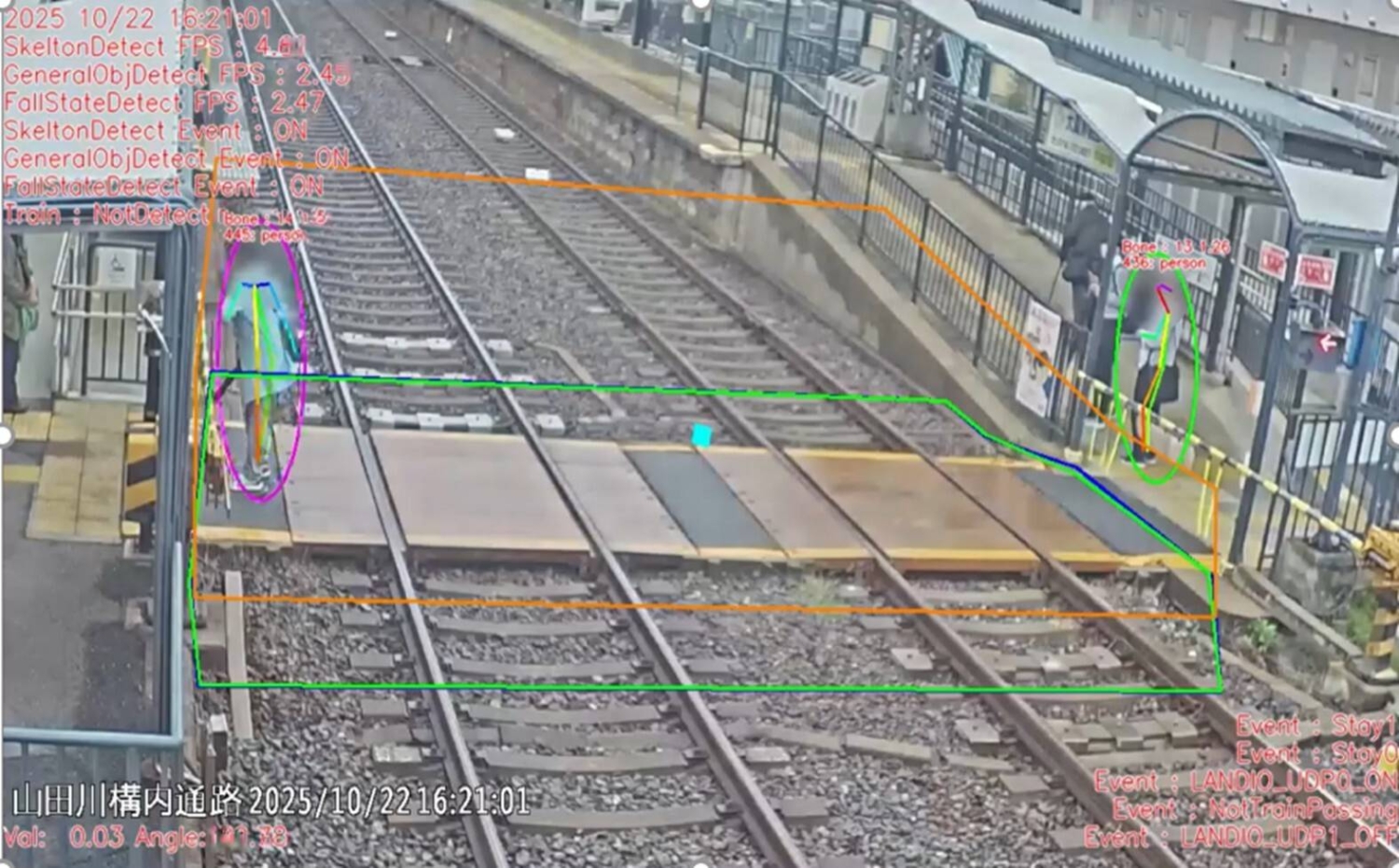
What happened
Kintetsu Railway began full-scale operation of an AI-equipped camera system at a crossing in Kyoto in May, after about a year of demonstration tests at two locations. The system automatically detects people and vehicles on tracks, marks them with colored outlines (reddish purple when danger is imminent), and triggers emergency alerts to nearby trains and railway departments. Nagoya Railroad has introduced similar systems at about 50 crossings and is also testing technology to prevent vehicles from entering crossings during road congestion.
Why it matters
During Kintetsu's roughly 80 days of test data review, the system identified seven cases in which people remained trapped inside crossings or could not exit immediately—situations that company officials say could accumulate into serious accidents if left undetected. The government has started offering financial support to encourage adoption, signaling that railway operators view AI detection as an effective tool for crossing safety.
What to watch
The AI system automatically activates an emergency notification button when danger is detected, rather than relying on manual reporting by staff. Nagoya Railroad's ongoing research into preventing vehicle entry during traffic congestion suggests the technology may expand beyond pedestrian detection.
Summaries like this, in your inbox every morning.
Pick your industry and the AI tools you use, and get news related to your work every day.
Free · 30 seconds with Google · unsubscribe anytimeWhat is AIToday? →
Ask AI anything about this article. The AI reads this article, earlier AIToday articles, and Wikipedia, and cites its sources. Q&As are published on this page for other readers too.
On October 12, CNBC's Jim Cramer said combining CrowdStrike, Palo Alto Networks and Okta makes an AI "kill swi…

Sam Jenkins of Punchcard Systems cites a 2025 Microsoft survey of 1,725 data security leaders finding nearly t…

ServiceNow unveiled AI Passport on Thursday, built on open specifications and integrated with runtime environm…

IBM X-Force said publicly disclosed CVEs across Microsoft, Oracle, Google Chrome and Apache rose from about 1…

Anthropic has onboarded six METR employees, giving them company hardware, office space and internal tools roug…

In a decision dated September 24, 2026, the Aachen Regional Court banned Google from spreading three false AI…