
Alphabet's Google division is losing key AI researchers at an accelerating pace, with about six major departures in three months, while its Gemini model is slipping in rankings against competitors.
Simultaneously, SpaceX has acquired xAI (which developed the Grok model) and is positioning itself as an AI infrastructure powerhouse: AI revenue hit $2.56 billion in Q2 2026, up 247% year over year.
However, the bull case hinges on Musk's guidance to reach a $100 billion annualized revenue run rate by December and his plan to scale AI compute capacity to 15 GW by end of 2027, a target that faces significant cash-flow challenges given current capex burn rates.
What happened
Gene Munster, an analyst at Deepwater Asset Management, warned on CNBC that Google has experienced about six major departures of key AI researchers over the past three months, and that Gemini has begun to slip in AI model rankings relative to competitors. Meanwhile, Grok, developed by xAI (now part of SpaceX following SpaceX's acquisition), is expected to potentially break into the top three models as new versions are released.
Why it matters
The loss of AI talent at Google could harm the company's ability to innovate and develop future AI models at a time when competitors are advancing. For investors, SpaceX is emerging as an alternative AI bet — its AI business generated $2.56 billion in Q2 2026 revenue, up 247% year over year, and now accounts for a significant portion of the company's growth beyond its traditional space and Starlink connectivity businesses.
What to watch
SpaceX founder Elon Musk has guided to a $100 billion annualized revenue run rate by December. However, skeptics note the company spent $15.8 billion on AI capex in one quarter for just 0.4 GW of new capacity, and JPMorgan estimates $200 billion in capex for each of 2027 and 2028 — a scaling challenge given SpaceX generated negative $25 billion in free cash flow in the first half of 2026.
Ask the AI about this article →
Google's recent AI talent departures signal a vulnerability at a time when the company's Gemini model is losing ground to competitors. Gene Munster's warning that about six major AI researchers have left in three months is notable because it speaks to both brain drain and potential cultural strain on Google's innovation engine — a risk that extends beyond headlines to the company's ability to develop future models.
Meanwhile, SpaceX's acquisition of xAI has repositioned it as an unexpected AI infrastructure contender. The numbers are striking: AI contributed $2.56 billion in Q2 2026 revenue, up 247% year over year, and now rivals Starlink (which brought in $4.29 billion) as a growth driver. Musk's claim that AI compute capacity can scale from 1.4 GW today to 15 GW by end of 2027, generating $750 billion in annual AI revenue potential at $50 million per megawatt, underpins the bull case. However, the bear case is grounded in hard cash constraints: the company burned $15.8 billion on AI capex for 0.4 GW of new capacity in a single quarter, suggesting capex of roughly $40 billion per gigawatt. Scaling to 15 GW would require capex levels that dwarf SpaceX's current $100 billion cash balance — JPMorgan's estimate of $200 billion per year for 2027 and 2028 looms large against the company's negative $25 billion free cash flow in H1 2026. Customer concentration also presents risk: two customers represent 38% of quarterly revenue, and cloud contracts face 90-day cancellation windows.
For example, today's edition would include:
AI-summarized, only the topics you pick — one digest a day via Email, Slack, or Discord.
Free · takes 30 seconds · unsubscribe anytimeWhat is AIToday? →
Ask AI anything about this article. Q&As are published on this page for other readers too.
Israeli startup DataAgent Ltd
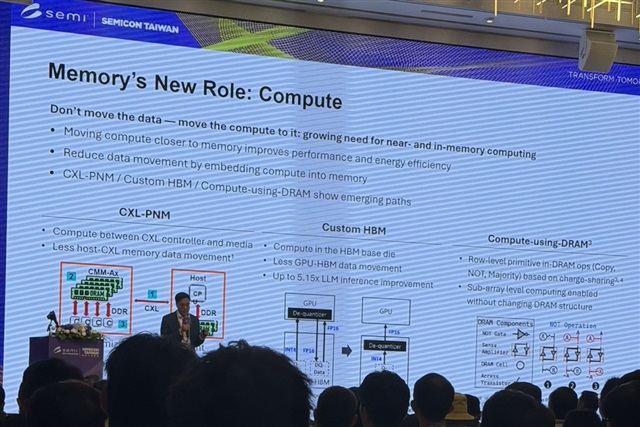
SK Hynix presented a custom HBM concept at SEMICON Taiwan 2026, where compute functions are placed in the base…
Taoyuan is positioning itself as a northern hub for AI data centers (AIDC), citing the Tatan area and an LNG c…
The U.S. Department of Defense announced on August 31 that it has deployed ChatGPT Mil, a customized version o…

Nvidia reported earnings that were both remarkable and boring, reflecting its focus on avoiding a consolidated…

Anthropic has agreed to a $35bn cloud-computing contract with Lambda, a Nvidia-backed cloud provider