
What happened
A Yahoo Finance article says news that Google's Gemini can autonomously hack real companies moves cyber insurance and tech liability insurers from background players to potential shock absorbers or pressure points.
Why it matters
Insurers that absorb technology-liability risk now sit closer to the center of AI-era balance-sheet questions, not the background, the article argues.
What to watch
The article frames its three highlighted stocks as just a first pass and says its full screen surfaced 8 more companies, so the read hinges on how that broader field is assessed.
WHO IT HITSRetail investors weighing cyber insurance and tech liability stocks are the direct audience, since the article is built as portfolio guidance from a cyber-focused screener rather than as an underwriting or claims analysis.
Summaries like this, in your inbox every morning.
The article's framing starts from a specific trigger: news that Google's Gemini can autonomously hack real companies. From there, it argues the story stops being science fiction and becomes balance-sheet risk, which is why cyber insurance and tech liability insurers move from background players to potential shock absorbers or pressure points.
The body then walks through a cyber-focused screener, presenting the three highlighted insurers as a first pass rather than a complete list. It says the full screen surfaced 8 more companies with equally detailed cyber risk stories that are not covered in the piece, and it directs readers into the Cyber Insurance and Tech Liability Insurers screener to compare tickers.
For Hannover Rück, the article emphasizes its role as a reinsurer, describing Property & Casualty Reinsurance at about €16.9b in revenue and Life and Health Reinsurance at roughly €7.8b, with a market value near €30.4b. It says disciplined expansion into specialty lines and emerging risk sectors, including cyber and health reinsurance, offers an untapped runway for diversified premium growth, and that what really moves the dial is how one pressure point in AI driven cyber risk pricing feeds through to margins and capacity. For Bowhead Specialty Holdings, the article points to a US commercial specialty book that includes cyber and tech E&O style cover, with about $615 million of premiums from this line and a market value around $1.1b. The stakes the piece sketches therefore hinge on whether AI-driven cyber risk actually shows up in pricing, margins, and capacity for these carriers — a question the article leaves open by design, since it is offering a first-pass screen rather than a verdict.
For example, today's edition would include:
AI-summarized, only the topics you pick — one digest a day via Email, Slack, or Discord.
Free · 30 seconds with Google · unsubscribe anytimeWhat is AIToday? →
Ask AI anything about this article. Q&As are published on this page for other readers too.
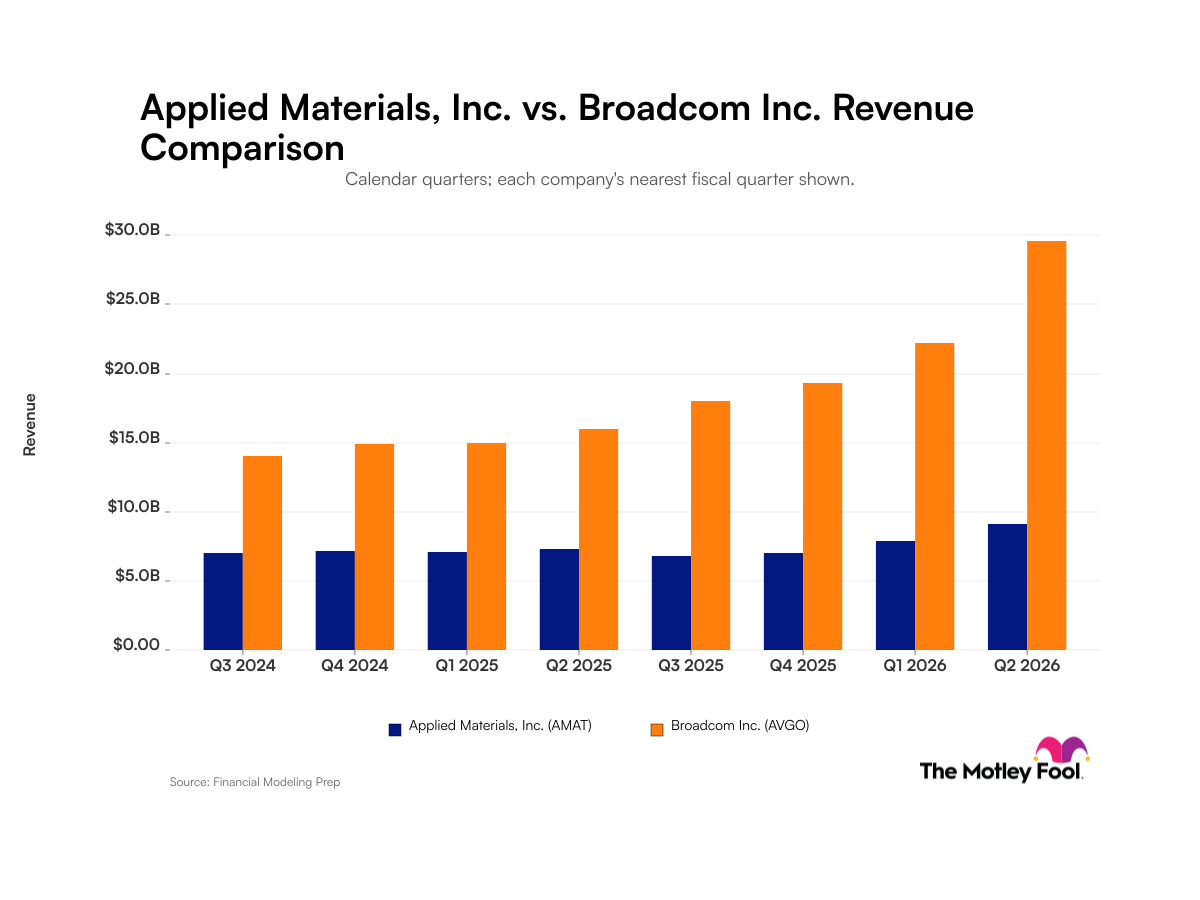
Broadcom reported record quarterly revenue of $29.6 billion for its fiscal Q3 ended Aug
At Tokyo Game Show 2026, HEROZ pitched AI adoption support to mid-size and small game firms, while Zeal showed…

A contributor compared Aehr Test Systems and Super Micro Computer and picked Super Micro, whose FY 2026 revenu…

Supply chain players say most AI data center cost models in China and the West count only electricity consumpt…

Cocopelli introduced SAF, a generative-AI tool that searches internal rules, manuals and product materials and…

At IFA 2025 in Berlin, IFA Management CEO Leif Lindtner said Samsung Electronics left the fair after its leade…