What happened
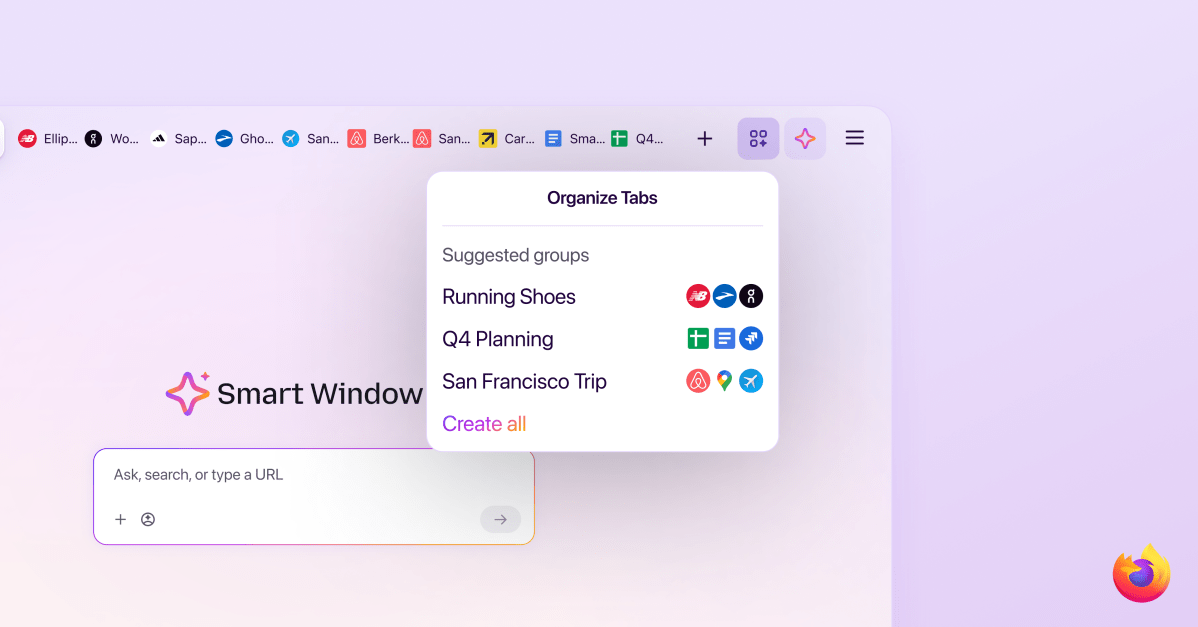
Firefox's Smart Window AI browsing mode can now search through your browsing history to find pages you previously visited, display visual previews of those pages, and automatically suggest groupings of related tabs — all powered by a partnership with Exa that adds source citations to chat responses.
Why it matters
Instead of forcing you to search the web from scratch, Smart Window learns what you've already seen and helps you relocate information you remember but can't place — Mozilla says beta testers reported this helped them stay focused. You can also choose which AI model to use (Google's Gemini 3.1 Flash Lite, OpenAI's oss-gpt-120b, Alibaba's Qwen3-235B-A22B-Instruct-2507, or local models), and Mozilla promises all third-party models operate under zero-data-retention contracts with no storage for training, advertising, or human review.
What to watch
Smart Window remains an opt-in beta feature with no announced exit date. Future updates will add Chrome-like recent browsing journey surfacing and AI-powered autofill for online forms.
Summaries like this, in your inbox every morning.
Firefox's Smart Window update reflects a shift in how browsers can use AI as a productivity tool for users themselves rather than a vehicle for generating new web queries or training data. Rather than asking the AI to search the internet anew, Smart Window prioritizes helping you retrieve and organize information you've already encountered—a fundamentally different use case from the AI-search-engine model some competitors are pursuing. Mozilla's insistence on user choice (selecting which AI model to use) and data privacy (zero-data-retention contracts with third-party providers) appears designed to position Firefox as a "neutral party on the internet," in the words of Firefox head Ajit Varma, standing apart from larger tech companies that may use browser data to train models or serve ads.
The feature set announced—visual previews of previously visited pages, automatic tab grouping with duplicate detection, and source citations from Exa—all serve the same goal: reducing friction when you already know something exists somewhere in your browsing history but cannot immediately recall which page held it. Mozilla says beta users reported this helped them "maintain their train of thought better," suggesting the company is measuring success by whether the feature solves a real workflow problem rather than by engagement metrics. Future additions like Chrome-like browsing journey surfacing and AI-powered form autofill suggest Mozilla is committed to deepening integration between Smart Window and the core browsing experience.
Pick your industry and the AI tools you use, and get news related to your work every day.
Free · 30 seconds with Google · unsubscribe anytimeWhat is AIToday? →
Ask AI anything about this article. The AI reads this article, earlier AIToday articles, and Wikipedia, and cites its sources. Q&As are published on this page for other readers too.

