What happened
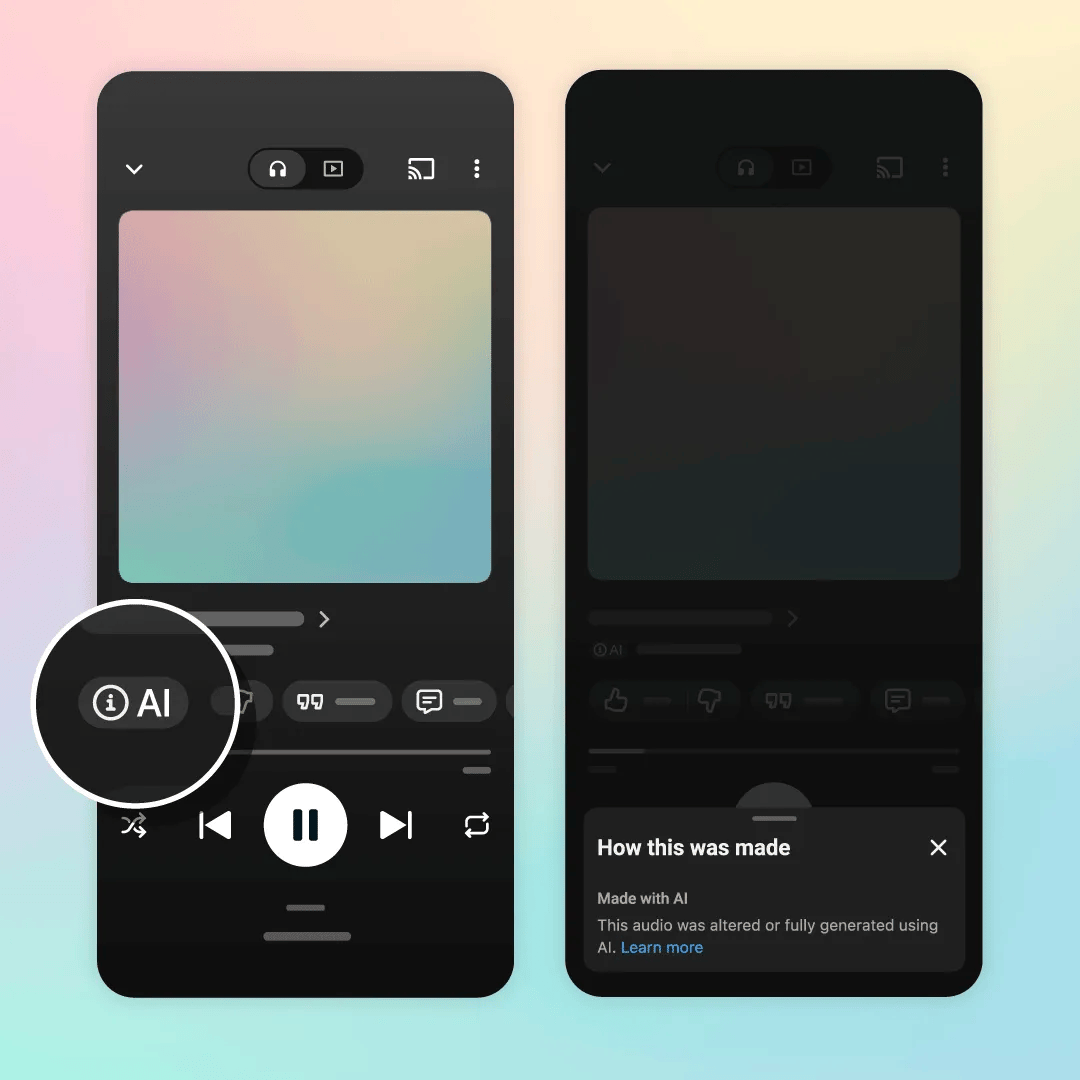
YouTube Music announced a labeling system on Wednesday that tags AI-generated music on the player page. Partners declare tracks as Fully Gen AI, Partly Gen AI, or No Gen AI.
Why it matters
Labels bring transparency to listeners without banning AI tracks from monetization. YouTube says it worked with music partners and detection tools to identify AI music.
WHO IT HITSMusic listeners gain a way to see whether a track was made with AI, and artists and partners using YouTube must declare their AI use through the new designations.
Summaries like this, in your inbox every morning.
YouTube Music's move comes as AI-generated music rapidly expands across streaming services, and many platforms are adopting their own approaches. Apple Music has plans to introduce “Made With AI” labels as part of its AI Transparency Tags later this year, while Spotify also has AI labels and a music spam filter.
Deezer has taken one of the stricter stances, reporting in July that it was receiving nearly 90,000 fully AI-generated tracks daily. It labels detected AI music, excludes it from algorithmic recommendations and editorial playlists, and withholds royalties from fraudulent streams. TIDAL also labels recordings it identifies as entirely AI-generated, allows listeners to disable them, and excludes these recordings from royalty attribution.
YouTube, by contrast, is focusing on disclosure rather than blanket restrictions. Its new labels are intended to inform listeners about AI’s role in music creation, but AI involvement alone doesn’t make a track ineligible for monetization. YouTube even experiments with AI-powered music creation, including its tool Dream Track, which lets select creators generate soundtracks featuring AI-generated versions of participating artists’ voices.
Pick your industry and the AI tools you use, and get news related to your work every day.
Free · 30 seconds with Google · unsubscribe anytimeWhat is AIToday? →
Ask AI anything about this article. The AI reads this article, earlier AIToday articles, and Wikipedia, and cites its sources. Q&As are published on this page for other readers too.

