What happened
Anthropic tested Claude Code handling daily software maintenance on its own in-house apps for the past few weeks. Claude created 388 pull requests across Anthropic's repositories; 180 were merged after human and automated review, a merge rate of about 46 percent.
Why it matters
The test shows that AI can reduce the burden of repetitive maintenance work on human developers. Claude runs 12 specialized routines—covering crash fixing, dead-code removal, duplicate merging, test cleanup, and logic simplification—using plain-language Slack prompts with no elaborate prompt engineering required.
What to watch
More than half the auto-generated pull requests did not merge, signaling both limits and potential of the approach. Anthropic engineer Boris Cherny describes the results as "surprisingly positive" and "early signs of life" for autonomous AI-powered maintenance, and the company is exploring ways to speed up the merge process for mechanical changes.
Summaries like this, in your inbox every morning.
Anthropic's experiment with Claude Code represents a pragmatic exploration of how AI can absorb repetitive software maintenance tasks. Rather than a theoretical test, the company deployed Claude against its own codebase, running 12 distinct maintenance routines—from crash fuzzing to duplicate-code merging to flaky-test fixing—each with a specific role in the broader maintenance pipeline. The setup is deliberately unglamorous: plain-language Slack prompts, no complex prompt engineering, and straightforward human review gates. This approach avoids over-engineering the system while keeping humans in control of what ships.
The 46 percent merge rate after review is telling. It indicates that Claude can produce valid, useful pull requests at scale—enough to meaningfully reduce developer toil—but also that nearly half the proposals need refinement or rejection. The team's iterative approach (tweaking routines when they fail) suggests a path toward improvement over time. Cherny's framing as "early signs of life" rather than "solved" is honest and important: the experiment shows potential but does not yet prove that fully autonomous maintenance is ready for production. The fact that Anthropic is already looking at ways to accelerate the merge pipeline suggests confidence in the direction.
Pick your industry and the AI tools you use, and get news related to your work every day.
Free · 30 seconds with Google · unsubscribe anytimeWhat is AIToday? →
Ask AI anything about this article. The AI reads this article, earlier AIToday articles, and Wikipedia, and cites its sources. Q&As are published on this page for other readers too.
Cammarata reinterprets InceptionV1's cat-car neuron as a V-shape detector, not two unrelated concepts
Google Deepmind's Gemini 4 Argon scored 97.5 percent on ARC-AGI-3 at a cost of $4,800, second only to GPT-6 As…
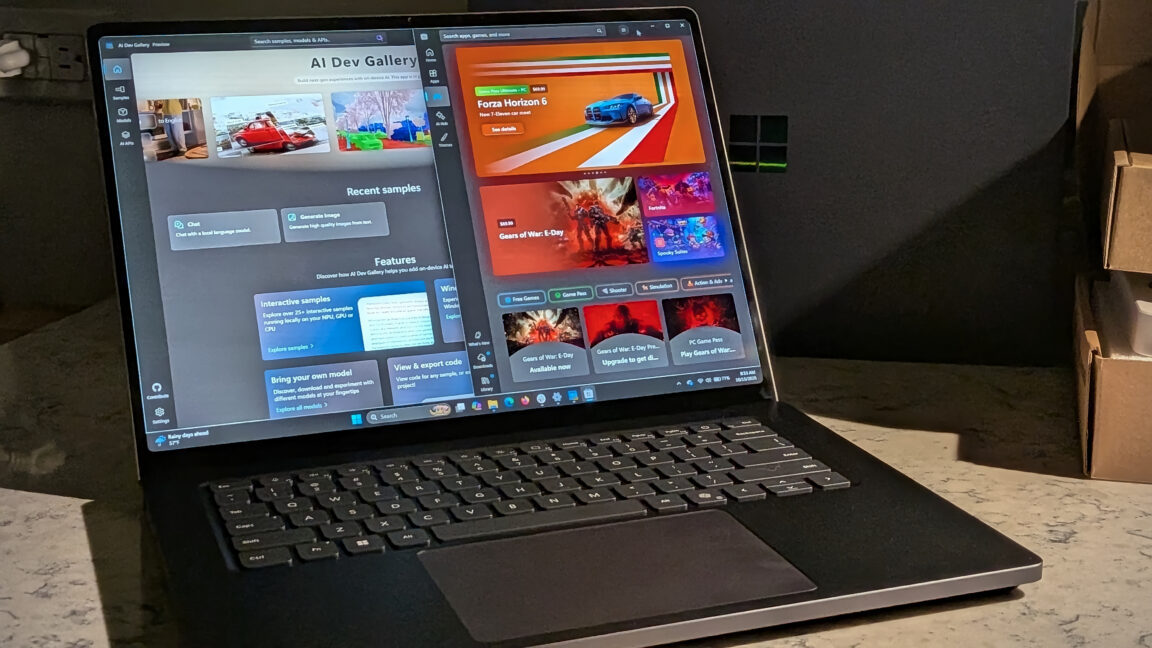
Microsoft's Surface Laptop Ultra, using Nvidia's RTX Spark platform, starts at $2,599 (up to $5,899)
Meta's new commercial terms, effective October 30th, appear to let it crawl and train AI on content from websi…
Vercel data published Thursday shows TypeSafe AI's Jev, a lightweight decision model for choosing among predet…
Reflection AI introduced Beam, an open-weight model for agentic coding and long-horizon tasks, with 501 billio…