What happened
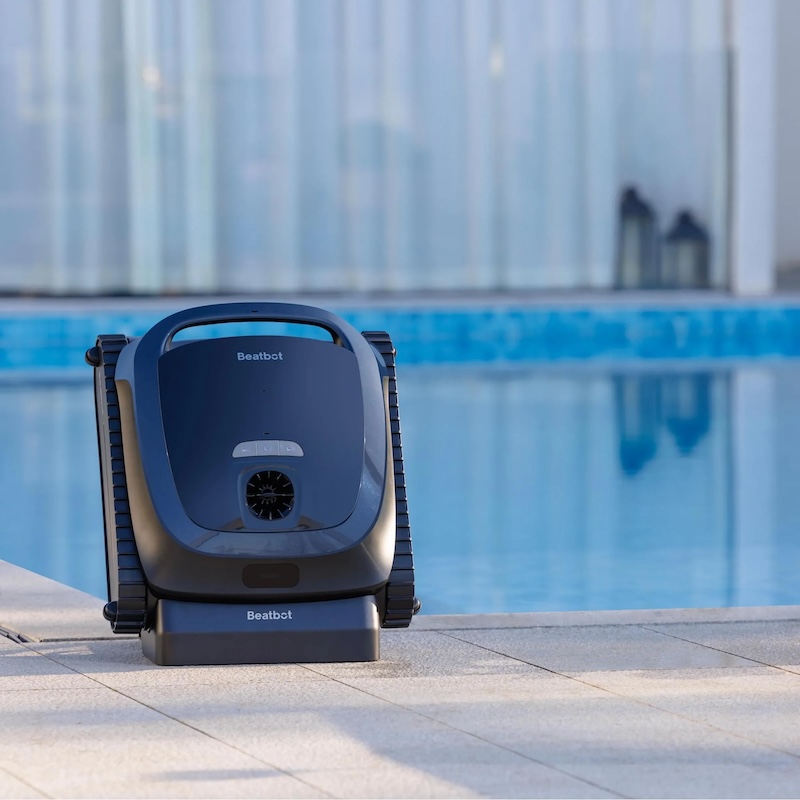
Pool cleaning robots are shifting from random movement patterns to AI-powered navigation systems that map pool geometry, sense obstacles in real time, and plan efficient paths. Beatbot AquaSense 2 Ultra exemplifies this approach, using AI Pool Mapping, Smart Navigation, and advanced sensing to handle complex pools with multiple levels, curved walls, steps, and waterlines.
Why it matters
Traditional pool robots waste energy repeating the same routes and miss corners, slopes, and waterlines—forcing homeowners to do manual touch-ups. AI navigation reduces missed areas and repeated passes by helping the robot understand pool shape and adapt to changing conditions, making coverage more predictable and improving user trust in the system.
What to watch
The category is moving toward treating pool robots as autonomous maintenance systems rather than standalone machines. However, AI navigation does not sanitize water or replace chemical testing, filtration, equipment repair, or professional diagnosis for algae, stains, and equipment faults—those remain the homeowner's responsibility.
Summaries like this, in your inbox every morning.
Pick your industry and the AI tools you use, and get news related to your work every day.
Free · 30 seconds with Google · unsubscribe anytimeWhat is AIToday? →
Ask AI anything about this article. The AI reads this article, earlier AIToday articles, and Wikipedia, and cites its sources. Q&As are published on this page for other readers too.
Ultra announced $62 million in funding — a $50 million Series A led by Framework Ventures plus a $12 million s…
Using OpenAI's Decisions API, model gpt-6-luna, a developer built a pipeline that answers questions like "is t…

Monolithos launched a public alpha of Robot Brain, a long-term memory system that stores a robot's task histor…
Danaher announced the launch of its first AI powered autonomous laboratory aimed at life sciences research acc…

In a SoftBank dialogue, AI governance chief Tadashi Iida and expert Kyoko Yoshinaga said firms must justify hu…

Renesas has developed its first low-voltage GaN power semiconductor, working with EPC and drawing on its own d…