Google has delayed the launch of Gemini, its major AI system, after the technology fell short of the company's own internal performance benchmarks.
The postponement underscores the technical challenges involved in developing cutting-edge AI models, even for well-resourced companies, and suggests that product timelines in the AI sector remain subject to engineering realities.
何が起きたか
Google has postponed the launch of its Gemini AI technology because the system failed to meet internal performance targets set by the company.
なぜ重要か
The delay signals that even leading AI labs face technical hurdles in scaling up their largest models. For businesses planning to adopt advanced AI, it suggests real-world deployment timelines may slip beyond public expectations.
注目点
No specific launch date has been announced yet; the company is working to close the performance gap before making the technology available.
Ask the AI about this article →
The delay reflects a tension between public AI announcements and technical readiness. Google, as one of the world's most-resourced AI research organizations, sets internal goals for its largest models before release. When Gemini fell short of those targets, the company chose to delay rather than ship a product it deemed below standard. This suggests that even companies with substantial engineering capacity and capital face genuine technical constraints in pushing AI performance to their desired levels. For the broader industry, the news implies that announced AI products are not automatically close to launch, and that internal benchmarks—not just external hype—drive actual deployment decisions.
For example, today's edition would include:
AI-summarized, only the topics you pick — one digest a day via Email, Slack, or Discord.
Free · takes 30 seconds · unsubscribe anytimeWhat is AIToday? →
Ask AI anything about this article. Q&As are published on this page for other readers too.
Israeli startup DataAgent Ltd
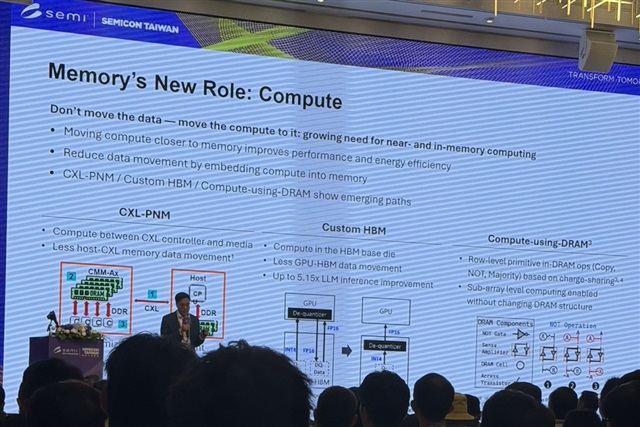
SK Hynix presented a custom HBM concept at SEMICON Taiwan 2026, where compute functions are placed in the base…
Nvidia reported earnings that were both remarkable and boring, reflecting its focus on avoiding a consolidated…

Anthropic has agreed to a $35bn cloud-computing contract with Lambda, a Nvidia-backed cloud provider

The Supreme Court of Japan has included about ¥60 million in its fiscal 2027 budget request for AI-related exp…
The Consumer Affairs Agency said Tuesday it will use generative AI to analyze about 900,000 annual consultatio…